Feeds:
Posts
Comments

Posts Tagged ‘History’

Woltz Avenue is a street running about three-quarters of a mile between Walden Avenue and Broadway in the Broadway-Fillmore neighborhood.   The street is named after a family that had three generations who all held public office in the City of Buffalo!

Woltz Avenue is technically named for Charles Woltz, who was on the Council at the time when the street was named.  The street was originally named Bowen Street.  The German residents of the neighborhood would confuse Bowen with Bone, so many of them called the street knoche, which is the German word for bone, leading to confusion.  So while Charles was president of the Council (1893-1895), a petition was drawn up to change the street name, however the petitioners failed to give suggestions for what to name it.  When the Council granted the petition, they opted to name the street after their President.

Charles was born in Alsace-Lorraine in 1853.  When the Germans acquired that territory in 1870, he came to America because of his aversion to German militarism.  Years later, when he returned to visit his brother, he was immediately thrown into jail for evading compulsory service in the German army.  His brother effected his release, however Charles never returned to his homeland again.

Charles was secretary of the Erie Land Company, which developed Woltz Avenue, Loepere and Mills Streets.  He was also an officer of the Genesee Land Company, which developed Montana, Colorado and Nevada Streets.  He was active in the Republican Party and was a delegate to the National Republican Convention which nominated William Howard Taft for the presidency.
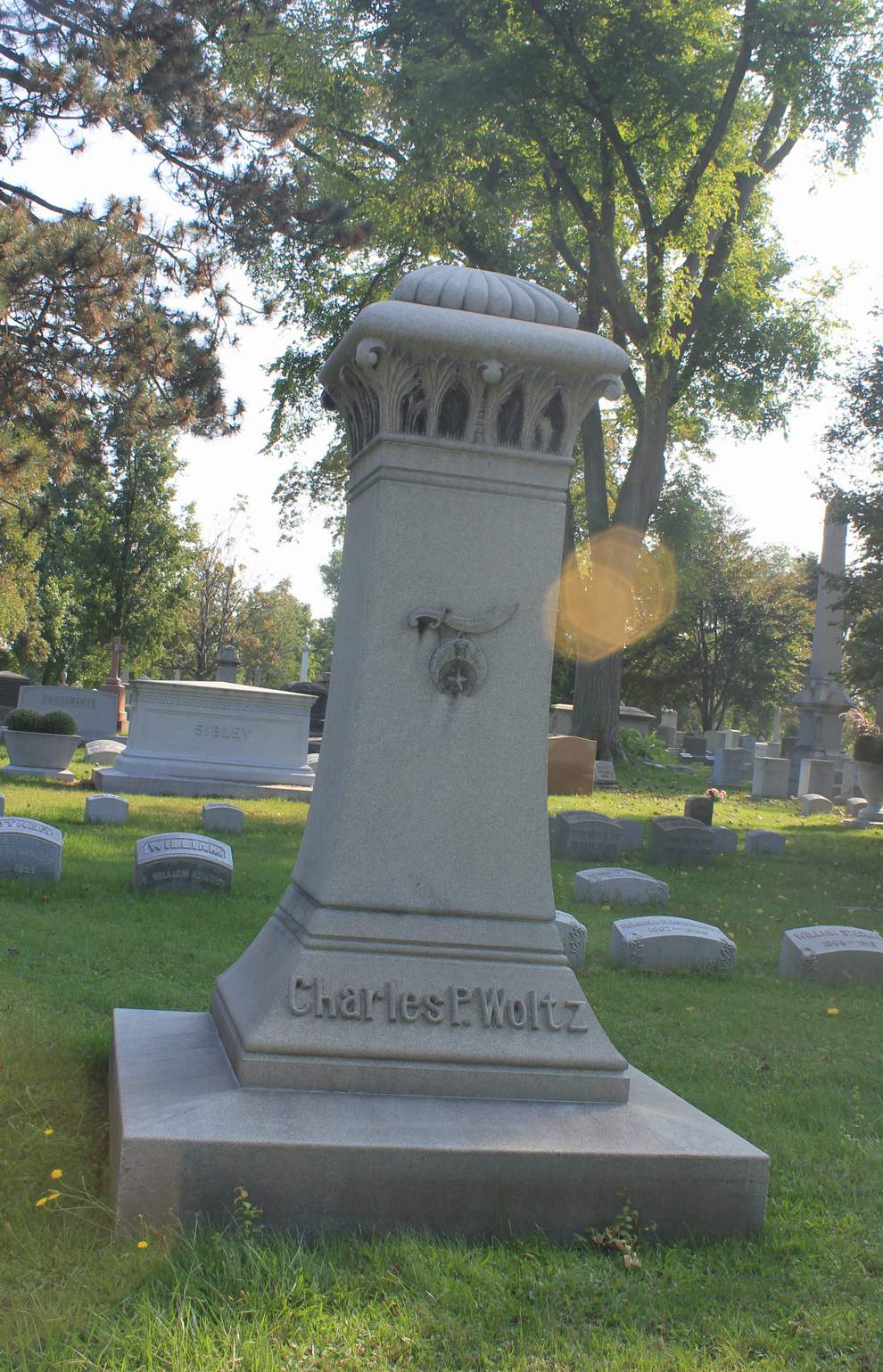
Charles wife, Eva, came from Germany in a sailing vessel that took forty days to cross the Atlantic.  Charles and Eva lived at 1125 Genesee Street, which is near the street that would bear the Woltz name.  In 1890, the Woltz home is listed in the Buffalo City Directory as “Woltz Saloon”.  Charles enjoyed fishing, and he would often take trips to Niagara-on-the-Lake for the day with his neighbors to go fishing.   Charles died in 1924 and is buried in Forest Lawn.

Charles and Eva had two sons, Charles J. and George.  Charles J. was born in 1878 and was a graduate of Buffalo Law School and continued the real estate business established by his father.  George was born in 1886.  In 1901, George began his career as an office boy, and worked his way up and became a Judge.  He served for 11 years as Assistant District Attorney, and then served more than 20 years on the bench.  He was affiliated with 32 clubs and organizations in Buffalo, including Bethlehem Evangelical Lutheran Church, Buffalo Consistory and Shrine, the Buffalo Athletic Club, the Elks, Oddfellows, Orioles, the Humboldt Club, Republic organizations and four German singing societies.  George lived at 755 Best Street.
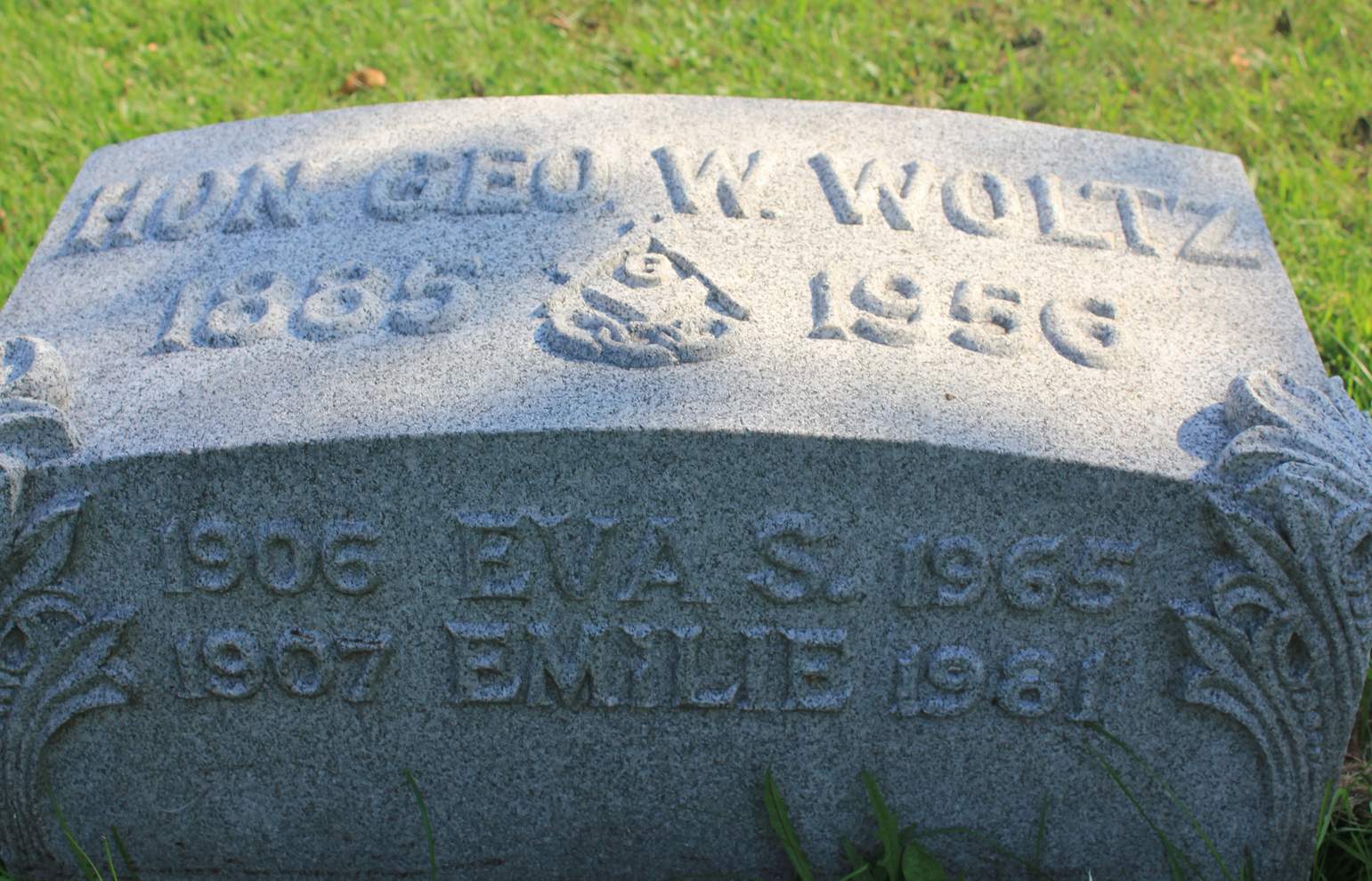
George’s daughter (Charles’ granddaughter), Eva Woltz, was born in 1906 and became an attorney and clerk of the City Court.  Eva passed away in 1965 and is buried in the family plot alongside her father George and her sister Emilie.

Source:  “Three Generations Memory” Courier Express July 23, 1939, sec 5 p 5.

Read Full Post »

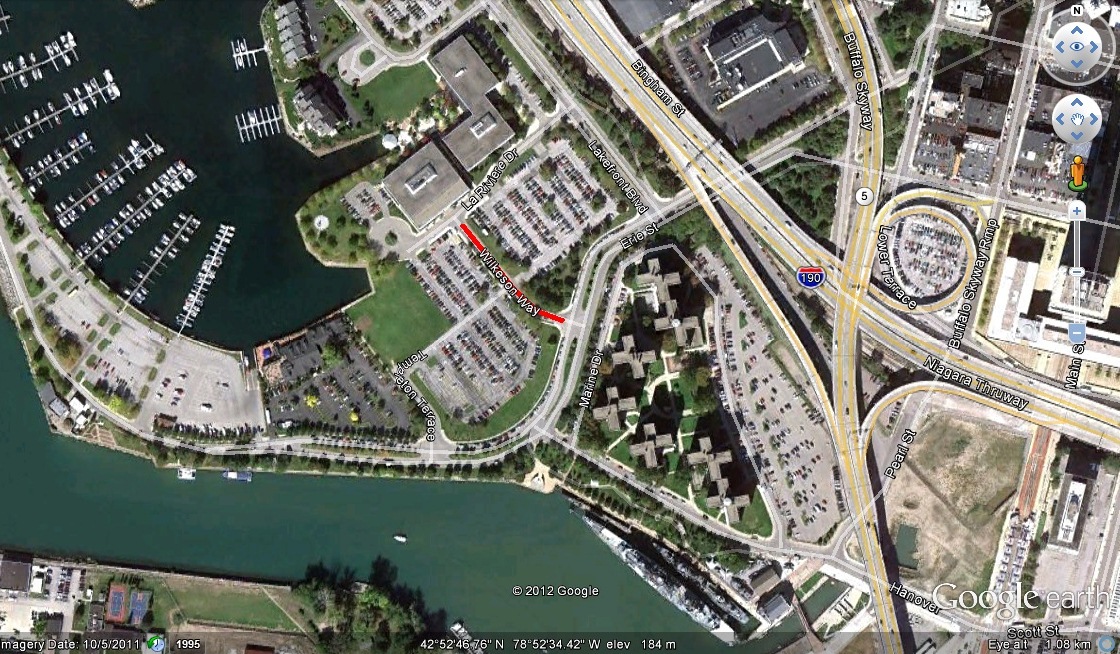
Wilkeson Way is a small street…ok, technically, it’s basically just the entry way into a parking lot down by the Erie Basin Marina.  It’s named after the man who was extremely important to the building of Buffalo in the early 1800s, so I’m including it.  Originally. Wilkeson Street was a little further north of the current Wilkeson Way, behind City Hall, in an area which changed due to urban renewal in the 1960s.

While the street is short, the man it was named for happens to be my absolute favorite Buffalonian, Samuel Wilkeson. (more…)

Read Full Post »

Kenefick Ave is a street in South Buffalo running between South Park Avenue and Abbott Road.  The street was named after Judge Daniel J. Kenefick.  Judge Kenefick is the author of the Buffalo City Charter, which was written in 1927.

Judge Kenefick was born in the Old First Ward in 1863.  He attended Buffalo City Schools, graduated from Central High School in 1881 and studied law in the Buffalo office of Congressman Richard Crowley.  He served as assistant district attorney and district attorney of Erie County and also was Justice of the New York State Supreme Court.  He served as director of the Buffalo Niagara Electric Company.  The Judge lived at 841 Delaware Avenue, at the corner of Barker Avenue.  841 Delaware Avenue is the current location of the Himalayan Institute, but I am not 100% sure that this is the same building which the Judge lived in.

Judge Kenefick grew up in the Old First Ward.  He married Maysie Germain of the Germain Family of Buffalo. He grew up alongside developer John F. Burke.  Mr. Burke grew up to become a developer and developed the part of South Buffalo where Kenefick Avenue is located.  Mr. Burke honored his boyhood friend by naming Kenefick Avenue after him.

Sources:

  1. Biography of Daniel Kenefick.  Our Country and It’s People:  A Descriptive Work on Erie County, New York.  Edited By:  Trumen C. White.  The Boston History Company, Published 1989.
  2. “Kenefick Avenue Among Few City Streets Honoring Living Citizen”.  Courier Express, October 9, 1938, sec 5 p 2.


Read Full Post »

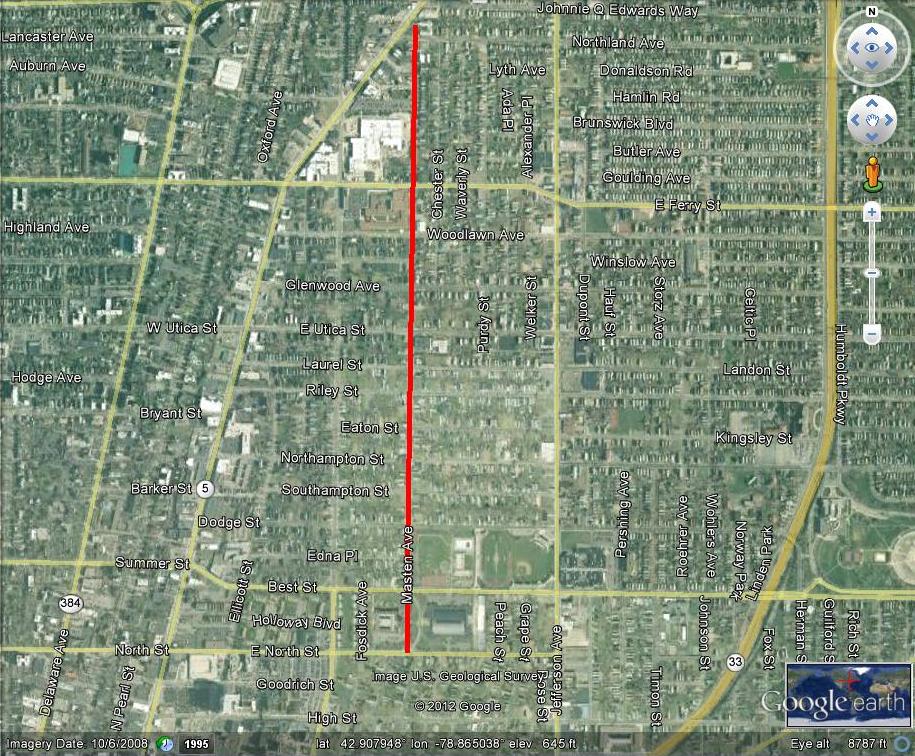
Masten Avenue runs north-south for about a mile on the East Side of Buffalo, between North and Ferry Streets.   The Masten Park neighborhood, Masten Avenue, Masten Park and the former Masten Park High School (currently City Honors), all get their name from former City of Buffalo Mayor Joseph Masten.

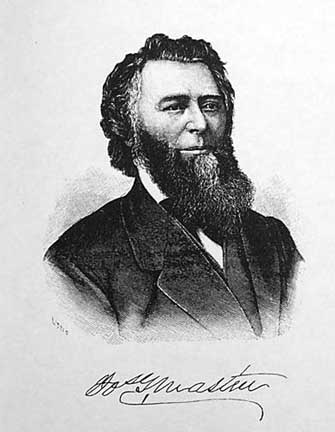
Joseph Griffiths Masten was born in 1809, in Red Hook, New York.  He came to Buffalo in 1836 after studying law.  He was elected Mayor in 1843.   While he was Mayor, he issued the law which says that owners/occupants of buildings and owners of vacant lots need to keep their sidewalks and gutters free of snow and dirt.  Blame him if you get a ticket for not shoveling your walk!

Buffalo was an exciting place to be while Masten was Mayor.  He was Mayor when Joseph Dart invented the grain elevator and expansion of the city resulted as the City began to become an important grain hub.  He was also Mayor during the founding of the University of Buffalo.  He and his wife, Christina, were the first owners of the Wilcox Mansion on Delaware Avenue.  At the time it was an army barracks and the Mastens converted it into a residence; today the mansion serves as the Theodore Roosevelt Inaugural Site.

After his time as Mayor, Masten served as a judge.  It is said that he went on long walks around his neighborhood, always stopping to talk to neighbors and people he met along the way.   He died in 1871 and is buried in Forest Lawn.  His tombstone reads:  “An upright judge, an eminent lawyer, a faithful public servant, an esteemed citizen, a true gentleman”.

Source:  “Masten Avenue Honors Memory of 1843 Mayor”. Courier Express, Dec 4, 1938 sec 7 p 4

Read Full Post »

Dart Street is a 0.5 mile street running between Forest Avenue and the Scajaquada (198) between Grant and Niagara Streets.  The short street is located in an industrial area that used to be used for manufacturing purposes, which is fitting because the street is named after the man who helped Buffalo to become an industrial powerhouse.

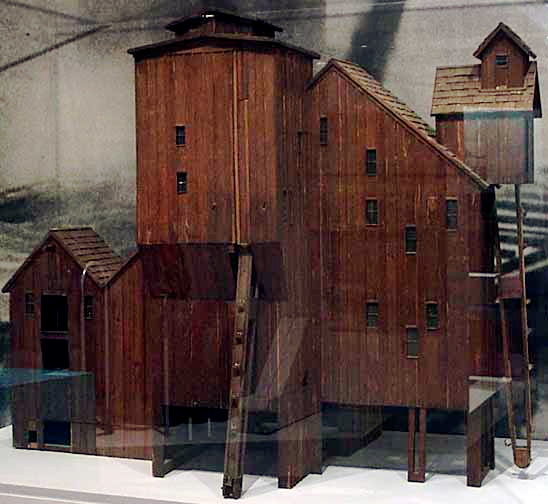
Joseph Dart invented the grain elevator.  Mr. Dart was born in Connecticut in 1799,  He came to Buffalo in 1821, when the Village had a population of approximately 1800.  He became a partner in the hat, cap and fur business with Joseph Stocking.  He learned the languages of the Native Americans in order to expand his business.  His store was located on the southeast corner of Main and Swan Streets.  During his downtime at his shop when the fur trade was slow, he toyed around with the idea to move grain from a ship to the land by a machine into an elevator.

Model of the Dart Grain Elevator

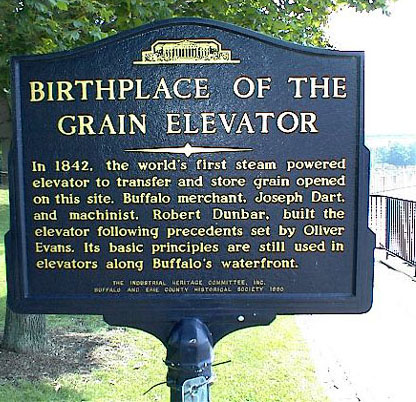
In 1841, he completed his blueprints and the first grain elevator was built on the banks of the Buffalo River.   Once his elevator was successful, elevators popped up all along the shores of the Buffalo Harbor and Buffalo River, giving rise to the grain industry which helped build Buffalo as an industrial powerhouse in the early 1900’s.  A historic marker is located on the spot where the elevator was located, close to where the entrance to the Erie Basin Marina is currently.

Mr. Dart refused to patent his invention, choosing instead to let it be a gift to all.  Most modern elevators still use Dart’s technology today.  However, the modern ships are a bit more automated, removing the need for grain scoopers.  The last scooper unloaded a ship in Buffalo in 2003.    You can watch a video of the last scooping in Buffalo here:

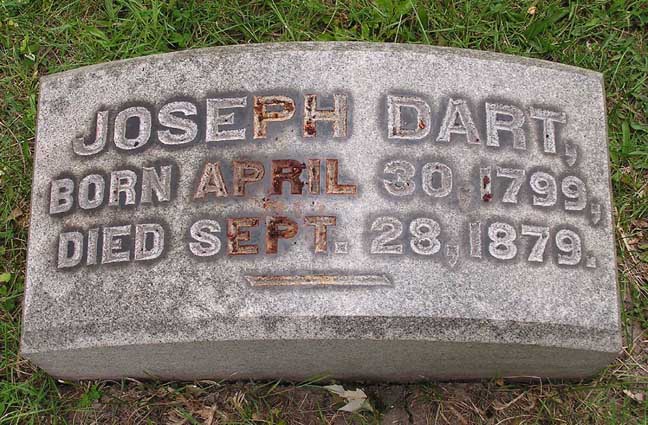
Mr Dart was also a prominent Buffalo citizen, involved in the Buffalo Water Works, a founder oft he Buffalo Female Academy (currently Buffalo Seminary), a member of the Buffalo Historical Society and active in the First Presbyterian Church.   The Dart Family, which included Joseph, his wife and seven children,  lived in a Mansion on the northeast corner of Niagara and Georgia Streets.  The Darts owned the first piano in Buffalo.  Joseph Dart died in 1879 at the age of 80.

I took this photo during the demolition of the GLF elevators, about two weeks before the one in the center collapsed this fall.

As a personal aside, the grain elevators are one of my favorite things in Buffalo.  They’re a huge part of our history, and these concrete mega structures are amazing.  I’ve been on several tours inside the elevators, and have a whole new appreciation for them.  A fact that many people don’t realize is that several of the elevators are still in use today, however, because they don’t show a lot of activity, they look vacant to most people.  Many of the vacant ones can be reused.  We currently allow salt and sand to sit on our waterfront, both of which could be stored in an elevator, protected from the elements.  To learn more about Joseph Dart and the grain elevators, I highly recommend the book Elevator Alley by Michael Cook, and the Buffalo Industrial Heritage Committee website.  There’s a wealth of information and lots of pictures of early Buffalo on their site.  Additionally, I recommend the walking tour given led Jerry Malloy, he is highly knowledgeable, and the tour is a must-do for people interested in learning about this important and fascinating part of our history.

Source:  “Dart Street Named in Inventor’s Honor” Courier Express Dec. 11, 1938 sec 5 p2

Read Full Post »

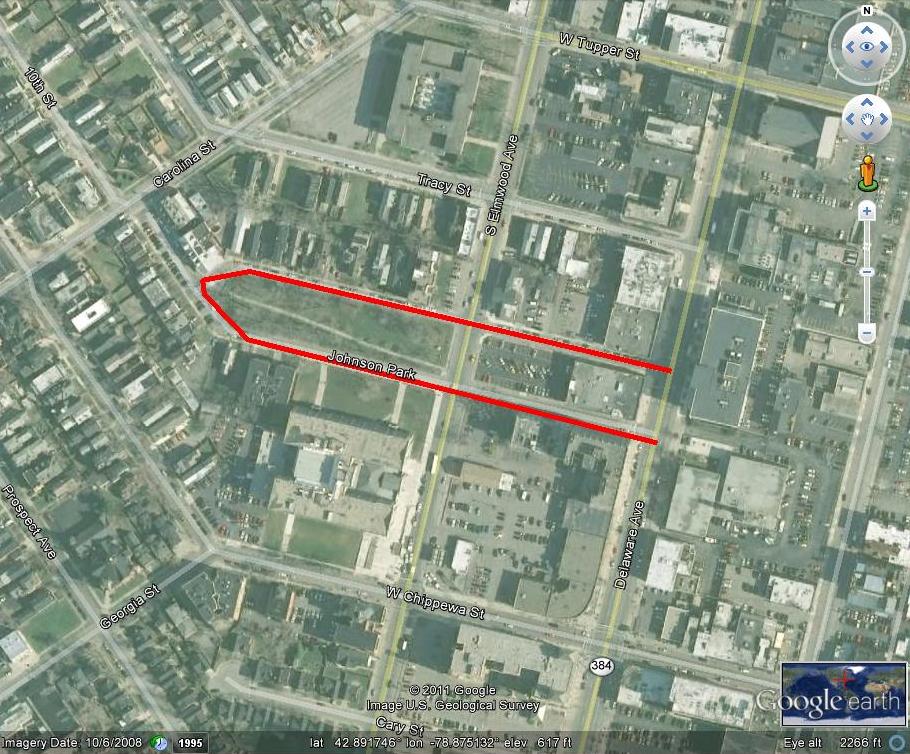
Johnson Park consists of two parallel streets that create a court between Delaware and a park that shares its name with the road.  The “park” in Johnson Park is named after the estate of Ebenezer Johnson, the City of Buffalo’s first mayor!

(more…)

Read Full Post »

Granger Place is a short road in the Elmwood Village, running less than 1/4th of a mile, between Elmwood Avenue and Lincoln Parkway between Forest Avenue and Bird Avenue.  The street was originally known as Elmhurst.   The street is named for Erastus Granger, one of Buffalo’s earliest residents and the Village’s first postmaster.

Erastus Granger was a businessman raised in Connecticut.  He was sent by a group of New England businessmen to look after their investments in Virginia and Kentucky.  While in the south, he met and befriended Thomas Jefferson.  He worked on Jefferson’s campaign for President, and when Jefferson took office, he sent Erastus Granger to Buffalo and appointed him postmaster of the Village in 1803.  When Mr. Granger arrived in Buffalo Creek (which is what Buffalo was called at the time), there were only 16 huts, three blacksmith shops, a taverns, a drugstore and a jail.   He sent up his post office in a desk at Crow’s Tavern on Exchange Street.  You can visit Mr. Granger’s desk and see a replica of Crow’s Tavern in the Pioneer Gallery at the Buffalo and Erie County Historical Society!

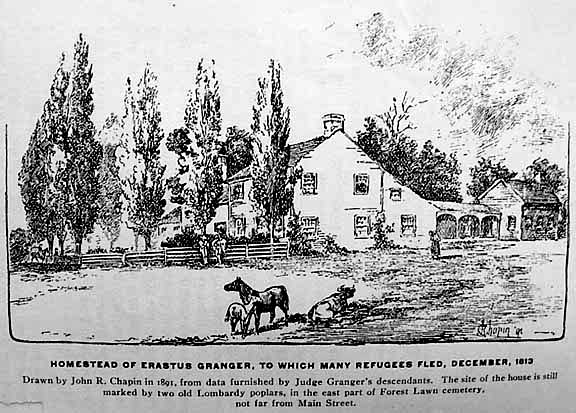
Mr. Granger built a house near where the Main Street entrance of Forest Lawn cemetary is today.  His farm extended north to West Oakwood and west to Elmwood Avenue.   Granger Place is located on a small portion of his 800-acre estate, which he called Flint Hill, due to the rock in the soil.  His estate included all of the lands now containing Forest Lawn, Delaware Park, Buffalo State College and the Richardson Complex!    He built the Buffalo Harbor lighthouse in 1817, which was replaced in 1830s by the current Buffalo lighthouse.

During the War of 1812, Mr. Granger worked with Red Jacket and other indian leaders to get them to sign a treaty of neutrality.  The Native Americans kept the treaty until the Indians from Canada invaded their territory, at which time they joined the Americans.    Mr. Granger opened his property as a safe haven for refugees of Buffalo after the British burned the Village.

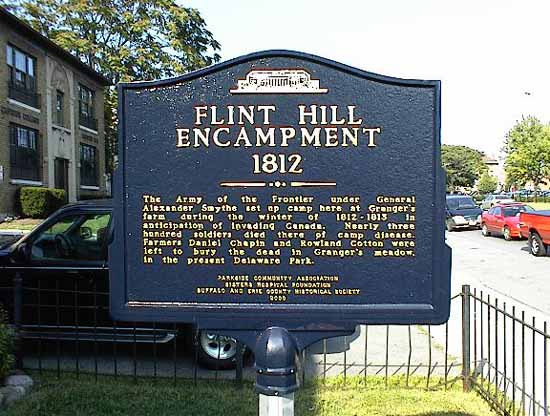
During the Winter of 1812-1813, The Army of the Frontier under General Alexander Smythe set up camp at Flint Hill in anticipation of invading Canada.  Nearly three hundred soldiers died there.  The dead were buried in Granger’s meadow, in the present Delaware Park.    A plaque at Main Street and Humboldt Parkway, and a stone in the Delaware Park meadow memorialize the Flint Hill Encampment and the 300 soldiers buried there.

Erastus Granger’s grave is located on land that he once owned in Forest Lawn cemetary.   Red Jacket delivered the Eulogy at his funeral.

Sources:

“Granger Place Honors Memory of First Buffalo Postmaster” Courier Express Sept 18, 1938, sec 6 p 10

Read Full Post »

Lafayette Avenue runs approximately 2 miles from west to east across the center of Buffalo, from Main Street to Niagara Street.  Lafayette Avenue crosses both Gates Circle and Colonial Circle.  The street was originally named Bouck Avenue.   There was a Governor of New York, William Bouck, but don’t quote me on it being named after him.  Before he was Governor, Bouck was involved in the building of the Erie Canal; his job was to bring the money to the workers in the western portion of the state.

Lafayette Square, located at Main Street between Broadway and Clinton, was originally laid out by Joseph Ellicott in 1804.  Lafayette Square was known in those days as Courthouse Square.  The Courthouse was located where the Buffalo and Erie County Public Library is currently located.

(more…)

Read Full Post »

In the Broadway/Fillmore neighborhood, there are three streets running between Broadway and Genesee Streets:  Guilford Street, Reed Street and Wilson Street.

All three of these streets are named for Guilford Reed Wilson.  Mr. Wilson was a pioneer coal dealer and an early member of the Buffalo Board of Trade.  He was born in Burlington NJ in 1813 and was educated in Philadelphia.  He was associated with lumber interests in Corning in his 20s.  He came to Buffalo at the age of 25 and embarked in the iron and coal business.  He was also director of several local banks and a member of the Board of Trade.  He was also one of the earliest members of the Buffalo Club.

Mr. Wilson acquired extensive real estate and owned and developed the tract of land through which Guilford, Reed and Wilson Streets were cut.  He owned the land along with other prominent Buffalonians – the Rich and Townsend Families.  He was married to Jane Townsend, daughter of Charles Townsend (a judge and prominent Buffalonian himself).  After their marriage, Wilson and his wife lived in Judge Townsend’s mansion at Main and Tupper Streets.  Mr. Wilson remained in Buffalo until his death in 1877.

Sources:

  1. “Three Streets Honor Pioneer Coal Dealer”Courier Express Dec 25, 1938, sec. 7 p 8.
  2. Memorial and Family History of Erie County.  The Genealogical Publishing Company:  Buffalo, NY 1906.

Read Full Post »

This post is at the request of John Fell.  Don’t forget, if you have any requests for specific streets- leave them in the comments or send me an email at buffalostreets (at) gmail (dot) com!

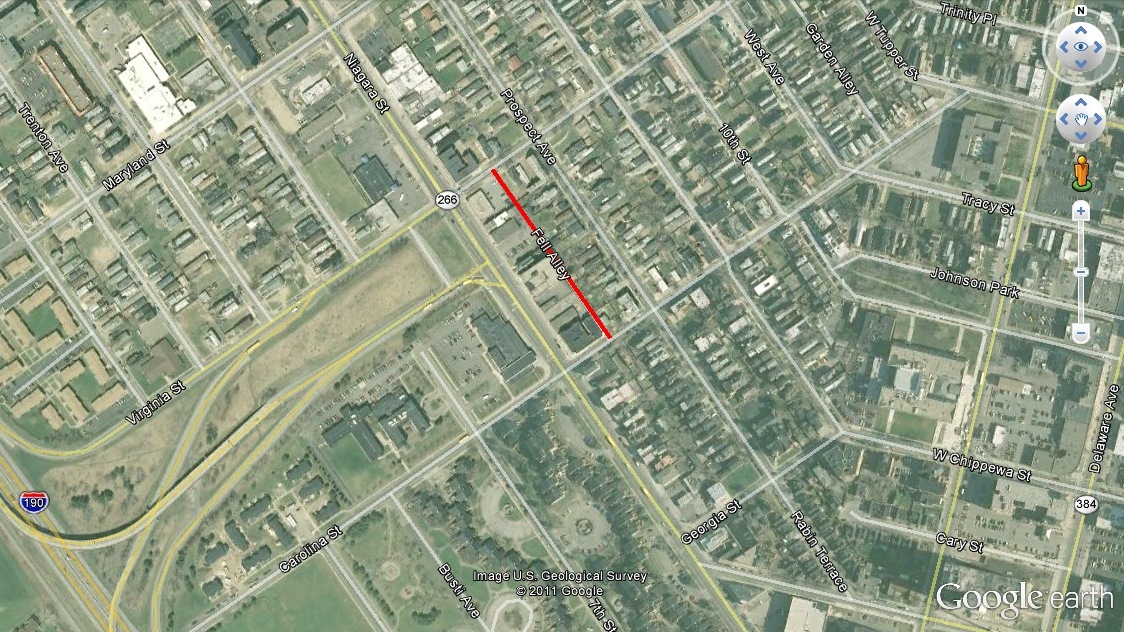
Fell Alley is a small,  two block alley running between Niagara Street and Prospect Avenue, from Carolina to Virginia Street.

Fell Alley was named for Dr. George Edward Fell.  Dr. Fell was the inventor of the Fell motor, a submarine life-preserver, and co-inventor of the electric chair.  The Fell motor is a device used for mechanical respiration and was used until the invention of the pulmotor in 1911.   The first Fell motor was invented in 1887, and used bellows, piping and a breathing valve to resuscitate unconscious patients.  At the time, the restoration of respiration was believed to be impossible, however Dr. Fell made it possible and saved many lives.    The submarine life-preserver not only kept you afloat,  it also provided an air supply to allow easier breathing should you go overboard.

Dr. Fell was a professor of  microscopy in the medical department of Niagara University (which is now the UB Medical School).    George Fell also worked as a surgeon.   While he was opposed to capital punishment, his work on the creation of the electric chair was intended to minimize the pain of the death penalty.

While he attended medical school in the evenings, George Fell also had worked as a City Engineer from 1882-1883.  He worked on the installation of one of the break walls from the harbor along the south shore of Lake Erie to the South Buffalo Lighthouse.  When George Fell completed medical school, his brother Charles took his place in the Engineering Department and completed the break wall.    Charles Fell is responsible for many of the plans for the City’s sewer lines, although many of them were not built until after his death.

George Fell was also considered to be a great humanitarian.   Dr. Fell’s home and office was at 72 Niagara Street.  He had four daughters and a son.  He moved to Chicago in 1917 and died in 1918.

Sources:

  1. Essig, Mark.  Edison and the Electric Chair: A Story of Light and Death.  Walker and Company:  USA, 2003.
  2. “Fell Alley memorial to Physician – Inventor” Courier Express May 19, 1940 sec 5, p7.
  3. Fell, George.  “A New Method of Saving Life at Sea:  The Fell Submarine Life Preserver”.  Buffalo medical journal, Volume 71.  August 1915
  4. Fell, George.  “The Influence of Electricity on Protoplasm.”  Physician and Surgeon 10.  October 1890,p 441-442.

Read Full Post »

« Newer Posts - Older Posts »

Field Notes

Live from Buffalo, NY

Grants.gov Community Blog

Connecting the grant community to #LearnGrants

Dienna Howard

I create, therefore I am.

Hidden Waters blog

Companion blog for the book "Hidden Waters of NYC"

Hoping for a Tail Wind

Because I definitely brought way too much gear.

priorhouse blog

Photos, art, and a little bit of LIT.

Sheepie Niagara

Bleating the Beat Since 2015