Feeds:
Posts
Comments

Posts Tagged ‘Buffalo’

Sanborn Map depicting Polonia Park in 1925

While researching Curtiss Street, I noticed that there was Polonia Park marked on some of the maps.  I have a great interest in the Broadway-Fillmore neighborhood and the area around the Central Terminal in particular, and I had never heard of this before.  I got sidetracked from my street researching and ended up finding out some interesting stuff which I would like to share with you all.  I know it’s not a street history, but hopefully you all will enjoy these tidbits of information as much as I do.

Polonia Park was located on Curtiss Street prior to the Central Terminal’s construction.  The park was purchased by the City in 1913 at the same time as the land for Schiller Park, Willert Park, an extension to Riverside Park and an addition to Lanigan Park.

In June 1916, the Buffalo Live Wire (a publication published monthly by the Buffalo Chamber of Commerce) posted that “A well-prepared city plan is indispensable to the intelligent acquisition of park properties, and if we enjoyed the guidance of a city plan in our recent campaign for additional parks, we would not now be wondering why we purchased, at a cost of $60,000, Polonia Park, consisting of lands useful for neither park nor playground.”

The article did not elaborate on this, but my guess is that because the land had been part of the railroad corridor, it was ill-suited for parkland.  Railroads use a great deal of pesticides to keep foliage from blocking the tracks, as can be seen when abandoned railroad corridors are still free from most grasses and shrubs long after the trains stopped coming through.  The West Shore Railroad, which connected Buffalo to New York City formerly cut through this park, following approximately the path which Memorial Drive follows today.

Despite the reports that the land was not useful as a park, the park was used during the early 1920s, as there are reports in the newspapers of baseball scores for games played in Polonia Park.
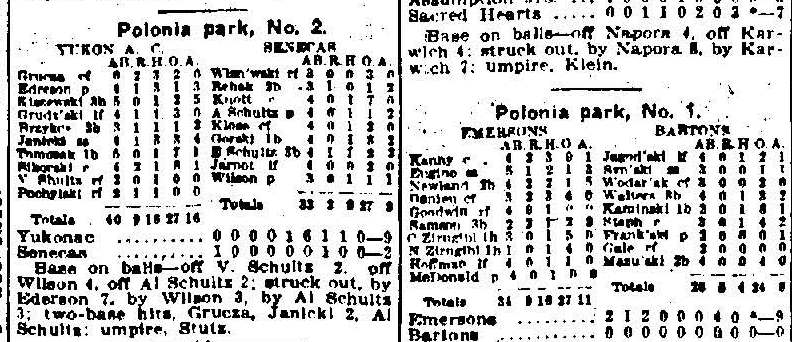
August 24, 1924
Buffalo Morning Express

By March of 1925, the property was owned by the Buffalo Board of Education as the intended site of the Peckham Vocational School.   Peckham Vocational was located at the corner of Peckham and Townsend, however they originally started out in the Adam Mickiewicz Library on Fillmore while the original school was being constructed.   As this ad from the Buffalo Morning Express, August 29, 1922 shows, there were four vocational schools in Buffalo at the time.  This was the time when many students would go out in the world to work after they completed 8th grade.  Vocational schools were a way to continue your education, while also learning a useful trade.

Ad for Vocational Schools
Buffalo Morning Express, August 29, 1922

Peckham Students

Peckham Vocational was a source of pride for Buffalo’s polish community.  The residents of Polonia were concerned that the high schools located in Buffalo were overlooking their community, so the residents rallied successfully to open a school in their neighborhood.  Peckham Vocational opened in 1911.  Board of Education had plans to build a new school and was about to let the contract to build when the railroad approached them to purchase the property to build what at the time was being called the “Fillmore Station”.   In exchange for the Polonia Park property, the Board fo Education received the property at the corner of Sycamore Street and Koons Avenue.  Peckham Vocational School was renamed Emerson Vocational School in 1937, after the school’s superintendent.  The school operated at its Sycamore Street address for 62 years until 1999.  Since then, the building has been remodeled and renamed Harvey Austin Public School 97, and operates as an elementary school.

After I posted my post on Curtiss Street, Marty from Forgotten Buffalowas kind enough to share these pictures of another planned park in Polonia.  It was clear that the people who lived in this neighborhood wanted a park, since they used the land that the chamber of commerce called unsuitable for a park as a park, and then plans were development for this park around 1938.  For reference, this map north is towards the bottom.  This land is currently the residential neighborhood between the Central Terminal and Broadway.

New Park Design For Park North of Central Terminal

Sadly, this park was never built.  While the residents of Polonia had successfully rallied to get a school built in their neighborhood in 1911, it seems that they were unable to rally enough support to build a neighborhood park.  Perhaps because it would have involved tearing down houses?

Recent efforts have occurred at the Central Terminal to build an urban habitat in the vicinity of the former Polonia Park.  The Urban Habitat Restoration project is working to reclaim the land which was used as a parking lot during the height of the Central Terminal’s use as a train station.  This project is working to restore some of the landscape, using native plants and green sustainable methods.   For more on this project, check out the Central Terminal Website here.

Over the course of  the past 100 years, this piece of property has transformed from railroad corridor, to park, planned use as school, to use as a parking lot, and now is being restored back to natural landscape.  Not too shabby of a history for our little piece of land that was once known as Polonia Park.


Learn about the history of other streets in Buffalo by checking out the Street Index.


Sources:

  1. “Buffalo’s Towering Temple of Transportation”, Greg Jandura.  accessed online, July 25, 2012:  http://www.trainweb.org/wnyrhs/nyctermpt1.htm
  2. “Council Wants Action on New School Tract”  Buffalo Morning Express March 21, 1925, pg 11
  3. Buffalo Live Wire, Vol. VII, No. 6,  June 1916, published by the Buffalo Chamber of Commerce.
  4. “Again Central Secures Delay” Buffalo Express Dec 14, 1905
  5. http://www.buffaloschools.org/m/content.cfm?subpage=39590
  6. Bucki, Carl,  “Polish Vocational School Was The Source Of Community Pride”.  Am-Pol Eagle.  Access online: http://ampoleagle.com/polish-vocational-school-was-br-the-source-of-community-pride-p5222-147.htm
  7. Plans for park designed by Joseph Fronczak provided by Marty Biniasz.

Read Full Post »

Curtiss Street
Present Day Alignment

Curtiss Street is runs along the railroad tracks near the Central Terminal.  The street follows the curves of the railroad, which has been there since at least the 1880s.  The streets in the vicinity of the Terminal have changed a bit in the last 100 years.  More information about other streets will be coming in other blog posts.  Since the construction of the Central Terminal, Curtiss Street has run underneath the Terminal at the curve.  (click photos to enlarge for easier reading)

Curtiss Street in 1889

Curtiss Street in 1925

Curtiss Street in 1950

People often believe the street is named after Glenn Curtiss, known for Curtiss Aeroplane Company.  However, Glenn Curtiss wasn’t born until 1878, and the street was named by at least 1889.  While it would have been very interesting if the street had been named in honor of an 11-year-old who ended up being as remarkable as Glenn Curtiss, this was not the case.   I was unable to find any concrete evidence linking Glenn Curtiss to the other Buffalo Curtiss family.  If anyone has any information of their linkage, please let me know in the comments.  But no, Curtiss Street is NOT named for Curtiss-Wright airplanes.

Curtiss Street is named for Charles Gould Curtiss.  Mr. Curtiss was an officer of the Lancaster and Depew Land Company, which developed Curtiss Street and several other streets in its vicinity.

Mr. Charles Gould Curtiss was born in 1827 and grew up in Utica, New York.  He ran the news stand at the Utica Rail Station while he was a boy, and eventually became a produce salesman.  At the age of 23, he formed a connection with a wholesale grocer, which brought him to New York City.  He made many connections while in New York. For a short time, he became an executive of Breckinridge County Coal Oil Company in Louisville Kentucky.  He worked to substitute coal oil for sperm oil. The discovery of petroleum caused the business to fail, as the coal oil was no longer necessary.

In 1857, Mr. Curtiss came to Buffalo to join Levi Willard in the insurance business.  In 1873, he organized a barley and malt firm that continued to operate for nearly half a century.  Charles and his wife Amelia lived in a large stone house at 63 West Huron Street.  He kept his horses at Efner’s Livery Stable at Franklin and Chippewa, and it is said that he rode his horses through Delaware Park on a daily basis.  At the time, the roads were only paved as far as North Street, so riding to the park was a ride out to the country.

In 1882, Charles was a delegate to the Democratic Convention where his friend Grover Cleveland was nominated for Governor.  After his election, Cleveland appointed Mr. Curtiss to the Board of Trustees of the Buffalo State Hospital for the Insane.  The Curtiss family also kept a farm at Delavan and Main Street where he raised chickens and kept a cow.  He felt that “the country was the best place for growing boys”, so he spent a great deal of time on the farm with his sons Harlow and Alexander.   Although his own schooling was limited, Charles felt an education was important, so he sent both sons to college.

Alexander Curtiss House
(currently the Ronald McDonald House)

Alexander studied medicine at the University of Rochester after coursework at Cornell.  Dr. Curtiss (Alexander) was in charge of the first hospital established in Denver, Colorado.  Following the birth of his first son, Colman, Dr. Curtiss returned to Buffalo and became a surgeon for Buffalo State Hospital.  Colman eventually ran his grandfather Charles’ barley and malt firm.  Colman was president of the company when it went under due to prohibition.  Following the closure of the malt firm, Colman worked in insurance for John Hancock Life Insurance Company.  Colman married Sally Cary, daughter of Trumbull Cary (another prominent Buffalonian).  Alexander and his family lived at 780 West Ferry, the house which is better known today as the Ronald McDonald House.

Ethel Mann Curtiss House
(100 Lincoln Parkway)

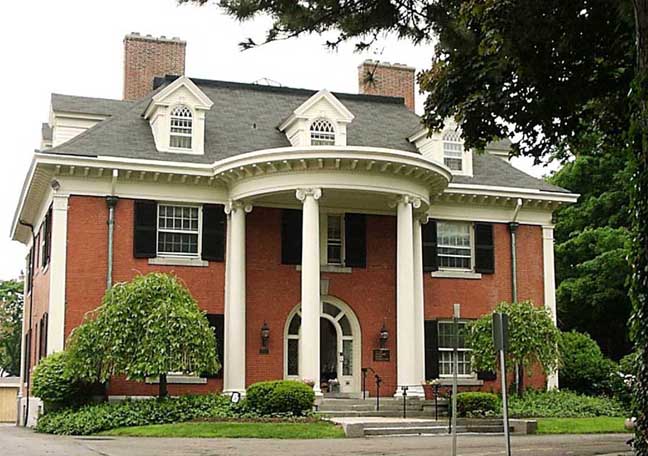
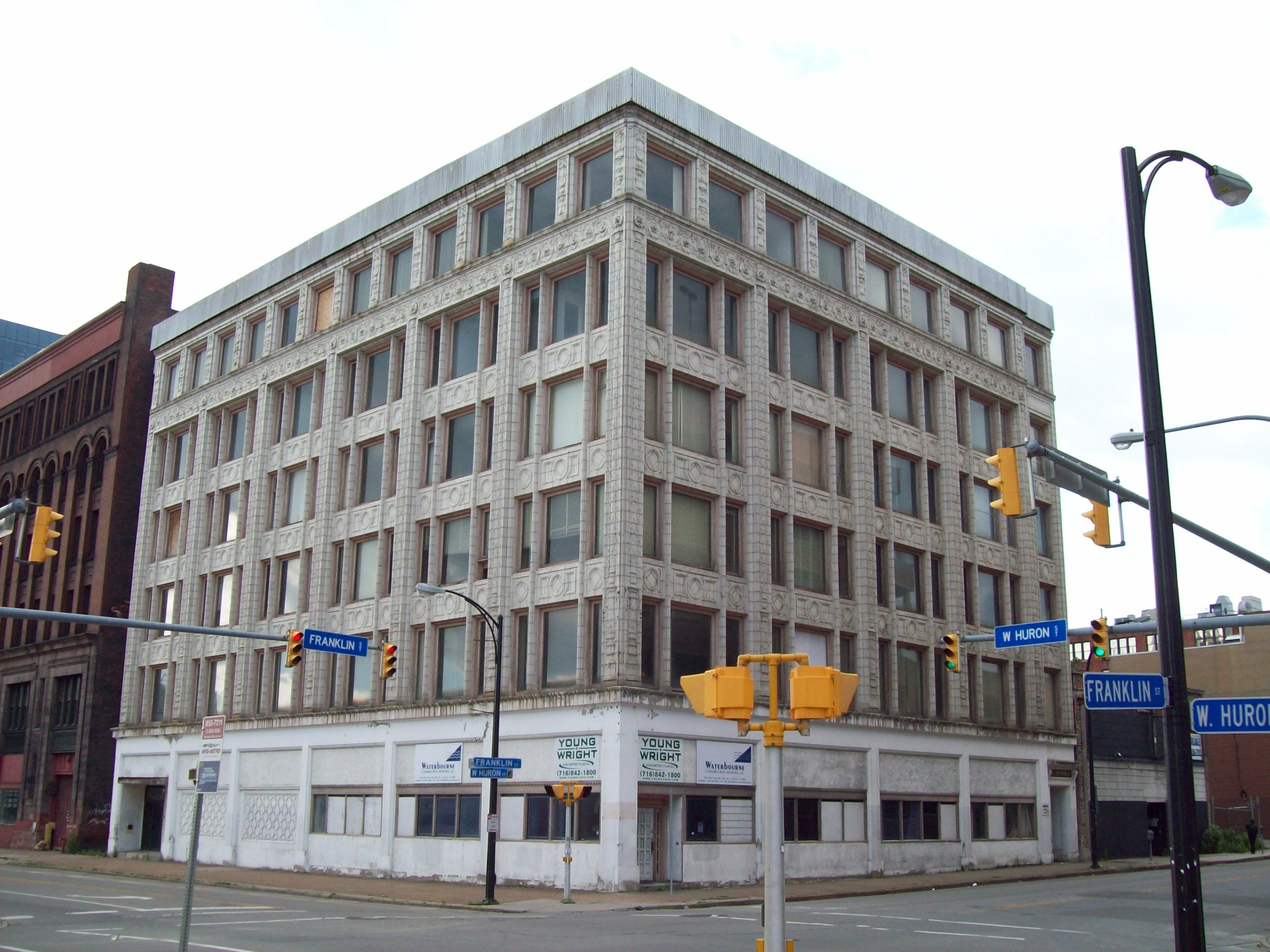
Harlow was a graduate of Trinity College in Hartford, Connecticut and studied law under Grover Cleveland.  Harlow became a lawyer and became an extensive real estate owner throughout the City.  Harlow and his wife Ethel were prominent in Buffalo during the early 1900s.  Ethel was originally Ethel Mann, the daughter of Matthew Mann, the doctor who operated on President William McKinley after he was shot on the Pan-Am grounds in 1901.  Harlow was influential in the development of the Curtiss Building at the corner of Franklin and Huron.  Ethel was considered a community leader as well, she worked with the Buffalo Council of Campfire Girls and conducted programs to develop leadership skills for women.  Ethel and Harlow lived at 100 Lincoln Parkway.

Curtiss Building
Franklin and Huron Streets

The Curtiss Building at Franklin and Huron Streets was designed by Harlow’s brother-in-law, Paul Mann, and was built in 1912.   The building is also known as the King & Eisele Building due to a jewelry firm which located in it during the 20s and 30s.  It was later known as the Hoelscher Building after the Hoelscher Building Corporation which was located there from the 1940s until the 1990s.  Mark Croce currently owns the building and had plans for a boutique hotel about 5 years ago.  However, the project appears to be at a standstill.

COMING SOON:   I became intrigued by the old maps when I saw the land where the Central Terminal now sits was once a park.  Coming later this week:  What was Polonia Park?

Sources:  “Curtiss Street Memorial to Trade Board Head, Developer” Courier Express Oct 22, 1939 sec. 6. p 10.

Read Full Post »

Woltz Avenue is a street running about three-quarters of a mile between Walden Avenue and Broadway in the Broadway-Fillmore neighborhood.   The street is named after a family that had three generations who all held public office in the City of Buffalo!

Woltz Avenue is technically named for Charles Woltz, who was on the Council at the time when the street was named.  The street was originally named Bowen Street.  The German residents of the neighborhood would confuse Bowen with Bone, so many of them called the street knoche, which is the German word for bone, leading to confusion.  So while Charles was president of the Council (1893-1895), a petition was drawn up to change the street name, however the petitioners failed to give suggestions for what to name it.  When the Council granted the petition, they opted to name the street after their President.

Charles was born in Alsace-Lorraine in 1853.  When the Germans acquired that territory in 1870, he came to America because of his aversion to German militarism.  Years later, when he returned to visit his brother, he was immediately thrown into jail for evading compulsory service in the German army.  His brother effected his release, however Charles never returned to his homeland again.

Charles was secretary of the Erie Land Company, which developed Woltz Avenue, Loepere and Mills Streets.  He was also an officer of the Genesee Land Company, which developed Montana, Colorado and Nevada Streets.  He was active in the Republican Party and was a delegate to the National Republican Convention which nominated William Howard Taft for the presidency.

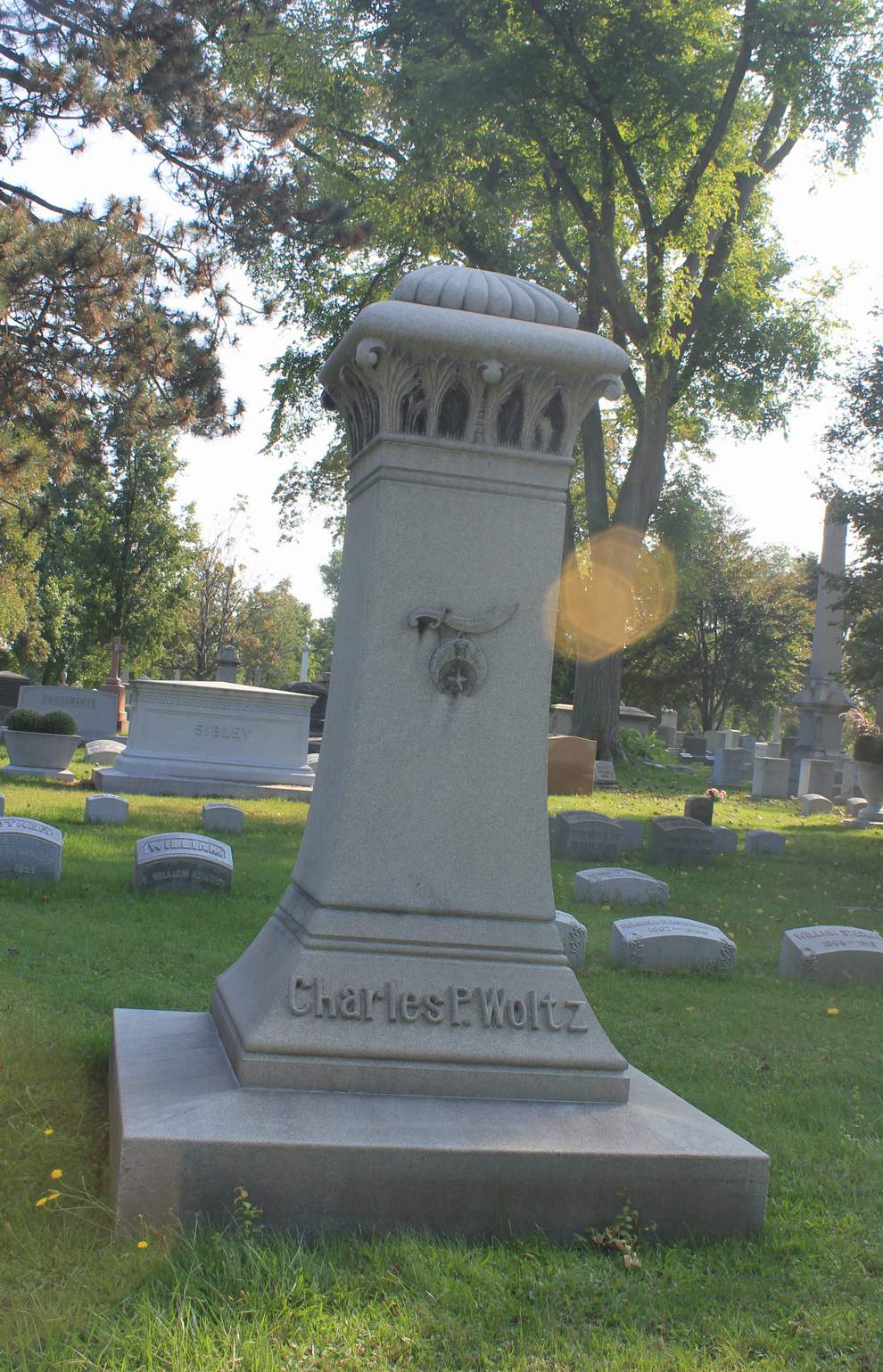
Charles wife, Eva, came from Germany in a sailing vessel that took forty days to cross the Atlantic.  Charles and Eva lived at 1125 Genesee Street, which is near the street that would bear the Woltz name.  In 1890, the Woltz home is listed in the Buffalo City Directory as “Woltz Saloon”.  Charles enjoyed fishing, and he would often take trips to Niagara-on-the-Lake for the day with his neighbors to go fishing.   Charles died in 1924 and is buried in Forest Lawn.

Charles and Eva had two sons, Charles J. and George.  Charles J. was born in 1878 and was a graduate of Buffalo Law School and continued the real estate business established by his father.  George was born in 1886.  In 1901, George began his career as an office boy, and worked his way up and became a Judge.  He served for 11 years as Assistant District Attorney, and then served more than 20 years on the bench.  He was affiliated with 32 clubs and organizations in Buffalo, including Bethlehem Evangelical Lutheran Church, Buffalo Consistory and Shrine, the Buffalo Athletic Club, the Elks, Oddfellows, Orioles, the Humboldt Club, Republic organizations and four German singing societies.  George lived at 755 Best Street.

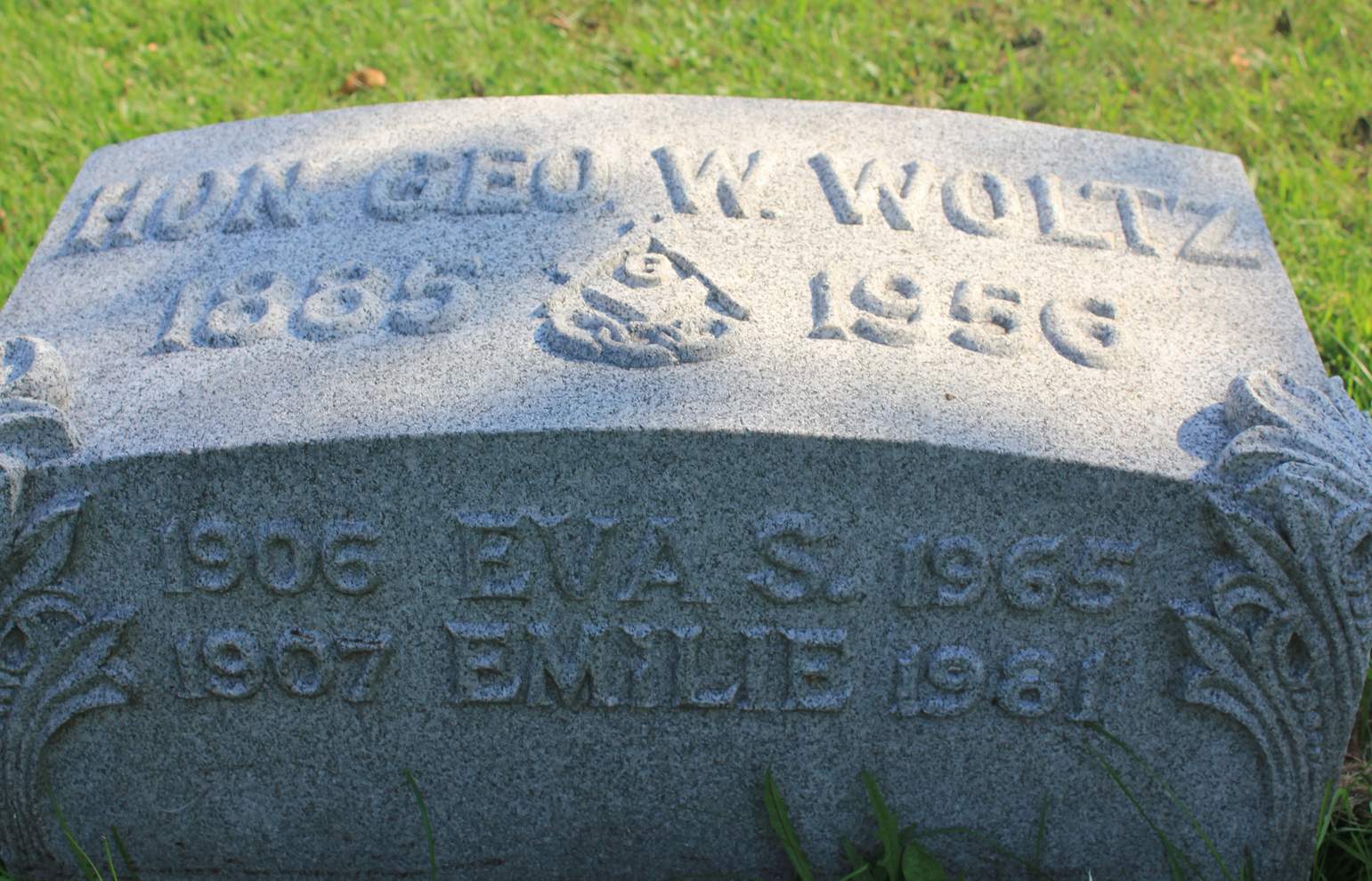
George’s daughter (Charles’ granddaughter), Eva Woltz, was born in 1906 and became an attorney and clerk of the City Court.  Eva passed away in 1965 and is buried in the family plot alongside her father George and her sister Emilie.

Source:  “Three Generations Memory” Courier Express July 23, 1939, sec 5 p 5.


Read Full Post »

Hi!  I just wanted to say that I have been overwhelmed the last few weeks with the feedback I’ve been receiving from people regarding my blog.  I guess the blog was posted on various facebook pages and I’ve had amazing readership numbers the last two weeks!   I really love doing the research and telling some of Buffalo’s stories.  Thank you all from the bottom of my heart.  I started this blog mainly as a way for me to tell some of my favorite stories.  My friends often get bored with me talking their ears off about my favorite Buffalonians, so I decided to start writing.  The feedback has been amazing, and has inspired me in so many ways.  One of the things I love about our city is that we all really seem to care about it.  So thanks to everyone who has shared my blog, retweeted my tweets about it, and told their friends about it.  I really do appreciate it!

In case you haven’t yet noticed, at the top of the page, I have added a few pages.  There’s a page called “What Is This All About” which discusses the basic premise behind the blog, an  “About Me” for you all to learn a little bit more about myself,  and finally a Street Index so that you could more easily search for entries on specific streets.  Remember, you can request any streets at any time!  If you’ve requested streets, I’ve added them to my queue and will be getting to them shortly.

Additionally, I added a link  for the RSS feed in case you’d like to subscribe that way, and there is also a place where you can subscribe by email.

I will start updating more regularly again very soon.  I’m moving on May 1st.  I’m very excited to be living in a historically important building, and to be a part of the resurgence of Downtown Buffalo.  Once I’m settled in, I figure that I will be able to do much more research, as I will be right next door to the library.

In the meantime, please let me know if there’s any streets you’re particularly interested in.  And here’s a little tidbit of information:  Today (April 20, 2012) is Buffalo’s 180th Birthday!   The City was incorporated in 1832, and the legislation passed the Assembly and the Senate in April of that year.  If you’re interested, you can read the first charter here.   Make sure you take a second this weekend to wish our fair city the happiest of birthdays.

Read Full Post »

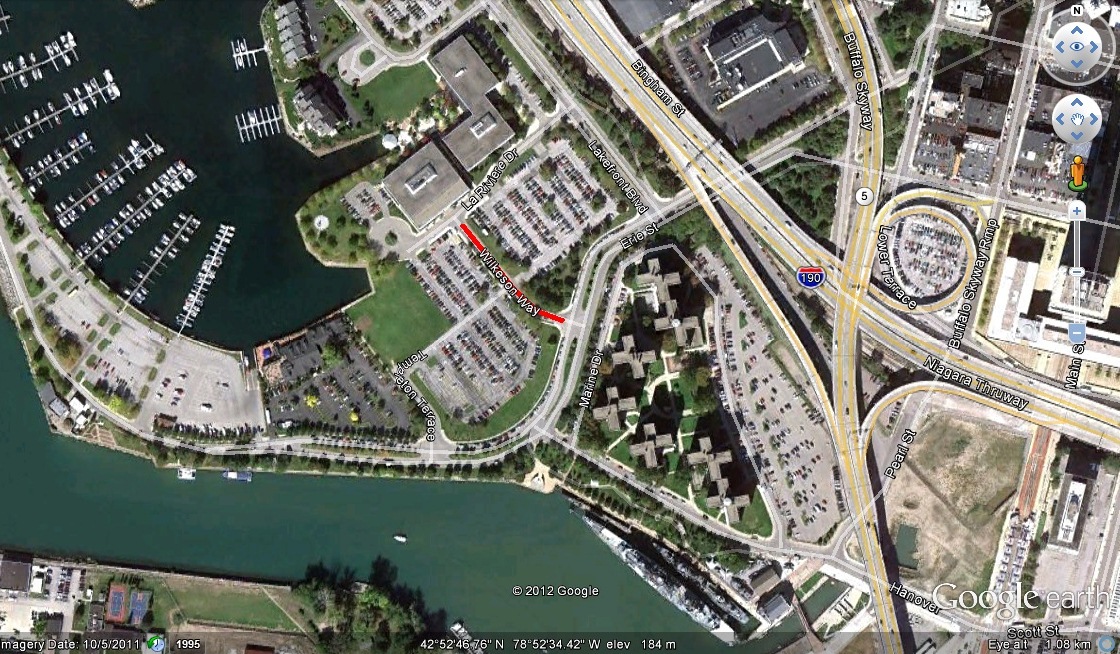
Wilkeson Way is a small street…ok, technically, it’s basically just the entry way into a parking lot down by the Erie Basin Marina.  It’s named after the man who was extremely important to the building of Buffalo in the early 1800s, so I’m including it.  Originally. Wilkeson Street was a little further north of the current Wilkeson Way, behind City Hall, in an area which changed due to urban renewal in the 1960s.

While the street is short, the man it was named for happens to be my absolute favorite Buffalonian, Samuel Wilkeson. (more…)

Read Full Post »

Kenefick Ave is a street in South Buffalo running between South Park Avenue and Abbott Road.  The street was named after Judge Daniel J. Kenefick.  Judge Kenefick is the author of the Buffalo City Charter, which was written in 1927.

Judge Kenefick was born in the Old First Ward in 1863.  He attended Buffalo City Schools, graduated from Central High School in 1881 and studied law in the Buffalo office of Congressman Richard Crowley.  He served as assistant district attorney and district attorney of Erie County and also was Justice of the New York State Supreme Court.  He served as director of the Buffalo Niagara Electric Company.  The Judge lived at 841 Delaware Avenue, at the corner of Barker Avenue.  841 Delaware Avenue is the current location of the Himalayan Institute, but I am not 100% sure that this is the same building which the Judge lived in.

Judge Kenefick grew up in the Old First Ward.  He married Maysie Germain of the Germain Family of Buffalo. He grew up alongside developer John F. Burke.  Mr. Burke grew up to become a developer and developed the part of South Buffalo where Kenefick Avenue is located.  Mr. Burke honored his boyhood friend by naming Kenefick Avenue after him.

Sources:

  1. Biography of Daniel Kenefick.  Our Country and It’s People:  A Descriptive Work on Erie County, New York.  Edited By:  Trumen C. White.  The Boston History Company, Published 1989.
  2. “Kenefick Avenue Among Few City Streets Honoring Living Citizen”.  Courier Express, October 9, 1938, sec 5 p 2.


Read Full Post »

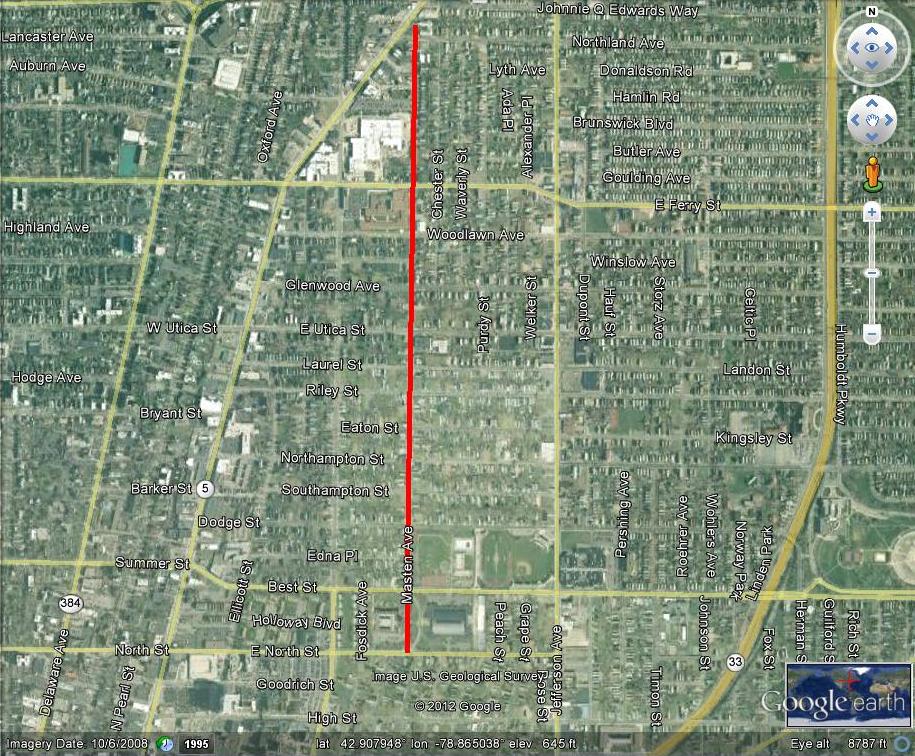
Masten Avenue runs north-south for about a mile on the East Side of Buffalo, between North and Ferry Streets.   The Masten Park neighborhood, Masten Avenue, Masten Park and the former Masten Park High School (currently City Honors), all get their name from former City of Buffalo Mayor Joseph Masten.

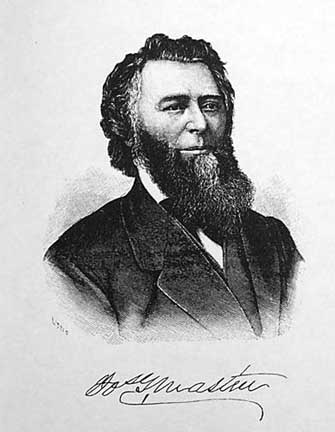
Joseph Griffiths Masten was born in 1809, in Red Hook, New York.  He came to Buffalo in 1836 after studying law.  He was elected Mayor in 1843.   While he was Mayor, he issued the law which says that owners/occupants of buildings and owners of vacant lots need to keep their sidewalks and gutters free of snow and dirt.  Blame him if you get a ticket for not shoveling your walk!

Buffalo was an exciting place to be while Masten was Mayor.  He was Mayor when Joseph Dart invented the grain elevator and expansion of the city resulted as the City began to become an important grain hub.  He was also Mayor during the founding of the University of Buffalo.  He and his wife, Christina, were the first owners of the Wilcox Mansion on Delaware Avenue.  At the time it was an army barracks and the Mastens converted it into a residence; today the mansion serves as the Theodore Roosevelt Inaugural Site.

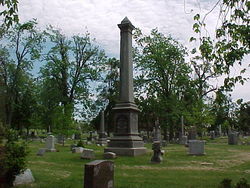
After his time as Mayor, Masten served as a judge.  It is said that he went on long walks around his neighborhood, always stopping to talk to neighbors and people he met along the way.   He died in 1871 and is buried in Forest Lawn.  His tombstone reads:  “An upright judge, an eminent lawyer, a faithful public servant, an esteemed citizen, a true gentleman”.

Source:  “Masten Avenue Honors Memory of 1843 Mayor”. Courier Express, Dec 4, 1938 sec 7 p 4

Read Full Post »

Dart Street is a 0.5 mile street running between Forest Avenue and the Scajaquada (198) between Grant and Niagara Streets.  The short street is located in an industrial area that used to be used for manufacturing purposes, which is fitting because the street is named after the man who helped Buffalo to become an industrial powerhouse.

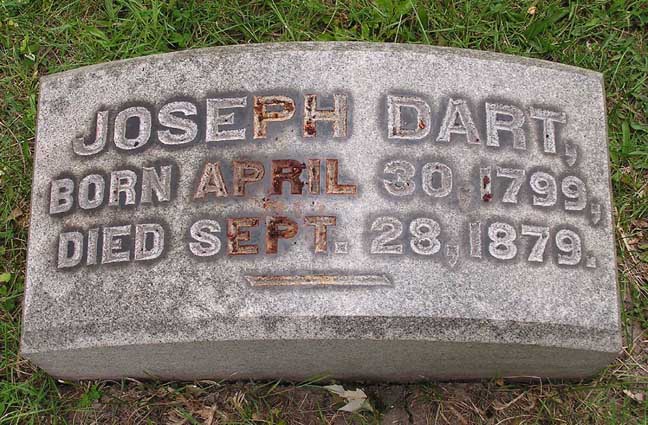
Joseph Dart invented the grain elevator.  Mr. Dart was born in Connecticut in 1799,  He came to Buffalo in 1821, when the Village had a population of approximately 1800.  He became a partner in the hat, cap and fur business with Joseph Stocking.  He learned the languages of the Native Americans in order to expand his business.  His store was located on the southeast corner of Main and Swan Streets.  During his downtime at his shop when the fur trade was slow, he toyed around with the idea to move grain from a ship to the land by a machine into an elevator.

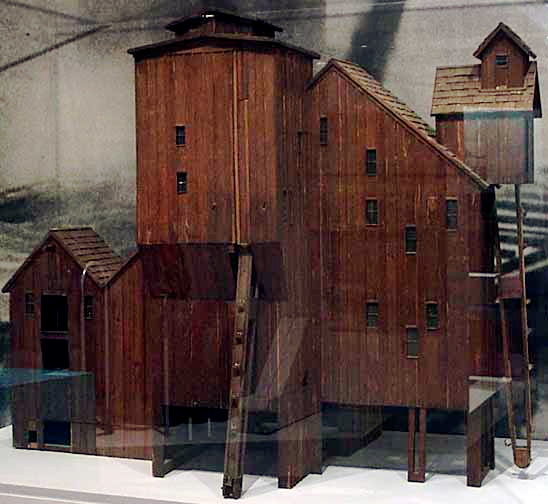
Model of the Dart Grain Elevator

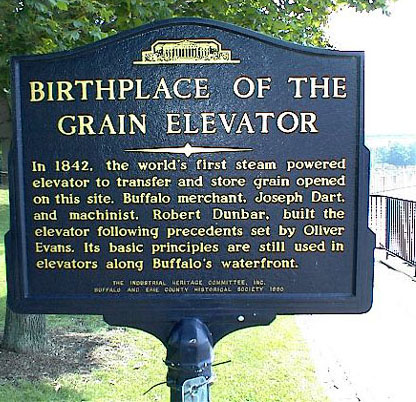
In 1841, he completed his blueprints and the first grain elevator was built on the banks of the Buffalo River.   Once his elevator was successful, elevators popped up all along the shores of the Buffalo Harbor and Buffalo River, giving rise to the grain industry which helped build Buffalo as an industrial powerhouse in the early 1900’s.  A historic marker is located on the spot where the elevator was located, close to where the entrance to the Erie Basin Marina is currently.

Mr. Dart refused to patent his invention, choosing instead to let it be a gift to all.  Most modern elevators still use Dart’s technology today.  However, the modern ships are a bit more automated, removing the need for grain scoopers.  The last scooper unloaded a ship in Buffalo in 2003.    You can watch a video of the last scooping in Buffalo here:

Mr Dart was also a prominent Buffalo citizen, involved in the Buffalo Water Works, a founder oft he Buffalo Female Academy (currently Buffalo Seminary), a member of the Buffalo Historical Society and active in the First Presbyterian Church.   The Dart Family, which included Joseph, his wife and seven children,  lived in a Mansion on the northeast corner of Niagara and Georgia Streets.  The Darts owned the first piano in Buffalo.  Joseph Dart died in 1879 at the age of 80.

I took this photo during the demolition of the GLF elevators, about two weeks before the one in the center collapsed this fall.

As a personal aside, the grain elevators are one of my favorite things in Buffalo.  They’re a huge part of our history, and these concrete mega structures are amazing.  I’ve been on several tours inside the elevators, and have a whole new appreciation for them.  A fact that many people don’t realize is that several of the elevators are still in use today, however, because they don’t show a lot of activity, they look vacant to most people.  Many of the vacant ones can be reused.  We currently allow salt and sand to sit on our waterfront, both of which could be stored in an elevator, protected from the elements.  To learn more about Joseph Dart and the grain elevators, I highly recommend the book Elevator Alley by Michael Cook, and the Buffalo Industrial Heritage Committee website.  There’s a wealth of information and lots of pictures of early Buffalo on their site.  Additionally, I recommend the walking tour given led Jerry Malloy, he is highly knowledgeable, and the tour is a must-do for people interested in learning about this important and fascinating part of our history.

Source:  “Dart Street Named in Inventor’s Honor” Courier Express Dec. 11, 1938 sec 5 p2

Read Full Post »

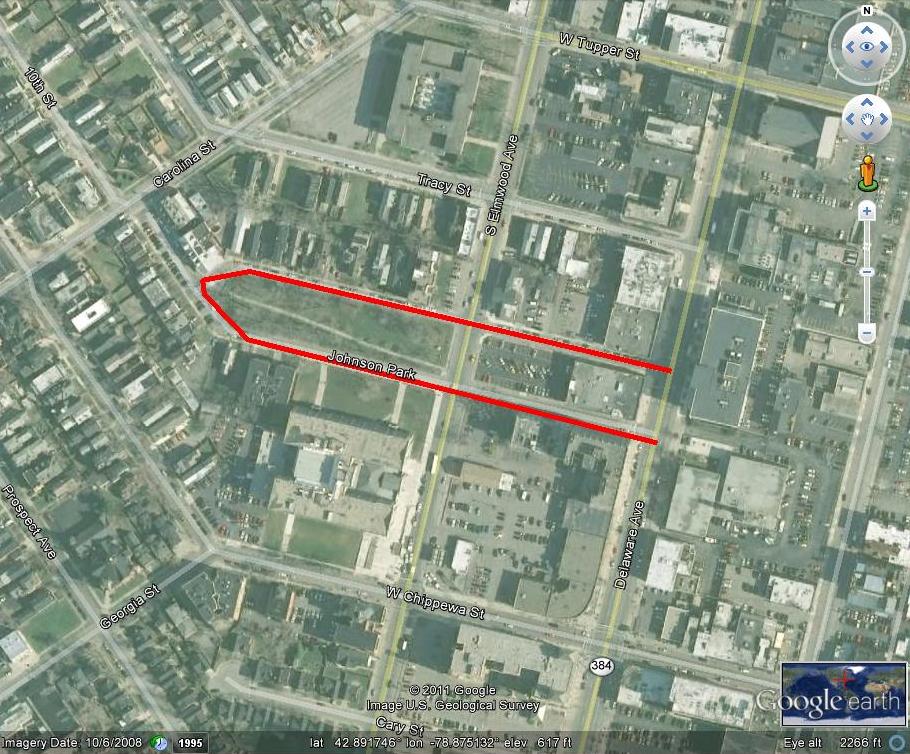
Johnson Park consists of two parallel streets that create a court between Delaware and a park that shares its name with the road.  The “park” in Johnson Park is named after the estate of Ebenezer Johnson, the City of Buffalo’s first mayor!

(more…)

Read Full Post »

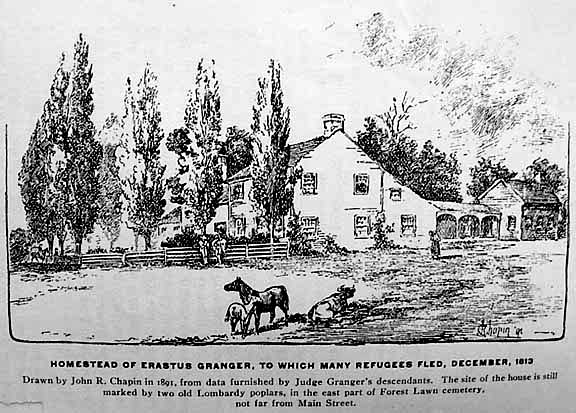
Granger Place is a short road in the Elmwood Village, running less than 1/4th of a mile, between Elmwood Avenue and Lincoln Parkway between Forest Avenue and Bird Avenue.  The street was originally known as Elmhurst.   The street is named for Erastus Granger, one of Buffalo’s earliest residents and the Village’s first postmaster.

Erastus Granger was a businessman raised in Connecticut.  He was sent by a group of New England businessmen to look after their investments in Virginia and Kentucky.  While in the south, he met and befriended Thomas Jefferson.  He worked on Jefferson’s campaign for President, and when Jefferson took office, he sent Erastus Granger to Buffalo and appointed him postmaster of the Village in 1803.  When Mr. Granger arrived in Buffalo Creek (which is what Buffalo was called at the time), there were only 16 huts, three blacksmith shops, a taverns, a drugstore and a jail.   He sent up his post office in a desk at Crow’s Tavern on Exchange Street.  You can visit Mr. Granger’s desk and see a replica of Crow’s Tavern in the Pioneer Gallery at the Buffalo and Erie County Historical Society!

Mr. Granger built a house near where the Main Street entrance of Forest Lawn cemetary is today.  His farm extended north to West Oakwood and west to Elmwood Avenue.   Granger Place is located on a small portion of his 800-acre estate, which he called Flint Hill, due to the rock in the soil.  His estate included all of the lands now containing Forest Lawn, Delaware Park, Buffalo State College and the Richardson Complex!    He built the Buffalo Harbor lighthouse in 1817, which was replaced in 1830s by the current Buffalo lighthouse.

During the War of 1812, Mr. Granger worked with Red Jacket and other indian leaders to get them to sign a treaty of neutrality.  The Native Americans kept the treaty until the Indians from Canada invaded their territory, at which time they joined the Americans.    Mr. Granger opened his property as a safe haven for refugees of Buffalo after the British burned the Village.

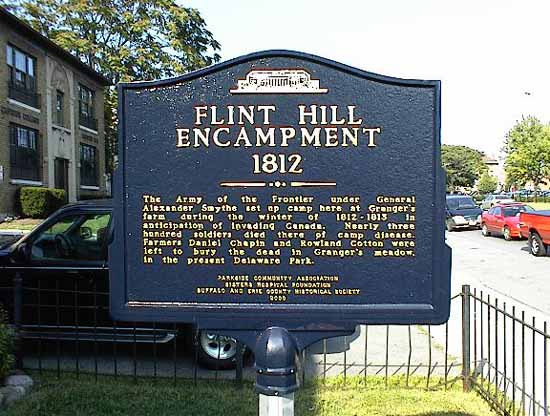
During the Winter of 1812-1813, The Army of the Frontier under General Alexander Smythe set up camp at Flint Hill in anticipation of invading Canada.  Nearly three hundred soldiers died there.  The dead were buried in Granger’s meadow, in the present Delaware Park.    A plaque at Main Street and Humboldt Parkway, and a stone in the Delaware Park meadow memorialize the Flint Hill Encampment and the 300 soldiers buried there.

Erastus Granger’s grave is located on land that he once owned in Forest Lawn cemetary.   Red Jacket delivered the Eulogy at his funeral.

Sources:

“Granger Place Honors Memory of First Buffalo Postmaster” Courier Express Sept 18, 1938, sec 6 p 10

Read Full Post »

« Newer Posts - Older Posts »

Field Notes

Live from Buffalo, NY

Grants.gov Community Blog

Connecting the grant community to #LearnGrants

Dienna Howard

I create, therefore I am.

Hidden Waters blog

Companion blog for the book "Hidden Waters of NYC"

Hoping for a Tail Wind

Because I definitely brought way too much gear.

priorhouse blog

Photos, art, and a little bit of LIT.

Sheepie Niagara

Bleating the Beat Since 2015