Feeds:
Posts
Comments

Posts Tagged ‘New York’

Today, we’re continuing our discussion about the Butlers of Buffalo.  Last post, we discussed Butler Street and Butler Place (and the Fitch Institute/Fitch Creche of Buffalo).  Today, we will discuss the third of the Butlers, Butler Avenue.  Butler Avenue is a street in the Hamlin Park neighborhood of Buffalo, running between Lonsdale Road and Humboldt Parkway.  The street is named for Edward H. Butler, the Founder and Publisher of The Buffalo News.

Screenshot (83)

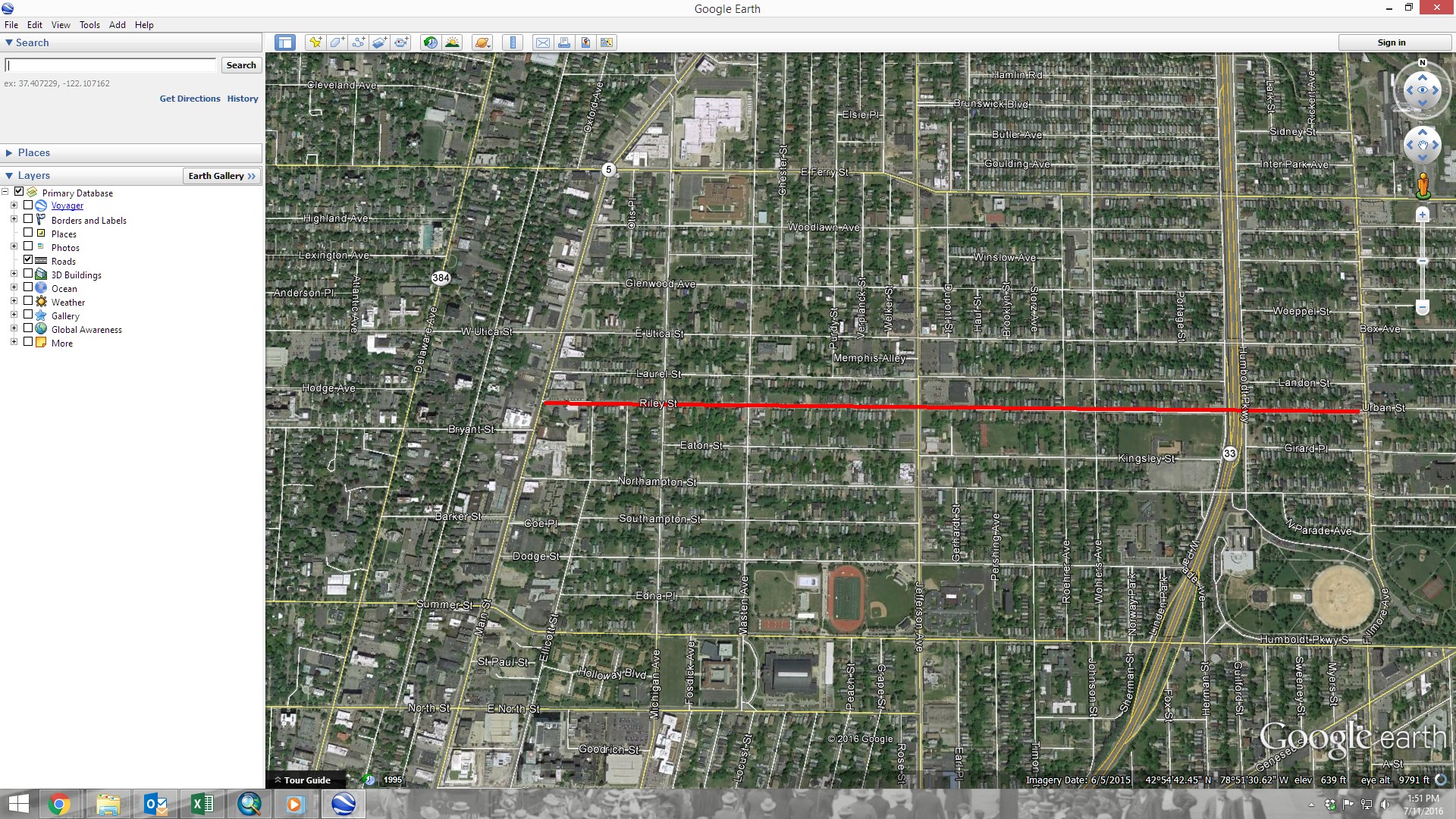
Butler Avenue is shown in red on the map.

Butler Avenue was laid out in 1915 between Lonsdale and Wohlers Avenue.  The street was developed by the International Home Building Company.  International Home Building Co’s offices were on East Ferry at the corner of Wohlers.  Demand for houses on the street was so high that they decided to open it to Humboldt Parkway after just a few months.  Hamlin Park’s development was centrally located and within easy riding distance of Buffalo’s downtown.  A 1915 article states, “the development that has taken place (on Butler Ave) in the last year or two shows what it means when building operations start in a large city.”  

Buffalo’s first newspaper was the Buffalo Gazette, first published in 1811.  It was published “occasionally” and later became a weekly newspaper.  The first daily newspaper in Buffalo was the Western Star, which began publishing published daily in 1834.  Through a series of purchases and mergers over the years, the Western Star newspaper eventually evolved into the Buffalo Courier-Express in 1926.

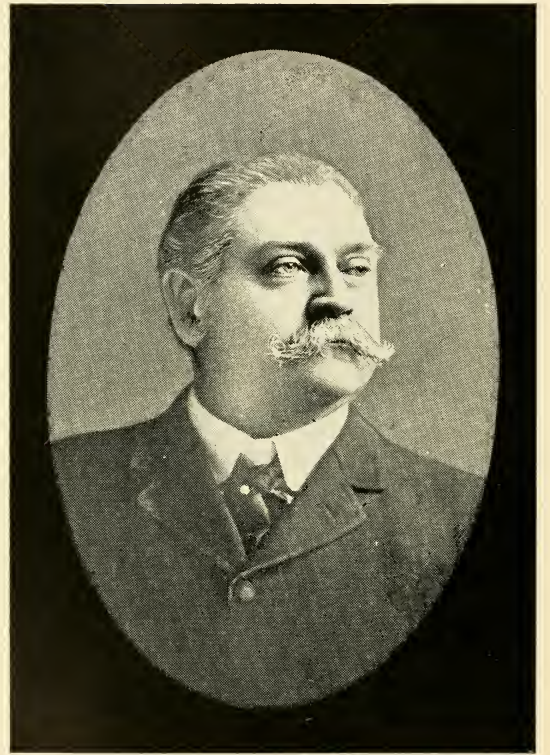
Edward H. Butler, Senior
Screenshot (81)

Edward H Butler, Sr. Source: 20th Century Buffalo

Edward Hubert Butler was born in 1850 in LeRoy in Genesee County, New York, to Irish immigrants Dennis and Lucy Butler.  He attended public schools.  The first newspaper he worked for was the LeRoy Gazette.  He later became connected with the Scranton Times as City Editor and the Scranton Free Press as a Financial Interest Reporter.  

In 1873, just 23 years old, Mr. Butler came to Buffalo to establish The Sunday News.  This venture was regarded by many as reckless, but very quickly, Mr. Butler was able to prove that his judgment was sound.  Other Sunday newspapers had failed to take hold, but The Sunday News was successful.  In 1879, Mr. Butler established the Bradford Sunday News, published for four years before selling it to devote more time to his Buffalo newspapers. The Sunday News was published out of 200 Main Street in Downtown Buffalo.  

Founding of the Buffalo Evening News
buffalo news second edition

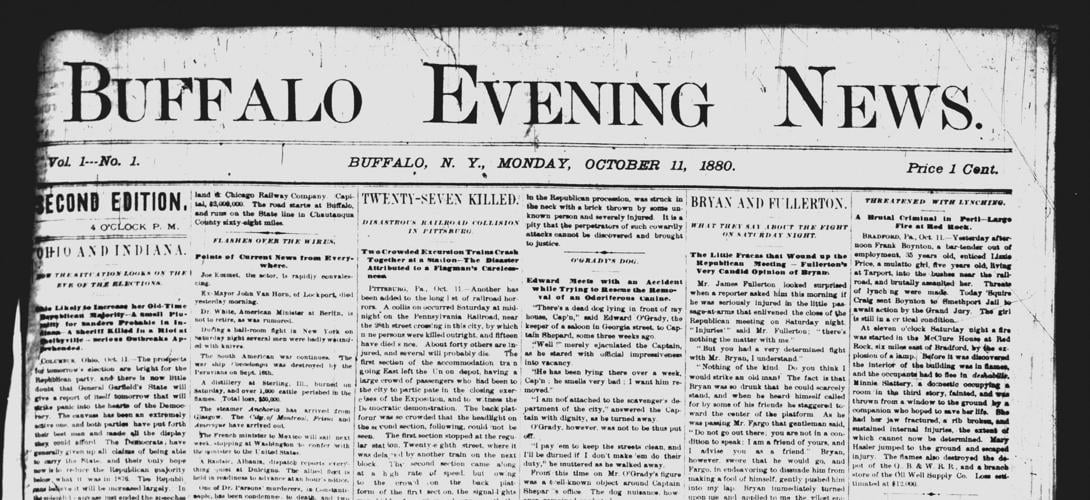
First Issue of the Buffalo Evening News from October 11, 1880. Source: The Buffalo News.

The first copy of the Buffalo Evening News was published by Mr. Butler on October 11, 1880.  You may notice in the picture that the first issue was actually the Section Edition.  The First Edition actually never made it to print.  It was supposed to be off the presses at 2pm.  Due to an elevator incident, the First Edition wound up on the floor, becoming “a tangled mess of handset type.”  They reset the type, and the Second Edition rattled off the presses at 4pm, starting The Buffalo Evening News’ storied history.

With the expansion of The Evening News, The News moved to temporary quarters at 214 Main Street.  The Evening News started as a four-page newspaper that cost 1 cent (about 30 cents today), less than the other daily newspapers of the time, which were 5 cents ($1.54 today).  The first-day circulation was 7,000 newspapers.  By 1882, just two years later, it had risen to 18,000 daily. The News was distributed by Buffalo’s system of horse-drawn streetcars.  The papers were loaded aboard them.  The News had a single horse-drawn, two-wheel cart for areas not reachable by streetcar.  This was the only circulation department for the first several years.  Eventually, a fleet of horse-drawn carriages replaced the streetcars for distribution.  Some of those carriages were used again during the 1940s during WWII gas rationing. 

buffalo news building

Buffalo News Building on Main Street around 1908. Source: A History of the City of Buffalo, Its Men and Institutions.

In 1881, The News moved to 218 Main Street, a 20-foot-wide, four-story building.  The business office (known as the counting room) was on the first floor, and the newsroom was on the second floor.  By 1885, the Buffalo Evening News ran five editions daily, which would continue for a century.  In 1896, the original 218 Main Street and the adjacent 216 Main Street were demolished for a new, larger building, which was used until 1973.  The News building at 216-218 Main Street was described as “one of the finest publishing houses in the State” when it opened in 1898.  

From the start, The Buffalo News differed from other newspapers in Buffalo and in cities other than New York City at the time.  The News sent reporters out on the streets to bring their reports to life.  It also offered something for everyone – news reports, market news, sports, prose and poetry, and advertisements.  One of Mr. Butler’s adages was to “print nothing in The News a child may not read”, to keep The News clean and help it have appeal with everyone.  It was designed to be “the People’s Newspaper” and to hold the public good above all else. 

In 1885, The Buffalo News bought the Buffalo Telegraph.  The Telegraph had been founded on October 30, 1880, just a few weeks after the Buffalo Evening News.  The Telegraph had been run by James and George Scripps and John Sweeney.  It had tried to compete with The News, but not been a financial success, so Mr. Butler took the opportunity and removed his competition.  
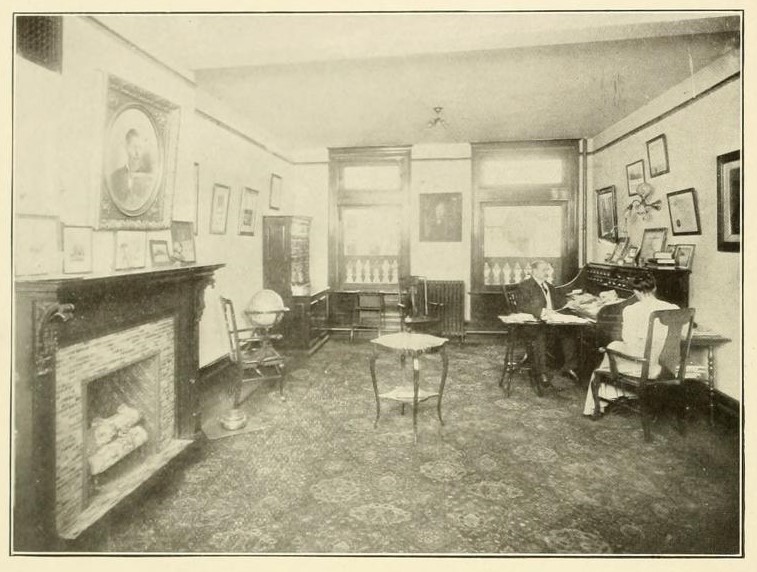
mr butlers private office history of buffalo its men and insitutions

Mr Butler’s Private Office at The Buffalo News, circa 1908. Source: A History of the City of Buffalo, its Men and Institutions

Under Mr. Butler’s ownership, The Buffalo News was very successful. It grew from a four-page daily newspaper into one of the most important newspapers in the country in its first 40 years.   By 1908, The Buffalo News had the largest circulation of any daily paper between New York and Chicago.  It was recognized as one of the best newspapers in the country outside of the two or three largest cities.  It was said that “his success as a journalist is due to his business capacity, his intellectual force and his habit of being in touch with people.”  He kept in touch with every department and paid attention to the operations of his paper.  When he was working on growing the newspapers’ circulation, there were times he was known to ride the train with the newspapers to ensure they made the connection to transfer for delivery of newspapers outside of Buffalo proper, personally ensuring that The News would get to people.  

The Butler Family

Edward Butler married Mary E. Barber of West Pisston in 1871.  They had four children, but only two survived – Ada Deen Butler, born May 31, 1879, and Edward H. Butler Jr, born June 19, 1883.  The other two children were likely named Clara and Ambrose.   [Note:  It was difficult to find the names of the children who died young, as they do not show up in any records I could find.  Special thanks to the staff at Forty Fort Cemetery in Pennsylvania, who took a peak into the Butler Mausoleum and found the crypts for Clara and Ambrose.  There are no dates on their crypts, but many sources mentioned that Mary Butler was buried with her babies, so I will assume that Clara and Ambrose are the two children who died.  Since there are no dates, there’s a possibility they were stillborn or died shortly after birth.]  The Butler family attended Westminster Presbyterian Church.  

In 1875, the Butlers lived at 109 Carolina Street (no longer extant).  Along with Edward and his wife Mary, his brother Ambrose Butler was also living with them while he was working as a clerk in the Canal office.  They also lived with a Domestic Servant – 19-year-old Mary Gorman, and a Housekeeper –  65-year-old Caroline Strong.  

In 1880, the Butlers lived at 377 Prospect Street (still standing).  The house had been the home of Seth Clark before the Butlers.  Along with Edward, Mary and daughter ADA, Edward’s brother Ambrose also lived in the home.  They lived with 20-year-old hosler (keeper of horses) John Collins, and 19-year-old servant Mary Schneck.  

429_Linwood

Image of 429 Linwood Ave as featured in Buffalo News, May 1984.

From 1890 to 1897, the Butlers lived at 429 Linwood Avenue (still standing).  This house is often called the “Lock-Butler House, as it was constructed by William Lock and then was home to the Butlers.  The house is an example of the Romanesque Style in Buffalo.  Mrs. Mary Butler died in August 1893 at the age of just 38 after an illness of three months.  She was buried in Forty Fort Cemetery in Forty Fort, Pennsylvania, in a plot near her two children who had passed away, her father, and her brother.    

In 1905, Mr. Butler lived at 522 Delaware Avenue (no longer extant).   He lived with his son Edward, daughter Ada and niece, 28-year-old Josephine Barber, a niece of the late Mrs. Mary Butler, who served as homemaker for the household.  They had four servants – 38-year-old Catherine Clark, 32-year-old Anna Peterson, 32-year-old Anna Sticht, and 29-year-old Mary Gerhardt.  Rounding out the household was 33-year-old Coachman August Gernoudt and his 32-year-old wife Nellie.  
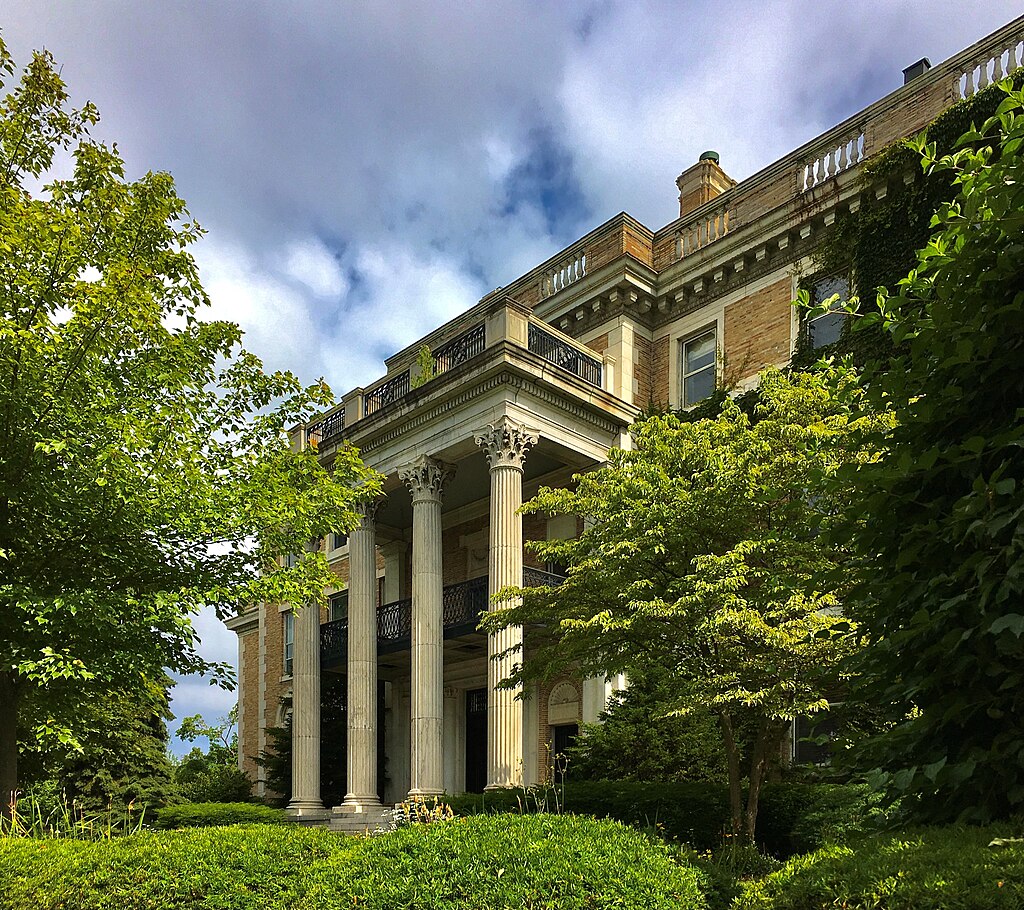
672_Delaware_Ave_-_1

Butler Mansion at 672 Delaware Avenue

In 1909, Edward Butler, Jr. married Kate Maddox Robinson of Atlanta, Georgia.  Also that year, the Butler family (Edward Sr., along with Edward Jr, his new bride Kate, and sister Ada) moved into the house at 672 Delaware Avenue, often called the Butler Mansion (still standing today).  The mansion was originally built for banker and leather manufacturer George Williams.  It is a three-story, Georgian Revival-style mansion with 40 rooms.  It was designed by Mead McKim and White architects, and the two-acre property consists of a 16,000-square-foot mansion and an 8,000-square-foot carriage house.  

In 1910, Mr. Butler lived with his son Edward Jr, daughter-in-law Kate, daughter Ada, and 8 servants:  butler Herman Werne, and servants Pauline Benner,  Caroline Killins, Antoinette Burnod, Emily Schnicklart, Gertrude Beck, Agnes Gambert, and Agnes Kelly.  

Mr. Butler’s Other Involvements

Mr. Butler was very involved with enacting of grade crossing law that created the Grade Crossing Commission and served as a member of the Commission from its founding for its first 20 years.  The Commission erected numerous grade crossing structures within the City of Buffalo city limits.  

Mr. Butler was also involved in constructing the McKinley Monument in Niagara Square.  The Buffalo News was able to help secure appropriations that made the monument possible.  Mr. Butler was President of the Commission that erected the monument.  Mr. Butler worked closely on the memorial to President McKinley with George E Matthews of the Buffalo Express.   

Mr. Butler served as a member of the Board of Trustees for the State Normal School for many years and was President of the Board for the last three years of his life.  He was President of the Buffalo Daily Newspaper Publishers Association, Vice-President of the United Press, Director of the Associated Press, and President of the State Editorial Association.   He was a member of the Buffalo, Ellicott, Park and Country Clubs in Buffalo; the Lotus and Larchmont Clubs in  New York’s Clover Club in Philadelphia and the Capital City Club in Atlanta.  

According to the book 20th Century Buffalo, in 1902, Buffalo had the following newspapers:  

  • Morning Newspapers:  Buffalo Morning Express (established 1846), Buffalo Courier (established 1842), and Buffalo Review (established 1883).  
  • Evening Papers:  Buffalo Commercial (established 1835), Buffalo Evening News (established 1880), Buffalo Evening Times (established 1883), Buffalo Enquirer (established 1891), Demokkrat (German – established 1837), Freie Presse (German – established 1855), and Polak W’Amervca (Polish – established 1887).
  • Sunday Papers:  The Illustrated Buffalo Express (established 1883), Buffalo Sunday News (established 1873), Buffalo Courier (established 1885), and the Buffalo Sunday Times (established 1879).

The circulation of the Buffalo Evening News at the time was 75,000 daily.  This was much more than the daily circulation of its closest competitors – the Buffalo Courier at 55,000 daily and the Buffalo Evening Times, The Buffalo Enquirer and the Buffalo Morning Express at 30,000 daily.  By 1927, the Buffalo New daily circulation was reportedly at 150,000.  By the mid-70s, the circulation was reportedly 280,000, with 300,000 on weekends.  

The Death of Edward H. Butler
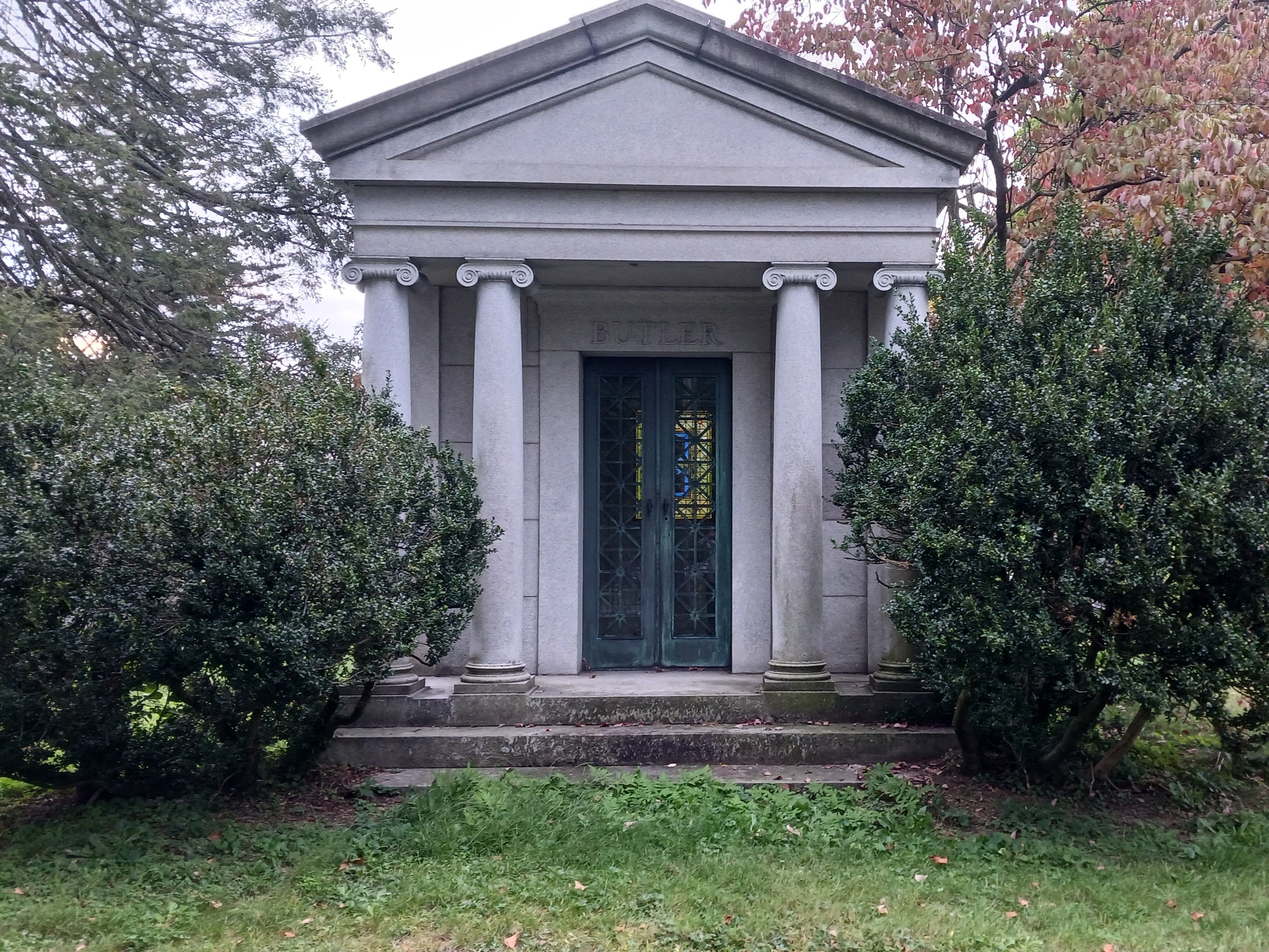
IMG_20240923_075453

Butler Mausoleum in Forty Fort Cemetery in PA

In 1914, Edward H. Butler died at his residence near the corner of North and Delaware.  He had been in poor health for about ten years, mainly due to diabetes.  He had recently had an operation for mastoiditis, an infection of the ear.  He did not recover well from the surgery.  His funeral was held at Westminster Presbyterian Church on Delaware Ave in Buffalo.  He was buried in a mausoleum in Forty Fort Cemetery in Forty Fort, Pennsylvania, next to his wife and the two babies who had passed away. 

IMG_20240923_091356

Interior of Butler Mausoleum showing Mr. Butler’s crypt.

Mr. Butler’s will gave to many charities.  It was believed that Mr. Butler left personal property valuing $25,000(about $787,000 in today’s dollars) and real estate valued at $25,000(about $787,000) or more.  He gave $60,000 (about $1.9 Million) dispersed amongst 40 charities/institutions.  [Note:  For a deep dive into Mr. Butler’s Bequests, we will discuss his will in my next post, going into each organization that received the money, the story of the charities and if they exist anymore.  Stay tuned for that!]

Outside of Buffalo, he donated to the cemetery where he and his wife are buried and to the cemetery in LeRoy where his mother and other relatives were buried.  He distributed approximately $60,000 (another $1.9 Million) to his personal friends, relatives and employees.  Every employee of The Buffalo News who had worked there for at least three years was given $100(about $3,147 today).  

Edward H. Butler, Jr.

edwardbutlerjr

Sketch of Edward Butler Jr. Source: The Fourth Estate.

Following Mr. Butler’s death, son Edward H. Butler, Jr. took over as Editor of The Buffalo News. Edward Jr also inherited the house at Delaware and North Streets, all of the oil paintings, plates, china, rugs and furnishings.    Daughter Ada inherited her house at Delaware and Highland Avenue, which had recently been completed, along with $50,000 to equalize her brother’s more significant inheritance of the larger family home.  

Edward Jr also inherited six-tenths of Mr. Butler’s ownership of the buildings used and occupied by the Buffalo Evening News and the Buffalo Sunday Morning News – 216 and 218 Main Street, the press and composition rooms on Pearl Street south of Seneca Street, the building at West Seneca Street and Lower Terrace that was used as a garage for the news vehicles, and all of the real estate used for the publication of the two newspapers.  The remaining four-tenths of The Buffalo News and Sunday Morning News went to Ada.  

Edward Jr had been well-trained to take his father’s place at The News.  He joined The News after graduating from Yale in 1907.  He took business courses at Bryant & Stratton Business Institute.  He also worked various jobs in all of the newspaper’s departments.  He knew all the people and how they made the newspaper work; the Butlers felt that learning and understanding every part of the business was important.  

In 1914, Buffalo readers had a choice of six English-language daily newspapers.  In the morning – The Courier and the Express.  In the afternoon, The Buffalo News, the Buffalo Times, the Buffalo Enquirer, and the Buffalo Commercial.  

One of Edward Jr.’s first tasks when he took over the newspapers was to close The Sunday News.  The Evening News was doing well, but The Sunday News was operating at a deficit.  Edward Sr had refused to kill The Sunday News as it was his first publishing venture in Buffalo.  Edward Jr quietly killed The Sunday News at the start of 1915.  The Buffalo News Sunday edition began again 63 years later when things shifted following the Butler family’s sale of the newspaper.

Edward Jr and Kate continued to live at 672 Delaware Avenue.  They had two children – first a son, Edward H Butler III, was born in August 1915. Sadly, Edward III passed away in June 1919, just a few months before his fourth birthday, after several days of illness.  According to his obituary, he had been in poor health for the previous year, suffering from “a peculiar glandular malady that had puzzled physicians.”   Daughter Kate Robinson Butler was born in November 1921.  

In the 1920s, Edward Jr became a pioneer in presenting news via radio.  The Radio Commission authorized WBEN to go on the air on September 8, 1930.  The WBEN stands for Buffalo Evening News.  WBEN broadcast from a studio on the 18th floor of the Hotel Statler.  WBEN started broadcasting with all live, local programs, no national programs and no prerecorded music. WBEN was a part of National Broadcasting Co.’s Red Network, which became the NBC Network.  In 1936, Edward Jr bought WEBR, part of the Blue Network that would later become ABC.  WEBR developed a slogan saying that their letters stood for We Extend Buffalo’s Regards. Edward Jr sold WEBR in 1942 to the Courier-Express.  

In 1928, Mrs. Kate Butler gifted the University of Buffalo with the tower clock in Hayes Hall and the four bells accompanying it.  Mrs. Butler was a member of the Council of the University of Buffalo.  The bells and the clock were restored between 2011 and 2015 during the renovations of Hayes Hall and still operate today.  

By the 1930s, the last competing daily newspapers, Buffalo Commercial Advertiser and Buffalo Times ceased publication.  This left Buffalo with just two newspapers – The Buffalo News and the Buffalo Courier Express.  

After WWII, Edward Jr brought The News to television in Buffalo.  WBEN-TV went on the air on May 14, 1948 and for the first five years was Western New York’s only television station.  In 1954, WBEN-TV became a CBS station.  In 1977, WBEN-TV became WIVB-TV, Channel 4 in Buffalo still to this day.      

Edward Jr was involved in many of the same causes as his father.  He was the Chairman of the Board of Buffalo State Teachers College (Now Buffalo State University).  He was involved with the efforts to move the school from his Normal Ave location to its current location on Elmwood Avenue.  He also served as a Trustee of Nichols School.  Edward Jr was a Director of Buffalo Trust Company and American Savings Bank.  He was a member of the Buffalo, Saturn, University, Park, Buffalo Athletic, and Buffalo Country Clubs.

185245182_1510853833

Butler Mausoleum in Forest Lawn Cemetery.

Edward Jr died in February 1956. He is buried in the Butler Mausoleum in Forest Lawn Cemetery.   Also buried there are his son, Edward H Butler III, his wife, Mrs. Kate Butler, daughter Kate Butler Wickham and two of Kate’s husbands – Bruce Wallis and Robert Wickham.  

Ada Butler and her Family

Edward Jr.’s sister, Ada Butler, married Roscoe Mitchell in April 1910.  Mr. Butler, Senior built the house at 1114 Delaware Avenue as a wedding gift for Ada.  The house is a three-story brick mansion designed by Buffalo architect Ulysses G Orr.  

Roscoe Mitchell was a well-known Buffalo attorney.  Ada and Roscoe had a daughter, Marjorie, born in 1911, and a son, Edward Butler Mitchell, born in 1912.  Sadly, both Roscoe Mitchell and Edward Butler Mitchell died in June and July 1932 after a long period of illness.  Roscoe was 49, and Edward was just 19. 
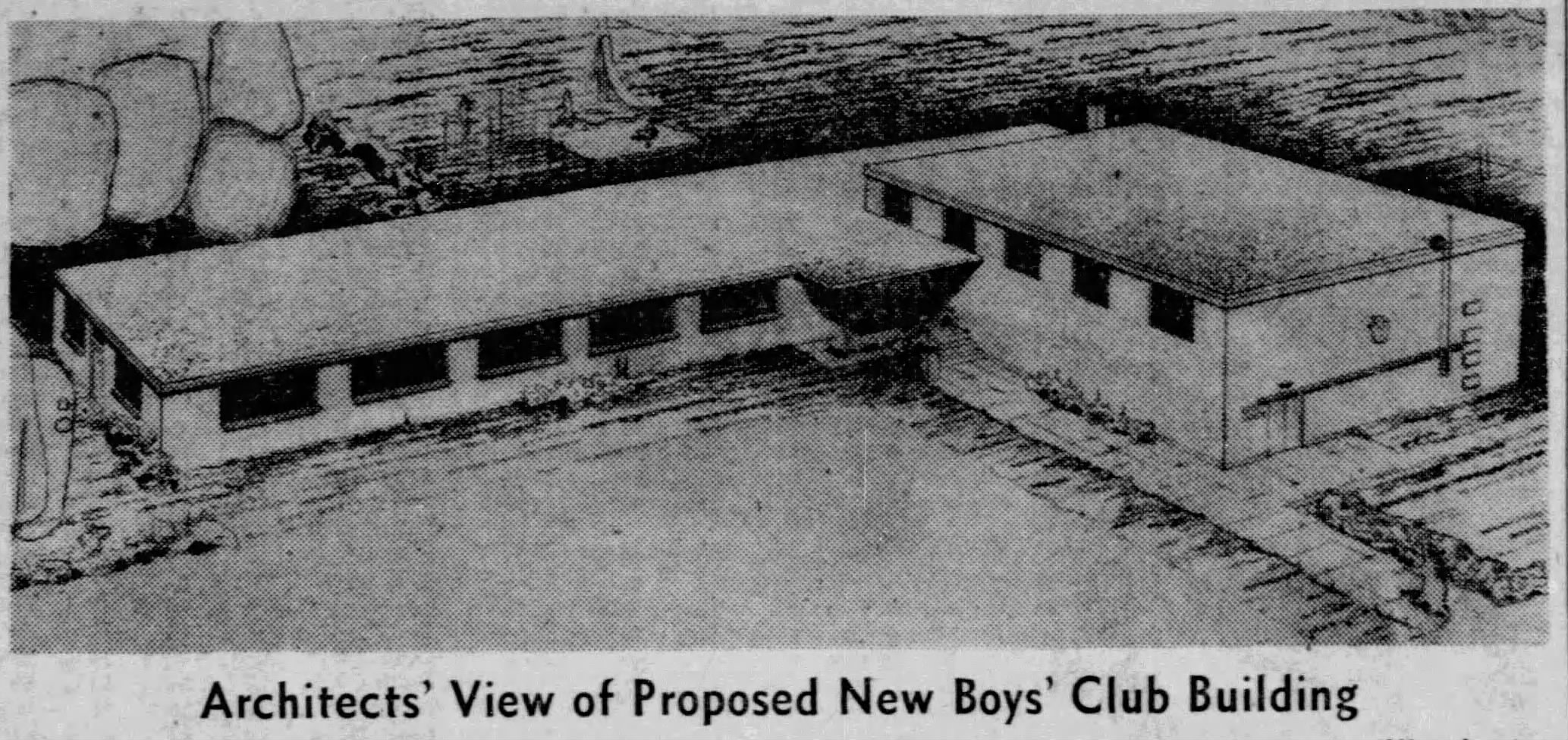
rendering_of_boys_club_building_on_Massachusetts_Ave

Rendering of Boys Club Building on Massachusetts Avenue. Source: Buffalo News, February 1955

The Butler Mitchell Boys Club was founded in the memory of Edward Butler Mitchell in 1933.  The story goes that Ada was driving around the West Side shortly after her son died and saw some young men playing in a makeshift clubhouse and she pulled up to them and talked with them. She decided to buy an old barn on Efner Street to give to the boys of the neighborhood to use.  The Butler Mitchell Club was founded to help the young men of the neighborhood, ages 16 to 24.  The group quickly grew and rented a space in a church at 254 Virginia Street by December of 1933 (this former church is where Hispanics United of Buffalo is located today).  In 1955, the Boys Club of Buffalo and the Boys Club of the Niagara Frontier joined together to erect a new building on the West Side at 370 Massachusetts Avenue, known as the Butler Mitchell Branch.  The Butler Mitchell Boys and Girls Club is still located on this site.  

After their father’s death, Edward Jr and Ada established and perpetually endowed the Edward H Butler Professorship in English Literature within the College of Arts and Science at the University of Buffalo.  This professorship was established in honor of their father and still exists today.

85130819_132955847061

Mitchell Family Plot in Forest Lawn Cemetery

Ada Butler died on April 1, 1934, in New York.  She was buried in Forest Lawn Cemetery with her husband and son.  The Mitchell family plot includes the graves of Roscoe, Edward, Ada, Marjorie and Marjorie’s husband Kent Schuyler McKinley, hence the “Mitchell McKinley” on the plot.  

Ada’s daughter Marjorie was married several times.  First to William Baird in July 1930.  Baird Point at Lake LaSalle on North Campus at UB and Baird Hall are named for the Baird family – William, his brother Cameron, and their father Frank. A street by the Peace Bridge that bisected Front Park, Baird Drive, was also named for them.  The road was removed in 2016 to restore park space to Front Park.  Marjorie and William had one daughter, Barbara Butler Baird, born in August 1931.  

Marjorie helped found the Butler-Mitchell Boys Club with her mother and served as president of the club from 1937 to 1952.  

In 1943, Marjorie Mitchell married Kent Schuyler McKinley.  As Marjorie McKinley, she financed the construction of the Edward H. Butler Auditorium in Samuel P Capen Hall [Note: this Capen Hall was located on South Campus; when North Campus opened, the Capen name moved to North Campus and Capen Hall on South Campus became Farber Hall…I am unsure if the auditorium still exists in Farber Hall – do any of my UB friends know?]

In 1950, Marjorie donated her family house on Delaware to the Episcopal Diocese of Buffalo.  The Diocese used the house as its headquarters, calling it the “Marjorie Mitchell McKinley Diocesan House,” though many called it as “The D’ House.”  The property has been the headquarters of Courier Capital since 2011.  

Marjorie and her husband Kent moved to Sarasota and founded the Sarasota News in 1954.  The Sarasota News was a daily afternoon newspaper.  Talk about a family with deep newspaper ties!  They sold the newspaper in 1962.

Also in 1962, Marjorie sold her 40% shares of The Buffalo News to her Aunt, Kate Butler. 

In 1965, Marjorie was named honorary chancellor of Florida Southern College, the first woman elected to the office.  That year, she also received an honorary doctor of fine arts degree from the college.  She was the main donor for the music building built on campus, the Marjorie M McKinley Music Building, which was named for her. 

Kent McKinley died in 1972.  Marjorie married Ted C Van Antwerp in 1973.  Marjorie passed away in November 1990.  Marjorie and Kent are buried in the Mitchell McKinley plot in Forest Lawn Cemetery.  

Mrs. Kate Butler

Mrs_Butler_August_1974Following Edward Jr’s death, his wife Kate Butler led The News.  She became President of The News in 1956.  She was known around town as “Mrs. Butler”, so I will call her that from here on out.  

The News had purchased additional properties over the years, taking over much of the area at Main and Seneca Streets.  In 1916, The News purchased a building on Pearl Street and remodeled it for use of the mailing department and for stock and file rooms.  In 1924, The News bought a building at Seneca and Pearl Streets; the four-story structure became part of The News’ press room.  In 1929, they purchased 214 Main Street and built an addition to their building.  They continued to need more space.  Mrs. Butler finished the construction of the printing plant, which her husband had begun.  The printing plant on Scott Street opened in 1958 on land that was once part of the Lehigh Valley railroad depot.  The new plant had 35 printing units arranged to operate as five giant presses.  On June 30, 1958, President Dwight D. Eisenhower pressed a button at the White House to start the first production run with the new presses. 

Mrs. Butler also became the Publisher of The News in 1971.  James Righter was publisher from 1956, when Edward Jr died, until 1971.  James Righter was married to Edward and Kate’s daughter Kate.  While the public word was that he took early retirement, reportedly, Mrs. Butler became Publisher because she fired her son-in-law when she found out he was having an affair.  

BN1

Buffalo News Birds Eye View, April 13, 1973. Source: Buffaloah.com

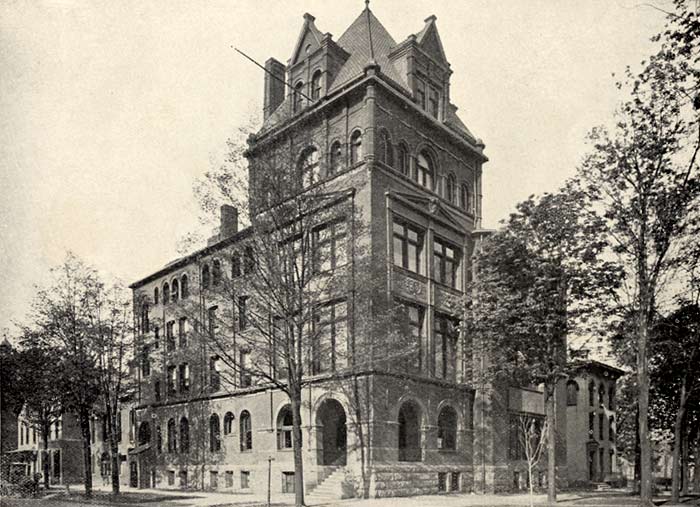
Mrs. Butler also made the tough decision to move The News from 218 Main Street after 75 years to the “new” Buffalo News building at the corner of Washington and Scott Streets.  The Main Street property was going to be a part of the City’s redevelopment program to build Marine Midland Center (now Seneca One Tower).  The new office building was built next door to the printing plant on Scott Street.  One News Plaza, as the new building was known, was designed by NYC Architect Edward Durrell Stone.  The modernist building is unusual because there are no support columns in the middle of the floor plates.  The five-story building also has an atrium that houses a garden with trees and plants.  The News moved into the new building at the corner of Washington and Scott Streets.  Mrs. Butler, unfortunately, was never able to set foot into the new building, as ill health had confined her to her house. 

 Kate Butler died in 1974.  She is buried in the Butler Mausoleum in Forest Lawn Cemetery.  

The Buffalo News After Mrs. Butler’s Death

Mrs. Butler had reportedly been counseled by her attorneys to take steps to minimize the tax consequences that would occur upon her death by gifting off some of her assets, otherwise a “fire sale” would occur.  After Mrs. Butler’s death, the Butler family decided to put The News up for sale.  The newspaper, TV station and radio stations were each sold to different buyers following Mrs. Butler’s death.  The News was officially out of broadcasting at that time.  

The Butler Mansion was donated to Roswell Park Cancer Institute in 1976.  In 1979, Jeremy Jacobs purchased the mansion for use as the headquarters of Delaware North Companies (the mansion is located at Delaware and North Streets, hence the Delaware North name).  In 1991, the mansion was sold to the Variety Corporation.  In 1999, Mr. Jacobs reacquired the mansion for the UB School of Management to use the property for executive training.  In 2001, the mansion was renamed the Jacobs Executive Development Center.  In December 2022, the UB Foundation announced the mansion’s sale to Douglas Development.  

In 1977, after 97 years of being owned by the Butler family, the newspaper was purchased by Warren Buffett for $32.5 Million.  Mr. Buffett became Chairman of The News.  When Mr. Buffett purchased The News, it was an afternoon newspaper published every day except Sunday.  Afternoon newspapers were dying across the country at the time due to the rise of office work over factory jobs and TV news, which made the afternoon edition feel out-of-date at the end of the work day.  The Evening News was different than most; it still sold more than double as many copies as the Courier-Express morning edition.  But it still lacked a Sunday paper.  One of Mr. Buffett’s first decisions was to restart the Sunday edition, which began on November 13, 1977.  There had been a gentleman’s agreement between The News and the Courier-Express that The News would be evening only and the Courier-Express would be morning only.  The Courier-Express fought against the Sunday edition by persuading a local judge to issue rules designed to cripple the distribution of the Sunday News.  In 1979, an appeals court overturned the crippling rules and scolded the judge who imposed them.   Two months later, the Connors family sold the Courier-Express to a Minneapolis newspaper company.  Three years later, on September 19, 1982, the Courier-Express published its last newspaper, leaving Buffalo with just one newspaper.  

After the Courier-Express closed, The Buffalo News became a seven-day newspaper.  In 1989, Buffalo News was the 27th largest newspaper in the United States, with 1100 full-time employees, 200 employees in editorial, and a circulation of 320,000 on weekdays and 390,000 on Sundays.  In 1990, 75% of the newspapers were delivered to homes by 4900 newspaper carriers (4400 youth, 500 adult carriers).   Like so many other Western New Yorkers, I delivered newspapers in middle school. The remaining newspapers were mailed out or found at newsstands/stores.  

The evening edition was abandoned in October 2006, and what had begun as The Buffalo Evening News became a morning-only newspaper.   

In January 2020, after 42 years of being a part of Warren Buffett’s Berkshire Hathaway group, The Buffalo News was sold to Lee Enterprises, just the third owner in the entire history of The News.  Lee Enterprises had ties to Berkshire Hathaway and had managed the Berkshire Hathaway newspapers, except for The Buffalo News, since 2018.   
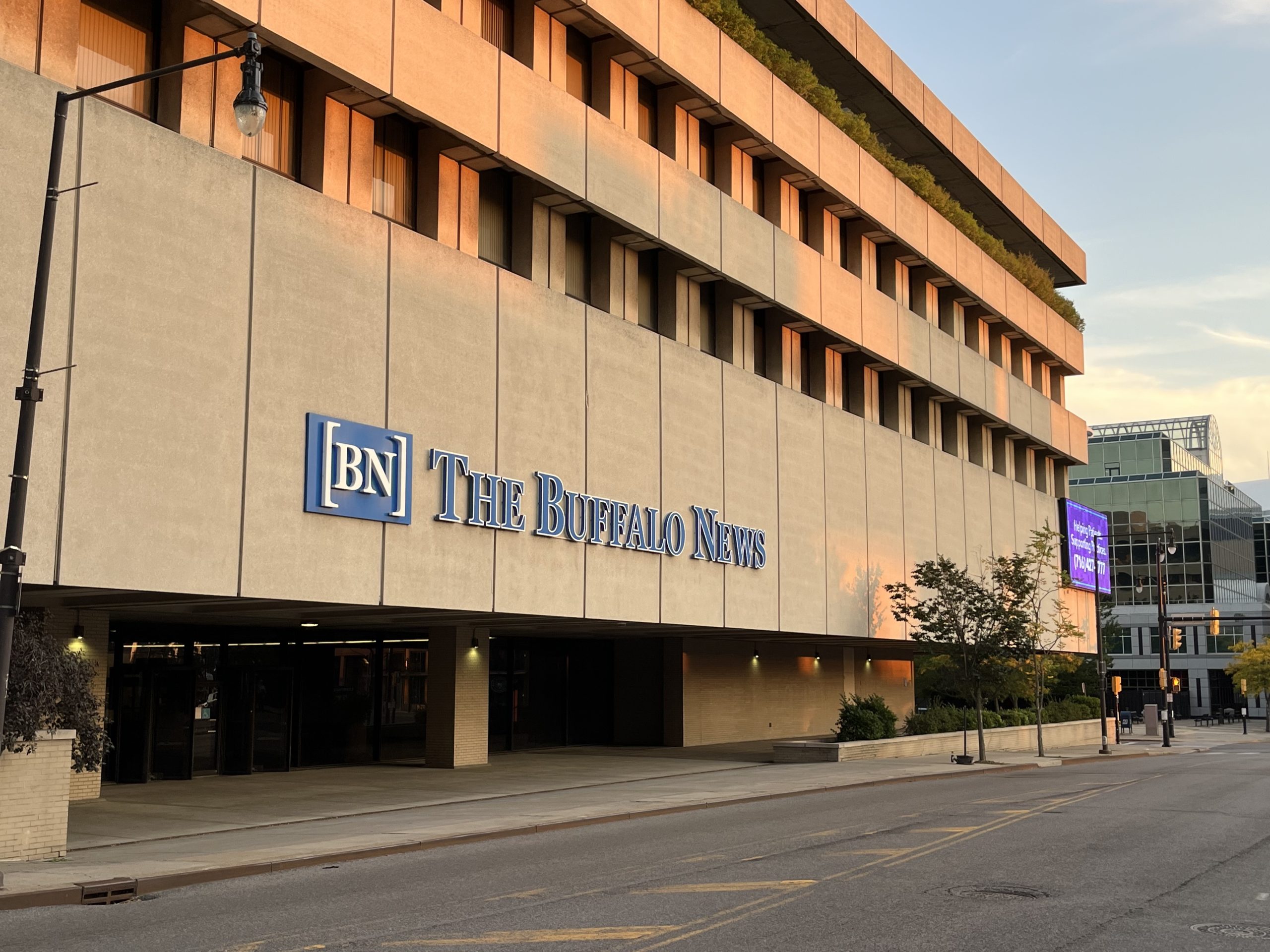
Buffalo-News_Sept.-26-2024-scaled

Former Buffalo News building from Washington Street.  The property is now vacant and fenced off.

In 2022, The Buffalo News announced they were selling their headquarters on Scott Street, moving out of Downtown Buffalo for the first time in almost 150 years. The 175 office employees relocated to 20,000 square feet in the Larkin Exchange Building on Exchange Street in October 2022.  The print production facilities were originally going to remain on Scott Street.  

In February 2023, The Buffalo News announced they were closing the printing production facility on Scott Street and moving print operations to Cleveland, Ohio, to the Plain Dealer printing facility.  About 130 employees across 8 different unions were affected by the closure of the print operations.   The final locally printed edition came off the presses on September 30, 2023.  

In 2024, The Buffalo News announced they would no longer publish a print issue on major holidays, including New Year’s Day, Martin Luther King Jr Day, Presidents Day, Memorial Day, Independence Day, Labor Day, Veterans Day, Thanksgiving and Christmas.  

The Buffalo News building was purchased by Douglas Jemal in July 2024. The sale included the office building, the adjacent production building and a parking lot across the street on Scott Street.  Douglas Jemal also owns the former HSBC Atrium building, just south of The Buffalo News properties, giving the developer control of approximately 14 acres of land in Downtown Buffalo near Canalside and the Arena – I can’t wait to see what he does with the properties!  

So the next time you drive down Butler Ave, or pass by the Former Buffalo News office or the Butler Mansion at Delaware and North, or read The Buffalo News, think of Mr. Edward H Butler and thank him for coming to Buffalo and giving us The Buffalo News and so much more.  What’s your favorite Buffalo News memory?  

Want to learn about other streets? Check out the Street Index. Don’t forget to subscribe to the page to be notified when new posts are made. You can do so by entering your email address in the box on the upper right-hand side of the home page. You can also follow the blog on Facebook. If you enjoy the blog, please share it with your friends; It really does help!

Sources:
  1. “Building is Active in Hamlin Park Now.”  Buffalo News.  November 20, 1915, p21.  
  2. “Butler Ave Just Opened New Street in Hamlin Park.”  Buffalo News.  May 15, 1915, p23.
  3. “Edward H. Butler Died Soon After Serious Operation.”  Buffalo Times.  March 10, 1914, p4.  
  4. “Will of Edward H. Butler is Filed This Afternoon”  Buffalo News.  March 18, 1914, p4.  
  5. “Edward H. Butler Jr and Kate Butler.”  Buffalo News.  November 1, 2015, p84.  
  6. “The News:  A radio and TV Pioneer.”  Buffalo News.  November 15, 2015, p92.
  7. “How the News Grew In Downtown Buffalo.”  Buffalo News.  November 22, 2015, p90. 
  8. “Buffalo’s Last Newspaper War.”  Buffalo News.  December 13, 2015, p94.   
  9. “Death of Mrs. Edward H Butler.”  Buffalo News.  August 21, 1893, p13. 
  10. “Striking Clock Being Installed at University.” Buffalo Times.  June 21, 1928.
  11. “Bennet, A Gordon.  Buffalo Newspapers Since 1870.”  Adventures in Western New York History, Buffalo and Erie County Historical Society, 1974.
  12. Hill, Richmond C.  Twentieth Century Buffalo:  an illustrated compendium of her municipal, financial, industrial, commercial and general public interests.  J.N.Matthews Co, Buffalo, 1902.  
  13. Downs, Winfield Scott.  Municipality of Buffalo:  A History, 1720-1923, Volume 1.  Lewis Historical Publishing Company, 1923.
  14. Kirchhofer, A.H.  “Romance in American Journalism.”  The Fourth Estate.  November 19, 1927.  
  15. “Jacobs Executive Development Center”.  University at Buffalo Archives.  library2.buffalo.edu/archives/campuses/detail.html?ID=118
  16. “Facts About The Buffalo News.” from The Buffalo News.  Updated 9/1990.  Found in the Newspapers Vertical File at the Central Library.  
  17. History of the City of Buffalo, It’s Men and Institutions.  Published by The Buffalo Evening News.  1908.
  18. “Obituary:  Edward H. Butler, Jr.”  Buffalo News.  June 23, 1919, p1.  
  19.  “Station WEBR Transferred; WBEN’s Status Unchanged.”  Buffalo News.  July 12, 1942, p8.  
  20.  Hsu, Charlotte.  “Journey to the Heart of the Hayes Hall Clock.”  UBNow, October 22, 2014.  buffalo.edu/ubnow/stories/2015/10/hayes_clock.html
  21. “Marjorie Van Antwerp Dies; Ex-News Executive”.  Buffalo News.  November 30, 1990, p5.  
  22. Butler Mitchell Alumni Association.  “Our History”.  bmalumni.com/history
  23.  Robinson, David.  “The Buffalo News is Being Sold to Lee Enterprises.”  Buffalo News.  January 20, 2020.
  24. Petro, Michael.  “Buffalo News Plans to Close Downtown Production Facility, Move Printing to Cleveland.”  Buffalo News.  February 20, 2023.  
  25. Glynn, Matt.  “Douglas Jemal agrees to buy Buffalo News complex to expand holdings near Canalside.”  Buffalo News.  March 19, 2024.  
  26. Ashley, Grant.  “Buffalo News no longer publishing print issue on ‘major holidays’.  WBFO.  July 6, 2024.  
  27. Light, Murray B.  From Butler to Buffett:  The Story Behind The Buffalo News.  Prometheus Books. 2011.  
  28. Sullivan, Margaret.  “Historic Change Coming for The News.”  Buffalo News.  October 1, 2006, p81.  

Read Full Post »

Rumsey Road and Rumsey Woods

Rumsey Road and Rumsey Woods

Rumsey Road is located along the southern edge of Delaware Park.  The road is named after the Rumsey family, a prominent Buffalo family, one of the leading families during the early development and growth of Buffalo.  The portion of Delaware Park near there is called Rumsey Woods.

The parents were Aaron and Sophia Rumsey.  They had three children – Bronson, Dexter, and Eleanor.   The family moved to Buffalo while the children were still young.  Aaron Rumsey established a tannery located on the south side of the Main and Hamburg Streets canal, near Alabama Street.  The sons joined the company as they grew to adulthood.  Aaron Rumsey died in 1864, and the business was handed down to them.  They turned A. Rumsey & Company into one of the leading leather firms in the United States.  The business was eventually absorbed by the United States Leather Company in 1893.

The brothers believed in the future of Buffalo, and showed it by investing much of their fortune into real estate in the City.  It is said that at one point, they owned 22 of the 43 square miles that comprised Buffalo.

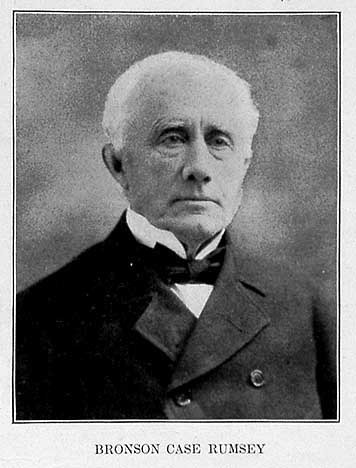
bronsonBronson Case Rumsey was born in Warsaw, Wyoming County, NY on August 1, 1823. Bronson was the first president of the Buffalo, New York & Philadelphia Railroad, a director of the Manufacturers’ and Traders’ Bank from its inception and a member of the Park Commission when it was first formed in 1869.  Even after Bronson retired, he was still involved in financial, industrial and civic matters of the city.  He remained on the Park Board until his death.  He was a successful banker, merchant, and capitalist.

Bronson married Eveline Hall.  They had four children – Laurence Dana, Mary Lovering, Bronson II, and Evelyn.  Bronson built Rumsey Park in 1865.  Rumsey Park comprised the land bordered by Delaware Avenue and Carolina Street, Tupper and Tracy Streets.  The land had been previously used as a lumber yard owned by Mr. Hodge.

Sanborn Map showing Rumsey Park in 1889

Sanborn Map showing Rumsey Park in 1889 (click to view larger)

The Bronson C. Rumsey house at 330 Delaware Avenue was likely the first French Second Empire (mansard roof) house built in Buffalo.  The house overlooked a spring-fed lake with a Swiss chalet boathouse, a Greek temple pavilion, terraced gardens, fountains and wooded paths.   Bronson’s children also lived at Rumsey Park:  Mary Lovering Rumsey and her husband Edward Movius lived at 334 Delaware Avenue, Evelyn Rumsey married Charles Cary and lived at 340 Delaware Avenue, and Bronson II lived at 132 West Tupper Street.  The eldest son, Laurence, lived at 1 Park Place, in the house the family had lived in prior to construction of Rumsey Park.

The rear of 330 Delaware Ave. Source: WNY Heritage

The rear of 330 Delaware Ave. Source: WNY Heritage

Bronson Case Rumsey's name in the Rumsey Family Plot

Bronson Case Rumsey’s name on the Rumsey Family Marker

Bronson Rumsey died in 1902 and is buried in the Rumsey Family plot in Forest Lawn Cemetery.The expansion of Elmwood Avenue south to connect with Morgan Street, cut through the center of Rumsey Park. The lake was filled in and the property was subdivided.  Development of the property into lots began around 1912, as the Rumsey family sold the off the properties.

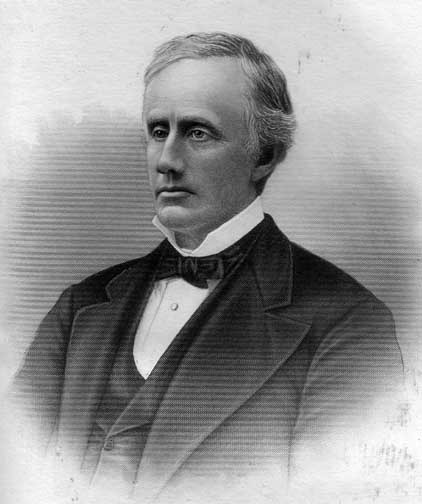
The second Rumsey son, Dexter Phelps Rumsey, was born in Westfield, Chautauqua County on April 27, 1827.   Dexter donated greatly to charities, particularly those committed to children, his favorite charity was the Fresh Air Mission.  Dexter served as Director of Erie County Savings Bank and was President of the Buffalo Club.  He was also an original trustee of the Buffalo City Cemetery, which established and operates Forest Lawn Cemetery.

Dexter Rumsey

Dexter Phelps Rumsey

Dexter was married three times: first to Mary Coburn who died in 1859, to Mary Bissell who died in 1886 and to Susan Fiske. Dexter had four children.  Cornelia married Ainsley Wilcox, who passed away two years later. Mary Grace then married Ainsley Wilcox in 1883.  The Wilcox Mansion (now known as the Theodore Roosevelt Inaugural Site) was a wedding gift from Dexter to Mary Grace and Ainsley.  Ruth married William “Wild Bill” Donovan.  Dexter P. Rumsey, Jr was friends with F. Scott Fitzgerald during his time in Buffalo.  F. Scott Fitzgerald’s writings referred to Dexter as among his “fascinating army” of childhood friends.

dexter-house

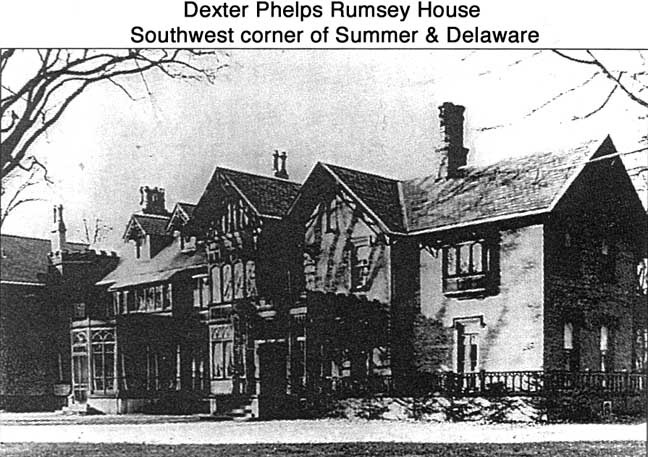
Dexter Rumsey House, 742 Delaware Ave

Dexter and his family lived at 742 Delaware Avenue, at the southwest corner of Delaware and Summer Street.  The house was owned by the Rumsey family from 1857 until 1945.  The house was one of the oldest in the City, first portions of it were erected in the 1830s.  The house was still located in the countryside when Dexter moved in and he kept cows on the property through the 1860s.  Mr. Rumsey is said that to have bought the house where he did because he was confident of Buffalo’s northward expansion.  Dexter’s stables remain near the grounds of his old Delaware Ave mansion, and are used by Westminster Presbyterian Church.  Dexter’s confidence in Buffalo’s growth was also said to be why he purchased the large tracts of woodland in the vicinity north of today’s Delaware Park, sometimes referred to as the Rumsey Farm.

A portion (approximately 350 acres) of Rumsey Farm in North Buffalo was used for the Pan American Exposition in 1901.  The land was flat, treeless and landlocked.  A great deal of deliberation was made in regards to if the site represented enough of Buffalo, without a waterfront or hills.  The site had the benefit of being undeveloped and the lack of hills made it easy to build upon, therefore the site was selected.  The lack of trees was made up for by connecting the exposition grounds to Delaware Park.  After the Exposition, the leased lands were returned to their original state and the properties were subdivided for residential development.
Spirit of Niagara Poster

Many members of the Rumsey family and their in-laws were involved in the Pan-American Exposition.  Bronson’s grandson Charles Cary Rumsey was an artist who created several of the sculptures for the exposition.  The Centaur in front of the Buffalo History Museum is an example of one of Charles’ sculptures.  Charles’ uncle George Cary was the architect who designed the Buffalo History Museum.  Bronson’s daughter Evelyn created the Spirit of Niagara painting that was used for much of the Pan American advertising (one of my all-time favorite paintings!)  Most infamously, Dexter’s daughter and son-in-law Mary Grace and Ainsley Wilcox, were the owners of the house where Teddy Roosevelt was inaugurated following President McKinley’s death.

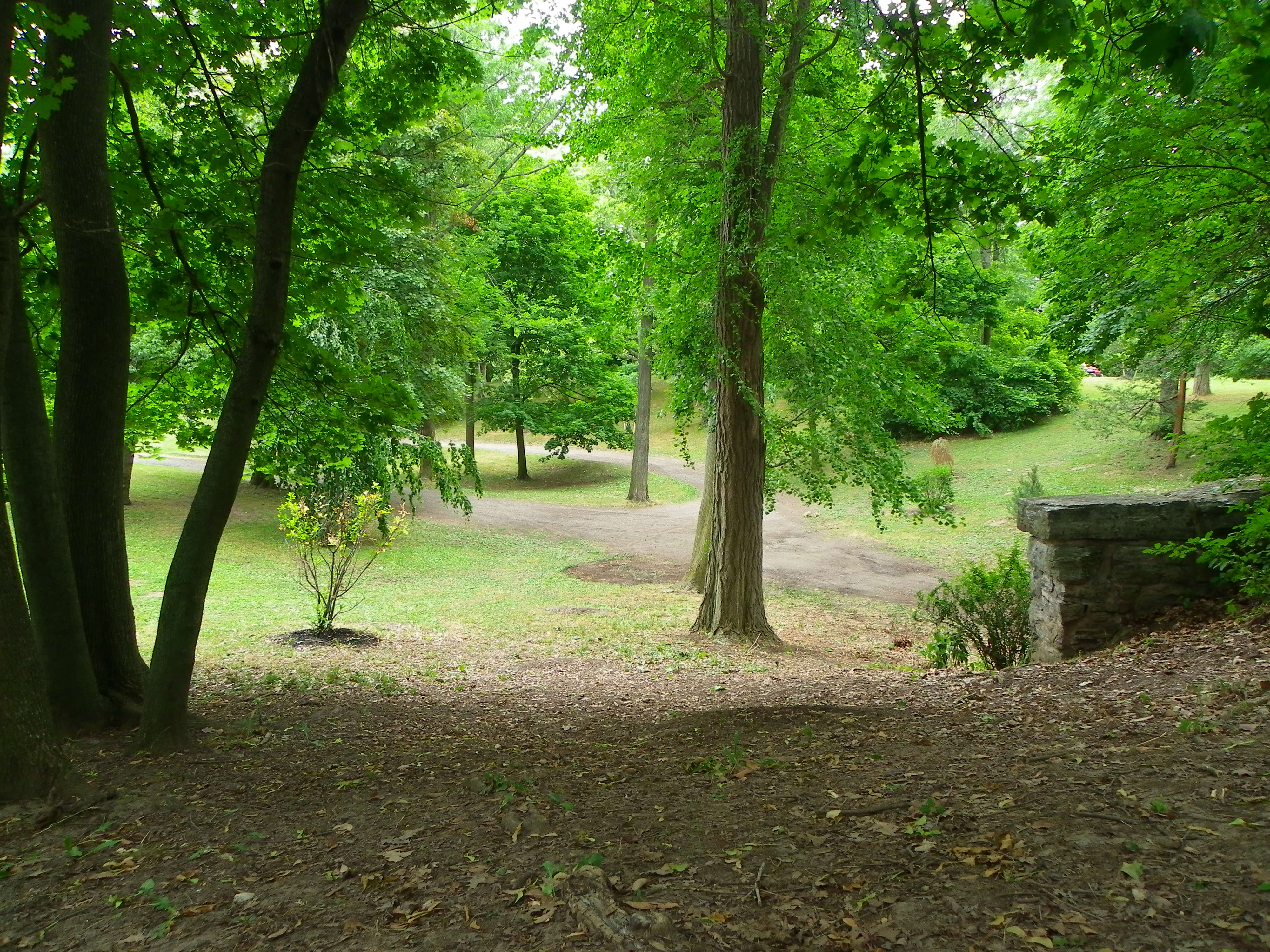
Dexter died on April 5, 1906 and is buried in the Rumsey family plot in Forest Lawn Cemetery.  When Dexter passed away, his wife and daughter Grace donated to the City Park Department the block of land adjacent to Delaware Park to add to the grove of trees to the park. The grounds are still known as Rumsey Woods to this day.

Rumsey Woods in Delaware Park

Rumsey Woods in Delaware Park

Bronson and Dexter’s sister, Eleanor, married William Crocker.  Eleanor had two children, William and Nellie.  She passed away in 1863 at the age of 36.  After Eleanor’s death, the Crockers relocated from Buffalo to Pennsylvania.  William Junior became a prominent lawyer in Williamsport, Pennsylvania.

Want to learn about other streets?  Check out the Street Index.

Sources:

  1. Named for Bronson C and Dexter P Rumsey.  Courier Express April 28, 1940 sec 5 p 12
  2. A History of the City of Buffalo:  It’s Men and Institutions
  3. Buffalo architecture:  A Guide
  4. Larned, J.N.A History of Buffalo:  Delineating the Evolution of the City.  Published by Progress of the Empire State Company.  New York, 1911.
  5. Buffalo Times, Jan 22 1927

Read Full Post »

rileystRiley Street is a street in the Masten Neighborhood of the East Side of Buffalo, running from Main Street to Fillmore Avenue.  The street is named after Major General Bennet Riley.  Note 1:  sometimes his first name is spelled Bennett, but his gravestone says Bennet, so I’m using that spelling.  Note 2:  There was another famous General Riley in Western New York, General Aaron Riley, whose house still stands in East Aurora.  As far as I can tell, the two men are not related.  Riley street in East Aurora is named after Aaron Riley and Riley Street in Buffalo is named after Bennet Riley.

19547819_122948017206Bennet Riley was born in St. Mary’s, Maryland in 1787.  He served as an apprentice in a cobbler shop as a young man, later serving as a foreman in a shoe factory.

Riley volunteered for service in the War of 1812.  In January 1813, he was appointed Ensign of Rifles.  He saw action at Sackets Harbor, New York, in the second of two battles to control the shipyards on Lake Ontario.  He was promoted to first lieutenant in March 1817.  He later advanced to captain in the 5th US Infantry and in 1821, he was transferred to the 6th US infantry.  He was promoted to brevet major in 1828 and lead the first military escort along the Santa Fe Trail in 1829.

Mr. Riley married Arabella Israel of Philadelphia in 1834.  They had eight children, including  twins William and Samuel who died in Fort King, Florida in 1841 and Bennet, Jr. who served in the Navy and died aboard the war-sloop USS Albany which disappeared with all hands in 1854. In Buffalo, the Riley Family lived in a frame house at Main and Barker Streets (1238 Main Street – where Delta Sonic is now located).  The house was later known as the Cobb Mansion, was home to St. Joseph’s Collegiate Institute in 1897 before they moved to Kenmore Avenue, and the site was then the location of Bishop Fallon High School.  It is said that Riley enjoyed purchasing second-hand furniture to furnish his house, and he purchased so much that while he was away, Mrs. Riley would send it downtown to be sold at auction.  One story survives that says that General Riley returned home and attended a sale, and ended up buying back many of his items, without an inkling that he was actually purchasing items that he had previously owned!

In 1837, Riley served as major of the Fourth Infantry and was stationed at Fort Gibson on the Arkansas River.  From Fort Gibson, he was ordered to Florida, where he was an active part of the Seminole War.  In 1842, at the close of the war in Florida, he was ordered to Buffalo, where he served at the Buffalo Barracks.

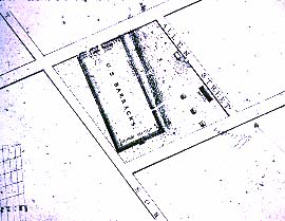
1840 Map showing the Buffalo Barracks. Source: National Parks Service, Theodore Roosevelt Inaugural Site

1840 Map showing the Buffalo Barracks.
Source: National Parks Service, Theodore Roosevelt Inaugural Site

The Buffalo Barracks was built near what was then the northern edge of the city in the fall of 1839.  The federal government leased the land from Ebenezer Walden to use eighteen acres of land, bounded by Main, Allen, Delaware and North Streets.  Buildings were erected and were occupied during winter 1839.  The Barracks was built in response to the Patriot’s War with Canada in 1837.  At the time, Buffalonians still remembered the Burning of Buffalo during the War of 1812, which had occurred just 25 years earlier during the winter of 1813-1814.

The facility was also known as the Pointsett Barracks, named after the Secretary of War, Joel Pointsett.  The buildings formed a rectangle around the parade grounds on the northern end of the barracks.  Buildings included company quarters (enlisted men’s housing), officer’s quarters, storehouses, a guardhouse and stables.  The first regiment to occupy the barracks was Col. James Bankhead’s 2nd Artillery.  And was later occupied by Lt. Col. Crane’s 4th Artillery, and then by Bennet Riley’s 2nd Infantry.  The military post became a center of social life in Buffalo, who enjoyed watching military parades and listening to the military band.  Many of the officers became an important part of Buffalo social society and ended up marrying Buffalo women.

In December 1839, Riley is promoted to Lieutenant Colonel of the 2nd Regiment of Infantry.  His officers quarters are located near where Allen Street and North Pearl Street now meet.  In mid-1840, the officer’s quarters were likely moved to the Barracks property.  In 1841, Lt. Colonel Riley is promoted to full Colonel, becoming the 4th and final Commandant of the Buffalo Barracks.   In Mid 1845, Col. Riley and his 2nd infantry are ordered to the Mexican Border.  The government abandoned the post at the Buffalo Barracks shortly after, breaking its lease with the land.  Relations with Canada improved by the mid-1840s and Fort Porter opened in 1845, rendering the barracks redundant.  The property was sold for $2,250 and the buildings were demolished, except for the quarters that house the Commandant and the Post Surgeon.  This building is now the front portion of the Theodore Roosevelt Inaugural Site.  The quarters made up the portion of the house that includes the present-day library and exhibit room and the second floor above.  The house was originally one of a row of three identical houses, each designed as duplexes to house two officers and their families, one on each side.  The house was renovated into a single family house by Judge Masten and his family.

californiaIn summer of 1846, Riley was ordered away to Mexico to join the army of General Taylor.  After the war with Mexico, Riley served at Fort Hamilton, New York in 1848.  He then commanded the Military Department in Upper California in 1849 and 1850.  He served as the provisional Governor of California.  At the time, congress was debating on the issue of California statehood, which made his role complicated.  The California Territory was transitioning from Mexican to American lawn and the Gold Rush at the time was violent.  Riley commanded eight companies of infantry, two artillery and two dragoons between San Diego and San Francisco.  The military had a hard time preventing the slaughter of California’s native population and was unable to suppress the violence in the often lawless gold camps.

riley grave forest lawnAfter the administrative service concluded in California, Riley was next sent to a regiment on the Rio Grande.  His declining health prevent his further military service, so he retired. He returned to his home in Buffalo, where he was greeted with a grand ovation.  The Mayor and a committee of citizens received him, along with a military escort and a procession of civil societies and citizens.  Of his return, it was recalled in 1892, “flags and banners flying, everything conspired to give a festal appearance to the city”.   There was some talk that he should be nominated to be President (a member of the Whig party).  He claimed that he “never got the presidential bee in his bonnet” and that he ” was far too sensible for that”.  He died of cancer on June 9, 1853.  He had a full military funeral, escorted by the 65th Regiment and the Independent Guard, commanded by Major Bidwell.  He is buried at Forest Lawn.  Riley Street was laid out in 1859 and dedicated in commemoration of his death.

Major General Riley is one of only three generals for whom military posts were named.  In June 1852, Camp Center (Kansas Territory) was renamed Fort Riley in Bennet Riley’s honor.  Riley County, Kansas is also named in his honor.


Sources:

  1. “Souvenirs of Major General Bennet Riley.”Publications of the Buffalo Historical Society, Volume 25.
  2. https://www.nps.gov/thri/buffalobarracks.htm
  3. “Streets Have Historical Link”.  Buffalo Courier Express, Sunday December 7, 1952.  p 7.
  4. “An Old Buffalonians Recollections of Gen. Bennett Riley”.  Buffalo Evening News.  April 16, 1892.  p4.


Read Full Post »

Coit Street

Coit Street

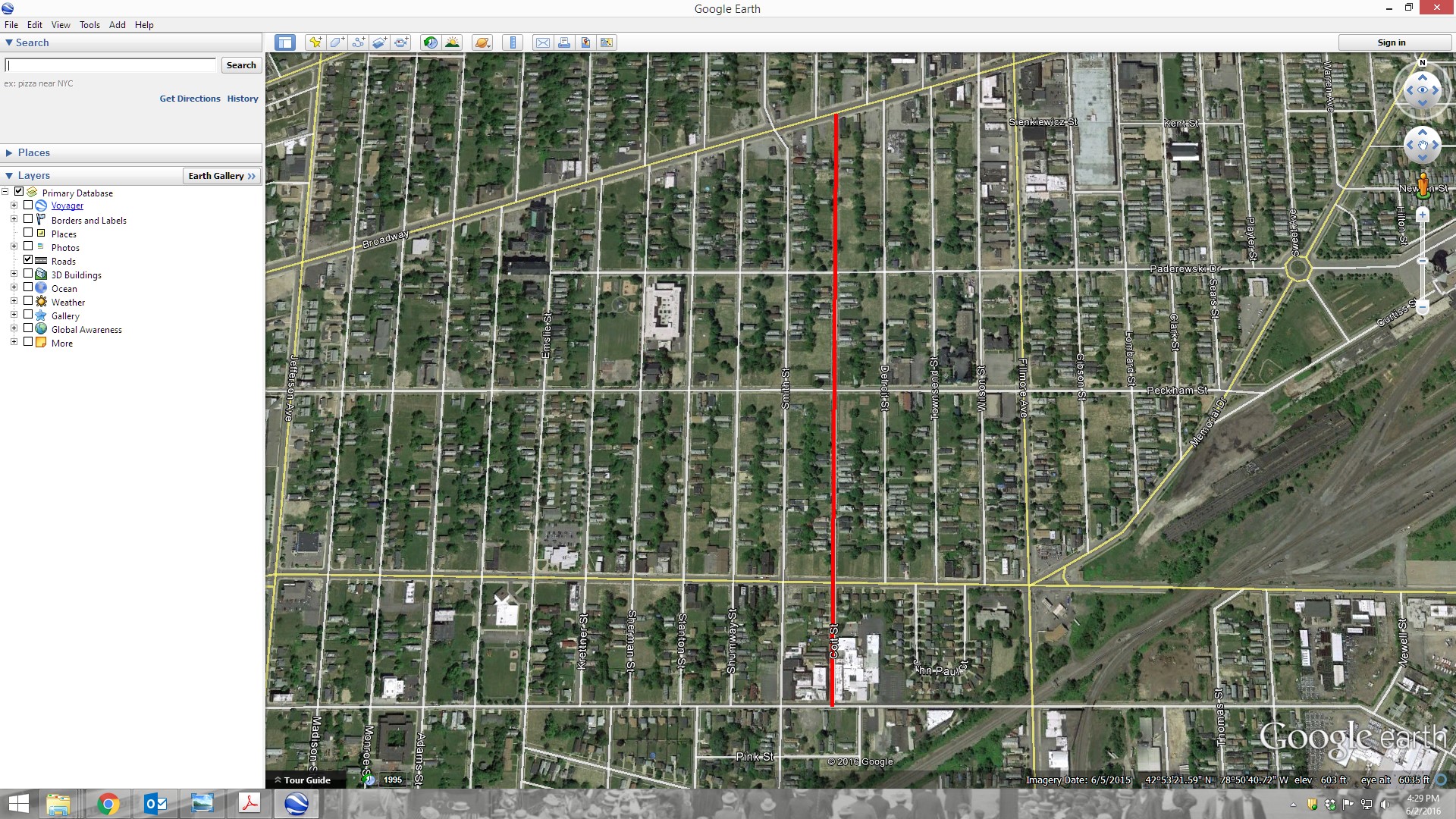
Coit Street is a street in the Broadway-Fillmore neighborhood on the east side of Buffalo, running between Broadway and Howard Street.  The street is named after George Coit, and is only a few streets away from Townsend Street, named after George’s good friend and business partner Charles Townsend (we’ll learn a little about Charles today, and more about him later).  George Coit was called “one of the eminent fathers and founders of Buffalo”.  He resided in Buffalo from June 1811 until his death in May 1865, watching the pioneer settlement rise into a village, rebuild after wartime burning, and grow into a great city.

gcoitThe Coit family arrived in America between 1630 and 1638.  George Coit was born on June 10th, 1790 in Norwich Connecticut.  He learned the druggist business and worked as a clerk in a store with Mr. Townsend (later Judge Townsend) in Norwich.   They came to Buffalo together in 1811 to run a drug store.  For more than 40 years, Mr. Coit & Mr. Townsend worked together in co-partnership.  They quickly were able to buy property at Swan and Pearl Streets, where the built a store.   The day before the Burning of Buffalo, Mr. Coit drove with Mr. Townsend and a wagon full of their goods into Williamsville.  When they arrived back in Buffalo following the burning, they procured a small wooden building on Erie Street which had survived the burning. Their store was in business until 1818, when they sold the business to Dr. John E. Marshall and they entered the shipping business.  They successfully operated several businesses involved in shipping and trade, along with Buffalo Car Works. Their first warehouse was at the foot of Commercial Street, at the mouth of Little Buffalo Creek, where they built a dock and a frame building.  Mr. Coit married a sister of Mr. Townsend, Hannah, on April 4th, 1815.  Hannah and George had eight children:  Sarah Frances, Charles, George, John, Frances, Nathaniel, Eliza, and William.

Wedding of the Waters at the Buffalo History Museum...depicting Governor Dewitt Clinton with Samuel Wilkeson, George Coit and Charles Townsend at the opening of the Erie Canal

Wedding of the Waters at the Buffalo History Museum…depicting Governor Dewitt Clinton with Samuel Wilkeson, George Coit and Charles Townsend at the opening of the Erie Canal

In 1818, Mr. Coit, along with Mr. Townsend, Samuel Wilkeson and Oliver Forward, secured a bond and mortgage for a state bond for the construction of the Buffalo Harbor.  By 1821, the channel was deep enough to allow for vessels, proving the Buffalo Harbor was successful, despite many people’s concerns about their experiment to build the harbor.  The four men worked together to build the harbor and lobby the legislature to ensure that Buffalo would be the terminus of the canal, not Black Rock.

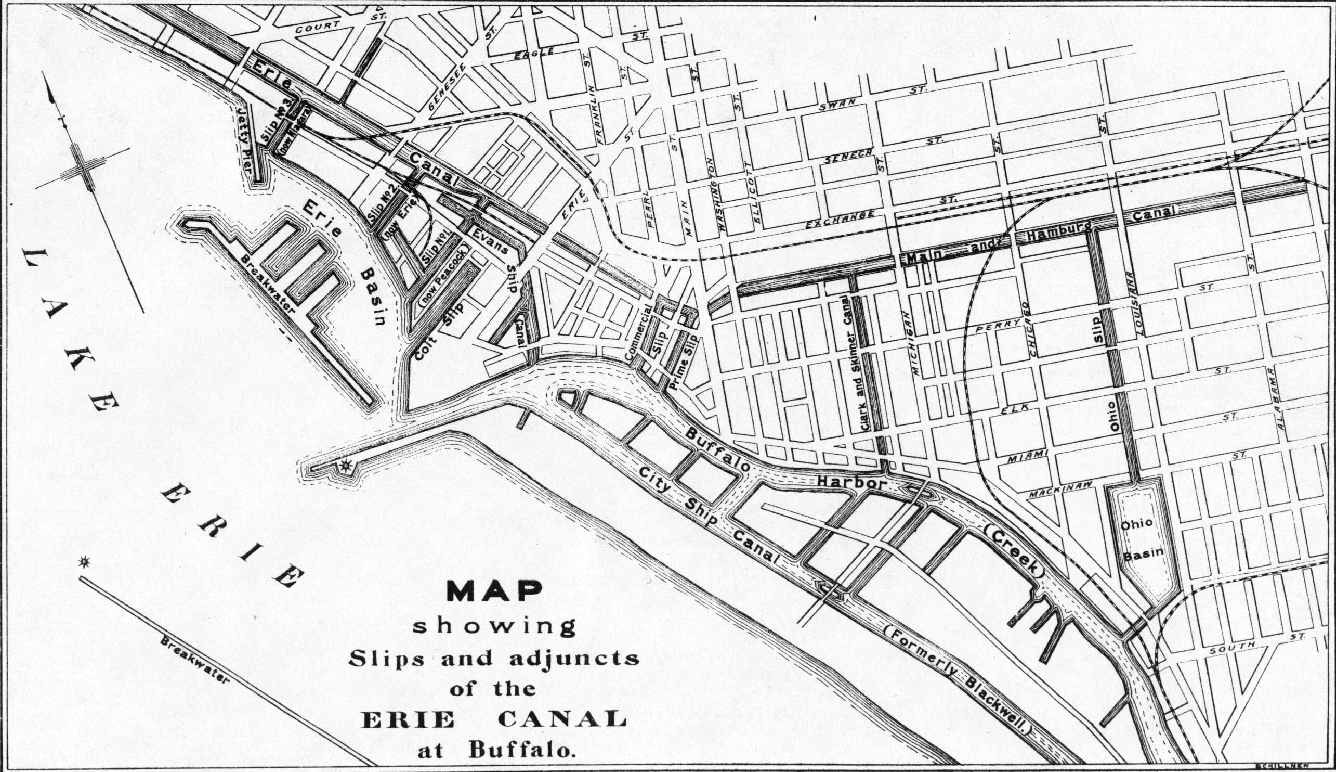
During the Canal-era, the Buffalo waterfront was a slew of various slips, many owned by private businesses.  The Coit Slip was located near the end of the Erie Canal.approximately parallel to Erie Street.  The slip was filled in when the Erie Canal was filled in during the 1940s, but a portion remains behind Templeton Landing (formerly Crawdaddy’s/Shanghai Reds).  The land around the Coit Slip was owned by Mr. Coit and Mr. Townsend.  The Coit Block/Coit Building (also referred to as the McCutcheon Building) was located at the southern end of Commercial Street adjacent to the western edge of the Commercial Slip.  The Coit Building was located there from pre-1840 until its razing around 1947.  Portions of the Coit Building’s foundations and other features were uncovered during the archaeological investigations during the Erie Canal Harbor project (which created the Commercial Slip and Canalside).  The recreated building housing the Buffalo and Erie County Naval and Military Park and Museum was built on the site in 2008.

Map Showing Different Canal Era Slips. For reference, Erie Street's alignment has shifted towards the south. Commercial Slip is the one that has been uncovered at Canalside (click to view at higher resolution)

Map Showing Different Canal Era Slips. For reference, Erie Street’s alignment has shifted towards the south. Commercial Slip, near the center of the map, is the one that has been uncovered at Canalside 
(click to view at higher resolution)

Mr. Coit was a member of the Buffalo Historical Society, the Buffalo Board of Trade, the Buffalo Water Works Company, as well as other organizations.

George Coit's Grave

George Coit’s Grave

Mr.  Coit died in May 1865 and is buried at Forest Lawn.  More than 50 Coit relatives are buried in the plot near George’s grave.  At a memorial before the Buffalo Historical Society in July 1865, Mr. William Ketchum said this about Mr. Coit:  “Although Mr. Coit had lived to see Buffalo grow up from an insignificant village to become a large and populous city, his own chosen dwelling being, as it were, in the very heart of business, he preferred to remain in his old home, and continued to occupy his plain, unpretending residence on the corner of Pearl and Swan Streets, where he had first pitched his tent more than 50 years ago”

Coit House

The Coit House on Virginia Street

The house which Mr. Coit had built is still standing here in Buffalo today and is considered to be the oldest house in Buffalo.  The Coit House is estimated to have been built around 1818, shortly after the Burning of Buffalo in 1813/1814.  The house was originally located at 53 Pearl Street.  The house was moved around 1867 to its current location on Virginia Street between Delaware and Elmwood Avenues.  The house had seem some changes over the years, including being converted into apartments, but has been restored to relatively close to the original layout of a single family home.

In May of 1962, the Coit House was improved by a group who wanted to help the neglected building.  Organizations such as the Buffalo Chamber of Commerce and the City of Buffalo Division of Conservation worked with volunteers to repair clapboard, paint the building and trim the trees.   During the late 1960s, the building was slated for demolition as a part of the Allentown-Lakeview urban renewal project.  This prompted the creation of the Landmark Society of the Niagara Frontier in May 1969.  The Landmark Society worked to restore the building and then help to sell the building to a new owner with a deed stipulation that would prohibit modification of the historic restoration of the building.   The house was purchased by Henry and Linda Priebe, who lived there for nearly 30 years.  The house went back on the market in 1999 when it was purchased by the Allentown Association.  Major renovations were completed on the building, which was then purchased by Gerhart Yakow, and is now owned by Tim Boylan and Sue-Jolie Rioux Boylan.  It’s a beautiful building and if you get a chance to visit, you should take the opportunity!  The wide plank boards in the floor on the third floor will make anyone interested in history and/or architecture swoon.  The Boylans are wonderful stewards of the building, you can tell they care very deeply about the history and heritage of the house.

One of the best parts about writing this blog is the feedback I receive from my readers.  While I can’t always respond to it all, I appreciate every single one of the comments, messages and feedback I receive.  I’ve had descendants of some of the families reach out to me; I’ve had people email me photos, mail me prints, and I love all of it.

I first “met” Coit family member Susie Coit Williams about four years ago, when she first commented on my blog.  We’ve emailed back and forth, as she was trying to get a historic marker at the Coit House.  The marker finally was installed and was dedicated during an unveiling ceremony on May 21st, 2016!  Here are some photos from that event!

Mayor Brown and Councilman Fronczyk proclaiming it George Coit Day in Buffalo!

Mayor Brown and Councilman Fronczyk proclaiming it George Coit Day in Buffalo!


Susie Coit Williams unveiling the historic marker

Susie Coit Williams unveiling the historic marker

Coit House finally has a historic marker!

Coit House finally has a historic marker!

It was a great opportunity to celebrate the history of George Coit, whose story is so ingrained in the fabric of the City of Buffalo!  It’s excited to know that the house is in good hands for the future, and that Mr. Coit’s life is remembered for all who pass down the street!  Take a walk by and check out the marker and think for a moment on Mr. Coit and the life he lived here in Buffalo.

To learn about other streets, check out the Street Index.


Sources:

  1. Smith, H. Perry.  History of the City of Buffalo and Erie County.  D. Mason & Co Publishers:  Syracuse.  1884.
  2. Brown, Christopher.  The Coit House Mystique.  June 2007.
  3. Grasso, Thomas.  The Erie Canal Western Terminus – Commercial Slip, Harbor Development and Canal District.  Erie Canal Harbor Development Corporation.


Read Full Post »

Grosvenor Street

Grosvenor Street

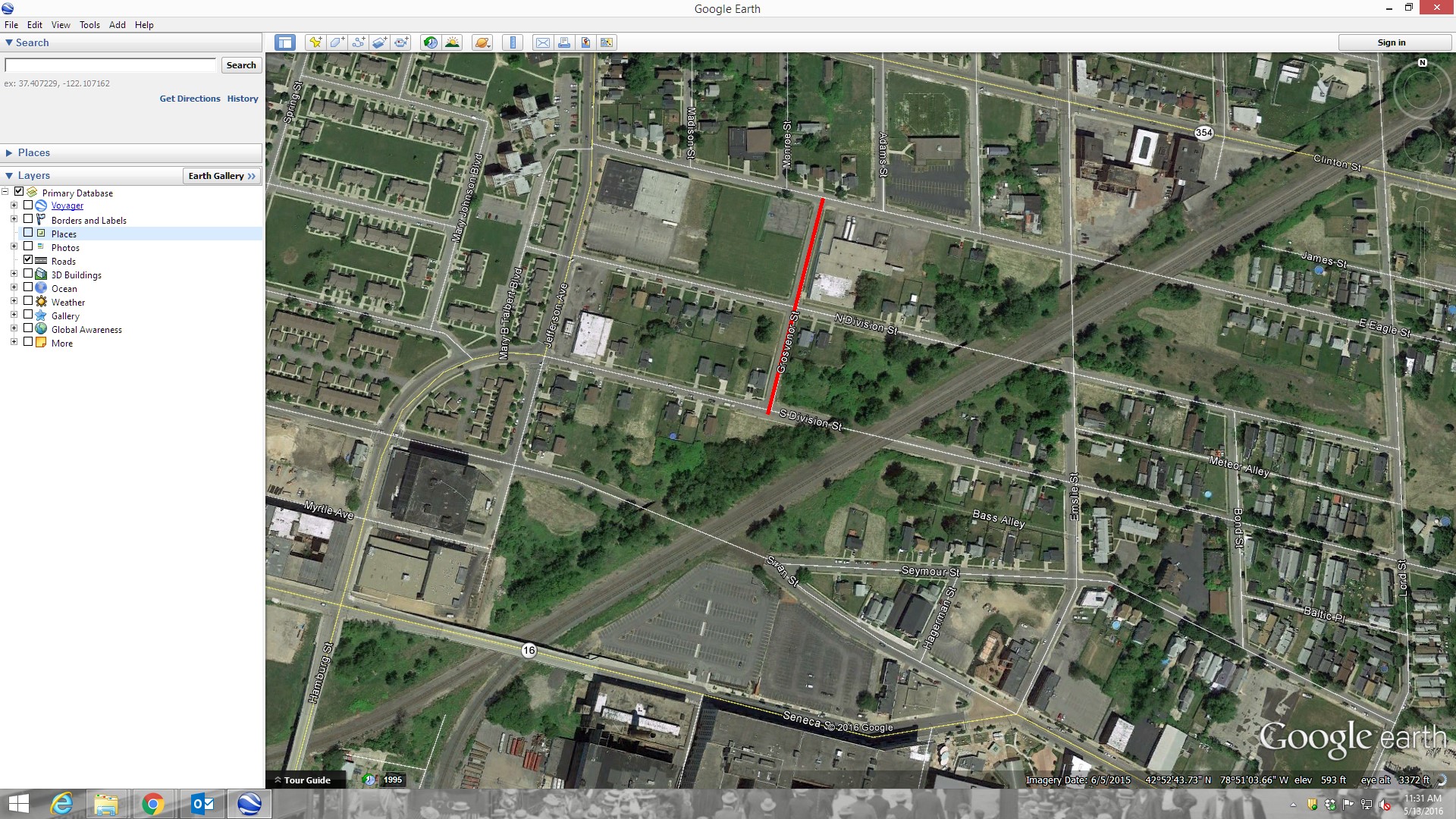
Grosvenor Street is a street on the near East Side of Buffalo.  The street currently runs two blocks, between South Division Street and Eagle Street.  Historically, the street continued south to Seymour Street, and changed name to Heacock after crossing the railroad tracks.  When at-grade rail crossings were removed, the street was shortened, and Heacock Street was later changed to Larkin Street.  The street is named after Seth Grosvenor, who only was in Buffalo for a short while, but left an important impact on the City.  Heacock Street was named after family friend, business partner, and brother-in-law of Mr. Grosvenor, Reuben Heacock (we’ll learn more about him later).    The name is pronounced Grove-nor, with a silent s.  There is also a Grosvenor Road in the Town of Tonawanda.  The name also lives on in the Grosvenor Room at the Buffalo Library, which happens to be where I do most of my research for this blog!

Seth Grosvenor Source: New York Historical Society

Seth Grosvenor
Source: New York Historical Society

Seth Grosvenor was born on Christmas Day, December 25, 1786, in Pomfret, Connecticut.  Seth’s family consisted of sixteen children – Abigail, Lucia, Roswell, Marcia, Godfrey, Martha, Mary, Polly, Betsey, Eliza, Thomas, Abel, Peggy, George, Seth, Stephen.   The family moved to Columbia County, New York around 1800. Little is known about when Seth Grosvenor arrived in Buffalo, as reports from the times tell conflicting stories.  It is believed that Seth Grosvenor arrived in Buffalo in late 1812/early 1813 to settle his brother Abel’s estate and run his store following Abel’s death.  Abel had been attacked by a mob of volunteer troops from Baltimore who mistook Abel for Mr. Ralph Pomeroy, the keeper of the hotel at Main and Seneca Streets.  The story goes that Mr. Pomeroy offended the folks from Baltimore by stating he was a friend of the British, and a mob set out to kill Mr. Pomeroy.  They saw Abel and mistook him for Mr. Pomeroy and attacked him instead.  Abel Grosvenor left Buffalo with his family but died from his injuries a short time later.  It is believed that Seth came to town shortly thereafter, but some reports indicate that Seth had arrived earlier to help his brother at the store.

On December 31, 1813, during the Battle of Buffalo, Seth Grosvenor organized a group of 20 to 30 men to defend the village against the British and Native American Troops, by taking a stand at the corner of Main and Niagara Streets.  During the Battle of Buffalo, the Grosvenor store and all its merchandise were burned to the ground on December 31, 1813.  Four days later, on January 4th, Seth advertised that he was back in the dry goods business, selling out of the Harris Tavern in Clarence.  One of the amazing things about Buffalo’s resilience following the burning of Buffalo is the quickness with which people and businesses returned to the fledgling village.  On April 5th, the Gazette read:  “Buffalo village which once adorned the shores of Erie and was prostrated by the enemy, is now rising again; several buildings are already raised and made habitable; contracts for twenty or thirty more are made and many of them are in considerable forwardness.  A brick company has been organized by an association of most enterprising and public-spirited citizens, with sufficient capital for the purpose of rendering the price of brick so reasonable that the principal streets may be built up of that article”.  Mr. Grosvenor was a member of the brick company.  By May 24th, the Gazette reported the following completed structures:  “23 houses occupied by families, 3 taverns, 4 dry goods and grocery stores, 12 grocery and other shops, 3 offices, 39 or 40 huts (or shanties).”  Mr. Grosvenor had also returned to Buffalo from Clarence by April 24th advertising that he can be called upon “at the new house situate where the Printing Office of Salisburys’ stood, will find him opening an assortment of dry goods, groceries, hardware, cigars and tobacco.”  His shop was located at the northwest corner of Pearl and Seneca Streets, which is where the Pearl Street Brewery is now located.  Later that year, Mr. Grosvenor went into business with his youngest brother, Stephen.

It is said that Mr. Grosvenor remained a bachelor all his life due to a bad romance between himself and Mary Merrill of Buffalo.  Before the Battle of Buffalo, Mary was said to be engaged to Mr. Grosvenor.  Following the Battle, many Buffalonians sought shelter and safety at Harris Tavern in Clarence.  Miss Merrill was said to have been affected by the charm and heroics of Captain Harris.  Two months later, in February 1814, Mary Merrill became Mrs. Harris.  Their breakup is also said to be one of the reasons Mr. Grosvenor left Buffalo for New York City in 1815, after teaching his brother Stephen the ins and outs of business and leaving Stephen in charge of the business.  Stephen Keyes Grosvenor was an active member of the Whig Party, and later served as Justice of the Peace in Buffalo.   Despite Seth only spending two years here, he had established many close ties during those years, and he kept close to Buffalo even after he left.  Mr. Grosvenor lived at 39 White Street in Manhattan.  Following his death, his estate expanded the home and later built a new building, which still stands on White Street.

Seth Grosvenor Grave

Seth Grosvenor Grave

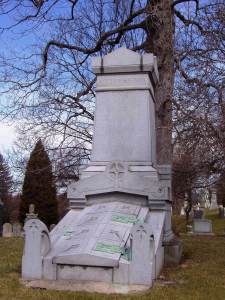
Mr. Grosvenor died in October 1857 and was originally interred in Manhattan at New York Marble Cemetery.  His remains were later removed and re-interred at Green-Wood Cemetery in Brooklyn in 1862.  He is buried next to his sister Eliza.

Mr. Grosvenor is often referred to as the “City’s greatest benefactor”.  He donated money to build the Grosvenor Library in Buffalo (as well as money for the New York Historical Society and Library in NYC).  In 1857, while living in New York City,  he announced that he was leaving $40,000 to the City of Buffalo, to be paid two years after his death.  The first $10,000 was to be used to purchase a lot and build a building for a public library.  The remaining $30,000 was given, to be invested forever, and its income to be used for the purchase of books, to be kept open for the use of the public, and the books not to be lent out nor rented, only used for reading within the building.

Grosvenor Library Source: A History of the City of Buffalo: It's Men and Institutions

Grosvenor Library
Source: A History of the City of Buffalo: It’s Men and Institutions

The City accepted the bequest in 1865.  The library first used in space within the Buffalo Savings Bank Building at Broadway and Washington Street, and the library was opened to the public in 1870.   The City set aside $4,000 a year to operate the library.  Over time, a building fund was put together, and in 1891, the trustees erected the Grosvenor Library at the corner of Franklin and Edward Streets.  In 1897, the library was passed into the control of the City of Buffalo and by 1908, the library contained more than 75,000 books and 7,000 pamphlets for reference use.  The library operated for free use for citizens of Buffalo, temporary residents and strangers alike.  By 1920, the collection had grown to 162,000 volumes and the library was open from 9 am to 10 pm Monday through Saturday and 2pm to 6pm on Sundays.

The Grosvenor Library was open until 1956.  Of note are the Grosvenor Library’s collection of music as well as one of the largest genealogy collections in the country~  At the time, there were three different libraries in the Buffalo area – the Grosvenor Library, the Erie County Public Library – which was founded in the 1940s and provided bookmobile services to rural towns and villages, and the Buffalo Public Library – which developed out of the Young Men’s Association as early as 1836.  In 1953, the three institutions were combined by an act of the New York State legislature, creating the Buffalo and Erie County Public Library.  In 1963, the collections of the Buffalo Public and the Grosvenor Library were integrated on the shelves in the new Central library, which opened at Lafayette Square in October of 1964.  The Buffalo and Erie County Public Library inherited the collections, which form the core of the Grosvenor Room at the Downtown Buffalo Library.    The Grosvenor Library Building was demolished in 1974.

Want to learn about other streets?  Check out the Street Index.

Sources:

  1. Rooney, Paul M. 150 years, 1836-1986 : Buffalo and Erie County Public Library.  [Buffalo, N.Y. : Grosvenor Society, 1986].
  2.  “Grosvenor Street Reminds City of Donor of Library”  Courier Express Jan 11, 1942, sec. 5 p 5
  3. “Seth Grosvenor and Buffalo” Grosvenor Library Bulletin, Volume 3, Number 4.  June 1921
  4. A History of the City of Buffalo:  It’s Men and Institutions.  Buffalo Evening News, Buffalo. 1908.
  5. Grosvenor Library Bulletin, Vol III.  September, 1920.
  6. “History of the Buffalo & Erie County Public Library”.  Buffalo and Erie County Library.  175th Anniversary of the Buffalo and Erie County Public Library.
  7. “The Grosvenor Family in Connecticut”.  Grosvenor Library Bulletin, Volume 1.


Read Full Post »

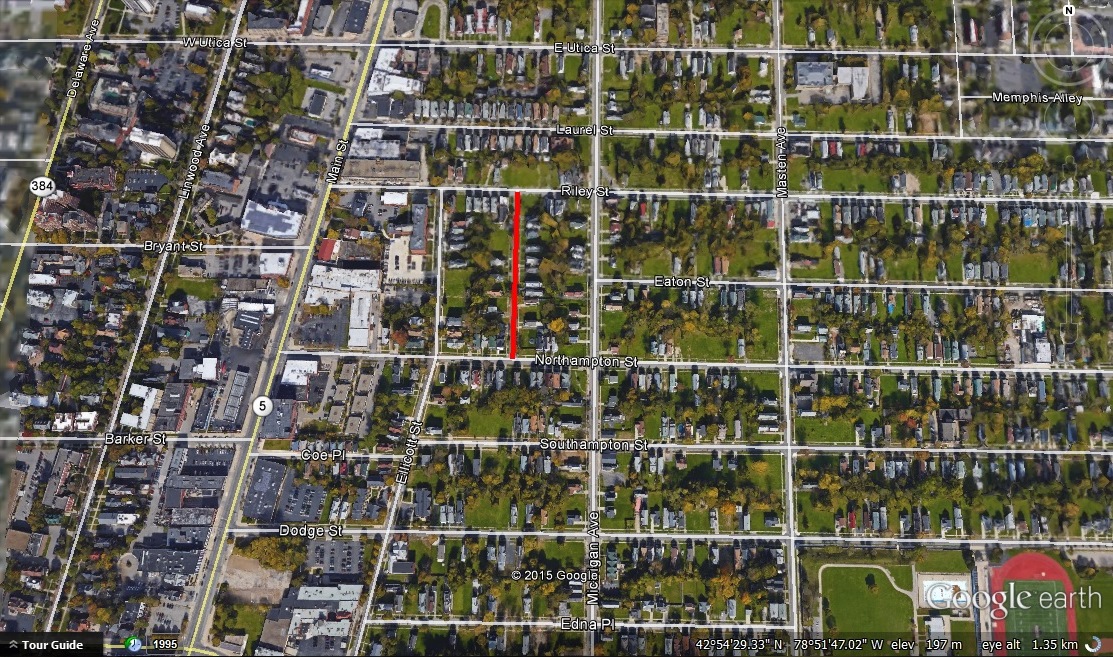
holland placeHolland Place is a one block long street in the Masten Park neighborhood on the east side of Buffalo, running between Riley Street and Northhampton Street.  The street is named after Nelson Holland.

Nelson Holland was born in Belchertown, Massachusetts in 1829.  The Holland family was a pioneer American family, John Holland had settled in Massachusetts in 1633.  Seven years after Nelson was born, his father brought the family to Western New York and bought a farm in Springville, New York.   Nelson attended rural schools and the Springville Academy (now the Griffith Institute).

nelson hollandIn 1850, Nelson Holland moved to Buffalo to work for his uncle, Selim Sears, who at the time was operating a mill in Michigan.  Nelson later purchased a portion of a saw mill, which stood where the Michigan Central Railroad station is (look this up).  He then purchased 4,000 acres of pine lands in Michigan.  In 1855, Mr. Holland purchased a mill in St. Clair, Michigan.

In 1864, Mr. Holland purchased 4,000 acres in Buffalo and came to Buffalo to look after his purchase, leaving his St. Clair mill in the hands of his brother Luther.  Mr. Nelson purchased interests in many mills and lands, stretching into Canada.  He owned lands stretching from Buffalo to Texas.

Mr. Holland’s holdings held firm through the ups and downs of the lumber industry, and survived the panics of 1857, 1873 and 1893.  He had controlling stakes in as many as 4 different lumber companies at the same time.  Even after 40 years in the business, Mr. Holland was said to “retain much of his old-time vigor, ambition and force with which to carry forth plans of future operations”.

In 1877, the Buffalo firm of Holland, Graves and Montgomery was organized.  They handled more than 500,000,000 feet of pine lumber.  Mr. Holland was considered to be a master in the art of manipulating pine forests to get product into marketable form.  It was also said that he had probably cut and consumed more pine lumber than any other man.

Mr. Holland was also prominent in lake transportation interests and was proprietor of the Buffalo Standard Radiator Company, which made radiators.

Holland Family Plot

Holland Family Plot

He was a member of North Presbyterian Church and served as President of its Board of Trustees, and then later became a member of Westminster Presbyterian Church.

Mr. Holland married Susan Ann Clark of Silver Creek in June 1857.  They had four children – Jessie Clark, Helen Lee, Grace and Nelson Clark.  Their son Nelson II took over the lumber business from his father. The family lived in a large brick home with sandstone trimmings on the northwest corner of Delaware and Bryant. Mr. Holland died in 1896 and is buried in Forest Lawn Cemetery.


Sources:

  1. Our County and its people:  A descriptive work on Erie County, New York.  Edited by: Truman C. White.  The Boston History Company, Publishers: 1898.
  2. Memorial and Family History of Erie County, New York.  The Genealogical Publishing Company:  Buffalo:  1906.
  3. Larned, J.N.  A History of Buffalo:  Delineating the Evolution of the City.  The Progress of the Empire State Company:  New York.  1911.

Read Full Post »

ripleyRipley Place is a short, one-block street on the west side of Buffalo, running between Vermont and Connecticut Streets, near Richmond Avenue.

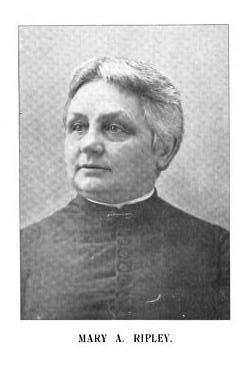
Mary A. Ripley was a teacher at Central High School from the 1860s through the 1880s.  She was born in Windham, Connecticut in 1831, but grew up in Alden, New York and attended local schools.  She was known around town as one of the few woman who dared in the 1880s to wear her hair short.

mary ripleyMiss Ripley taught for seven years at School 7.  In 1861, she became a member of the faculty at Central High School.  She was determined to make over the school.  At the time, the teachers often had to call in the police to stop the students’ riots.  Miss Ripley asked for the job of taking care of the boys’ study hall, which was where many of the riots originated.  The male teachers doubted she’d be able to handle the boys, but Miss Ripley kept order with little difficulty.  She would tell people her goal was to develop young people’s conduct and character.

In 1867, Miss Ripley published a volume of poems.  She also wrote a textbook of Parsing Lessons for small school room use and a book titled Household Service.  Many considered Miss Ripley a talented poet and writer; however, her heart was truly dedicated towards her students.  She made long lasting impacts on her students.

Several of her poems were featured in magazines.  The following comes from the Magazine of Poetry and Literary Review, Volume 6:

ripley poem

When the State Normal School opened in Albany, Miss Ripley was summoned there to become one of its first teachers.  She went to Albany to teach for a few years, but missed her old school so she returned to Buffalo.  She taught at Central until 1888.

Miss Ripley received many honors in her years teaching.  During the Civil War, at a Washington’s Birthday celebration, she was seated with former President Millard Fillmore.  In 1886, for her 25th anniversary of teaching at Central, she was given a gold watch and roses.  For her retirement, she was given a diamond ring from “Miss Ripley’s Boys and Girls”.  They formed the Mary A. Ripley Association, which met for several years.  Miss Ripley passed away in 1893.

Mary Ripley Library in the Union Hall.  Source:  WNY Heritage

Mary Ripley Library in the Union Hall. Source: WNY Heritage

The Mary A. Ripley Memorial Library was established in the Women’s Educational and Industrial Union building.  Miss Ripley was a member of the Board of Directors of the Union.  The Ripley Memorial Library was furnished at a cost of $2,000 and contained 500 volumes when it first opened.  The Ripley Memorial Library was established with the Public Libraries division of the University of the State of New York.  The library was widely used as a place to read and study.

The Women’s Educational and Industrial Union was established in 1884 by Harriet Townsend.  We’ll get to more about the Townsend men and Townsend Street on another day, but it’s women’s history month, so we’ll talk about her today!  Mrs. Townsend was made the CEO of the organization due to her intelligence, vision and management skills.  She had no children, which allowed her to work full time for the advancement of women, advocating for women’s rights all of her life.  The Union building was located on Delaware Ave at Niagara Square (site of the City Court Building) in the former Babcock house, which was later demolished to build a larger building.  During the dedication ceremony of the new building, Miss Ripley recited a poem she had written.

Membership into the Union was $1. Union reports stated “We no longer listen to the selfish moralist who cries ‘Let the woman stay in her home, her only safe haven'”, and that “it is not, an association of benevolent, well-to-do women, joined for the purpose of reaching down to help the poor and persecuted women, but a Union of all classes and conditions of women”.  The concept was unique at the time.

Union Building on Niagara Square c. 1890.  Source:  WNY Heritage

Union Building on Niagara Square c. 1890. Source: WNY Heritage

The Union building contained the first gymnasium for women in Buffalo, kitchen space for instruction in nutrition and cooking, and provided classes on various topics not provided in public schools.  The Union gave scholarships to women to attend Bryant and Stratton and trained women for low wage jobs, such as cooks, domestics, and seamstresses.   The Union taught members how to navigate the bureaucracy of government.  The Union lobbied to establish equal guardianship rights for women in case of divorce.  The Union successfully got a women appointed to the School Board and fought for rights for all women.

The Union dissolved in 1915, finding that its work was finished – most of its groundbreaking programs had been adopted by educational, governmental and civic organizations.  These Women’s Union began programs we take for granted today such as vocational education, physical education, night school, free kindergartens, probation officers, Legal Aid, etc.  The building then became Townsend Hall, part of the University at Buffalo and was the college’s first College of Arts and Sciences, named after Harriet Townsend.  The building was razed in 1959 after it was destroyed by fire.  The Townsend Hall name was transferred to a building on South Campus.

Learn about other streets in the Street Index.

Sources:

  1. “Ripley Place is Memorial To Beloved Central High Teacher” Courier Express Oct 5, 1941, sec 5 p 3
  2. “Streets Have Historical Link” Buffalo Courier Express. Dec 7 1952 p 7-8
  3. The Women’s Educational and Industrial Union of Buffalo.  Compiled by Mrs. Frederick J. Shepard.
  4. “Harriet A. Townsend:  The Women’s Union.”  Susan Eck.  Western New York Heritage Press.
  5. The Magazine of Poetry, A Monthly Review.  Charles Wells Moulton.  Buffalo NY 1894.

Read Full Post »

Richmond Avenue

Richmond Avenue

Richmond Avenue runs north-south through the West Side of Buffalo, running between Forest Avenue and North Street.  The road was originally known as Rogers Road and served as a trail from Buffalo to what was known as a Shingletown area in the north.  Even when the City reached to North Street, Shingletown was still mainly open fields used for grazing animals and raising vegetables.  The most prominent building on the street was a tavern located on a terrace within a fruit orchard at the corner of Rodgers (now Richmond) and Utica Avenues.  The tavern allowed travelers heading between Buffalo and Black Rock a place to rest.  Residential development of the area increased in the 1880s and by 1900 the area resembled its current appearance.  The street was named in 1879 in honor of Jewett Richmond, who was involved in the salt and grain industries.

jewett richmondJewett Richmond was born in Syracuse in 1831.  He entered the salt business at a young age and began shipping salt to Buffalo and Chicago.  On his trips to Buffalo, he saw Buffalo’s potential to become a grain center.  He moved to Buffalo in 1854 and entered the grain business, building a grain elevator and establishing a company on the lakeshore.  He built the Buffalo and Jamestown railroad.  He was president of the Marine Bank, the Mutual Gas Light Company and the Buffalo Board of Trade.  He also served on the City Council.

At one point, in 1881, a delegation of prominent citizens wanted him to run for Mayor.  Mr. Richmond was among 5 people they asked to run for Mayor that year (Major Doyle was another).  Mr. Richmond suggested that they ask Grover Cleveland first.  Grover Cleveland accepted, and was elected to his first important political post.

Mr. Richmond was involved in many organizations.  He was a member of the Young Men’s Association, which established the Buffalo Public Library.  He was a trustee of the Charity Organization Society and the Forest Lawn Cemetery Association.  He was a charter member of the Buffalo Historical Society (now the Buffalo History Museum), the Buffalo Society of Natural Sciences (now the Buffalo Museum of Science) and the Buffalo Academy of Fine Arts (now the Albright-Knox Art Gallery).   He was a founder of the Buffalo Club and the Country Club of Buffalo.

The Richmond family lived at 844 Delaware Avenue.  The property originally encompassed all of the land between Delaware Avenue and Richmond Avenue and was landscaped with gardens and some of the oldest trees in Buffalo.  In 1879, a petition was submitted to City Council to rename Rogers Road to Richmond Avenue in Mr. Richmond’s honor.

844 Delaware Avenue

844 Delaware Avenue

In January 1887, the Richmond house was destroyed by a fire.  In 1888, a new home was built at 844 Delaware Avenue.  The house is often referred to as the Lockwood house, as the 2nd owner of the house was Thomas B. Lockwood.  The house is currently owned by Child and Family Services.

Mr. Richmond died in 1899.  In addition to the street, two stained glass windows are also dedicated to his memory – one in Westminster Church and one in the Richmond Chapel in St. Paul’s Cathedral.

Richmond Monument in Forest Lawn Cemetery

Richmond Monument in Forest Lawn Cemetery

1920s version of the Richmond Avenue Extension

1920s version of the Richmond Avenue Extension

During the late 1920s and early 1930s, there was a proposal to extend Richmond Avenue further south of North Street.  During the late 1930s, residents of Richmond Avenue petitioned to have the city change the name from Richmond Avenue to Richmond Parkway in order to preserve the residential nature of the street.  In Olmsted’s plan, the “Avenues” were single drive lanes with double rows of trees on either side, while the “Parkways” were the double drive lanes with a carriage path in the center.  The residents were determined to keep the street as only a street of “homes and churches”.  Another proposal to extend Richmond Ave came to life after the construction of the Skyway in the 1950s.  This proposal would have connected Richmond Avenue to the Skyway.  None of these proposed extensions were built.

Check out the Street Index to learn about other streets.

Sources:

  1. Times, Oct 26, 1929, “Days of Auld Lang Syne” Buffalo Streets Scrapbook, vol 2
  2. Richmond Ave may extend to downtown Courier Express July 10 1935, p 13
  3. Named after Jewett Richmond “Richmond Avenue Perpetuates Memory of Cleveland Sponsor” Courier Express Oct 16, 1938 sec 5 p 3
  4. “Name Change Asked:  Richmond Would become Parkway” Courier Express December 2, 1938.  Found in Buffalo Streets Scrapbook, Vol 2 p 134


Read Full Post »

tupperTupper Street is an east-west road in downtown Buffalo that runs between Maryland Street and the Elm-Oak arterials.  Tupper Street was one of the first streets added to Buffalo after the original plan for the Village of Buffalo was laid out by Joseph Ellicott.

Samuel Tupper first came to Western New York in 1789 as a young surveyor.  He came from Connecticut and served for many years as a surveyor.  He worked on the Phelps and Gorman lands (between Lake Ontario and the PA State line, in the vicinity of Seneca Lake and the Genesee River), the Holland Purchase and as chief surveyor for the Connecticut Land Company on the “Western Reserve” in Ohio.  Mr. Tupper worked for Moses Cleaveland and laid out the City of Cleveland.  He also gave the city its name, deciding to name the city he was laying out after his boss.

Map of Buffalo Outer Lots - Samuel Tupper purchased lot 17, north of Chippewa Street in 1808

Map of Buffalo Outer Lots – Samuel Tupper purchased lot 17, north of Chippewa Street in 1808

In 1804, when New Amsterdam was laid out by Joseph Ellicott, there were only 14 landowners here in Buffalo.  In 1805, five more land owners were added, and Samuel Tupper was among them.  He came to Buffalo to run a contractor’s store, which were the stores that took care of purchasing and dispatching supplies to American military posts in the West.  He purchased inner lot 7 in 1805, which was at the northeast corner of Seneca Street and Willink Avenue (which became Main Street).  In 1808, he purchased outer lot 17.  He gave his name to the street north of his property on the outer lot and built his house at the corner of Main and Tupper.  Judge Tupper’s house was the 2nd house burned during the War of 1812.  Following the war, Judge Tupper built a large mansion on the site and served on a committee to investigate losses in Buffalo.

In 1808, Buffalo was made the county seat of what was then Niagara County (breaking off from Genesee County).  The first Judge was Augustus Porter, with Samuel Tupper and Erastus Granger working as his associates.  Mr. Tupper was not trained as a judge, but was known to have capabilities and qualities that were required of society at the time.  It was possible at the time to serve on the bench without legal training.  His title was Associate Judge of the Common Pleas.  He served as a judge until his death in December 1817.

Judge Tupper had no children.  An adopted daughter of his became the wife of Manly Colton, the Erie County Clerk.  The Colton family occupied the Tupper house for many years following Judge Tupper’s death.

To learn about other streets, check out the Street Index.

Sources:

  1. “Two Streets Perpetuate Names of Early Jurists”.  Courier Express Nov 2, 1941 sec 6 p 3
  2. Smith, Perry H.  History of the City of Buffalo and Erie County.  D. Mason & Co., publishers.  Syracuse, NY:  1884.


Read Full Post »

Often a group of streets will be named after a theme.  This is often seen when a developer may name a bunch of streets after his family members or friends.  Many people know that Washington, DC has streets named after all 50 states to form the City’s grid (crossed by alphabetic and numbered streets).   The City of Buffalo has streets named after 32 of the 50 states.  Many of these state street names originated in one of Buffalo’s original street grids.

Map of Village of Black Rock, 1816 Source:  New York State Archives

Map of Village of Black Rock, 1816
Source: New York State Archives

Many of the streets named after streets are located in what was the original development of the Village of Black Rock.  The Black Rock streets were originally laid out  two years before Joseph Ellicott came to Buffalo!  New York State purchased a one mile strip of land along the Niagara River known as the New York State Reservation in 1802.  The State laid out the streets of the Village of Black Rock.  For 20 years, Black Rock would serve as Buffalo’s rival.  In 1825, Buffalo won its fight to be the terminus of the Erie Canal, became a booming city, and annexed the Village of Black Rock in 1854.

State named streets in Black Rock include Georgia, Carolina, Virginia, Maryland, Pennsylvania, Jersey, York, Connecticut, Rhode Island, Massachusetts, Hampshire.  All of the original 13 colonies are represented by these streets, other than Delaware, which was originally located where Hudson Street is today.  When Buffalo and Black Rock merged, duplicate street names were changed to prevent confusion.  These streets all lay parallel to each other in what is now the West Side of the City of Buffalo, but was originally known as the South Village of Black Rock or Upper Black Rock.  When originally laid out, these streets formed a grid with numbered streets.  The streets were laid out by Lemuel Forester, a Surveyor for New York State.  You can read about the numbered streets in Buffalo by clicking here.  These streets form what was known as Upper Black Rock.  Peter Porter was an important person in the early days of Black Rock.

It is important to note that it is difficult to differentiate between states such as North and South Carolina or Virginia and West Virginia, as the cardinal directions (north, south, east, west) are used in street naming conventions.  Early maps of Black Rock show Jersey, York and Hampshire as New Jersey, New York and New Hampshire, but as time elapsed, the convention to name streets “New” to differentiate between different alignments of a street which changed over time, of which the alignment’s name may be “New _____ Street” or “Old ______ Street”.

Streets in Buffalo Named After States

Streets in Buffalo Named After States  (click to view larger image)

The City also has streets named after the following states:

  • Alabama
  • Arkansas
  • California
  • Colorado
  • North and South Dakota (as Dakota Street)
  • Delaware
  • Florida
  • Illinois
  • Kentucky
  • Louisiana
  • Michigan
  • Minnesota
  • Mississippi
  • Montana
  • Nevada
  • Ohio
  • Oregon
  • Tennessee
  • Texas
  • Vermont
  • Washington
  • Wisconsin
  • Wyoming

There are several streets named after states that used to be located in Buffalo.  These streets names have been removed for various reasons:

Portion of 1900 Sanborn Map depicting locations of Idaho and Arizona Streets.

Idaho Street and Arizona Streets– were located in North Buffalo off Military Road, north of Sayre Street.  The Buffalo Foundry was located here, and industrial facilities eventually absorbed the streets.

1951 Sanborn Map showing the former location of Indiana Street


Indiana Street was located near the foot of Main Street.  The street was eliminated when Crossroads Arena (aka Marine Midland, aka HSBC, aka First Niagara Center) was built.  The street is currently buried under First Niagara Center.

1925 Sanborn Map Showing Alaska Alley

1925 Sanborn Map Showing Alaska Alley

Alaska Alley  – was closed on February 24, 1960.  This was a small alley off of Chippewa near Genesee and Washington.   The block where Alaska and Seward Alleys were located is now parking for the Electric Tower building.

Iowa – used to be the part of LaSalle Avenue from Bailey to Eggert (near Minnesota Avenue).  However, they changed the name when they wanted to rename Perry Street to Iowa Street.  They then decided that Perry was too important to change the name of the street.  At this time, they also tried to change the name of Fulton Street to Oklahoma, but also decided that Fulton was too important of a person to change the name of the street.

In 1901, the City wanted to rename Indian Church, Hudson or South Division Street to Missouri.  Residents complained because it sounded like “Misery” to them, and they did not want to live on “Misery Street”.

There is no Maine Street, because it would be confusing because it sounds like Main Street.

I was unable to find evidence of streets in Buffalo named after the following five states:

  • Kansas
  • Nebraska
  • New Mexico
  • Utah
  • Hawaii

Buffalo Ex-Pats living in the Washington, DC area will be happy to know that Columbia Street, in the Cobblestone District near the arena, is named after the District of Columbia.

To answer the “which street named after a state is your favorite?” question – mine is York Street.  My dad moved to Buffalo (from Central New York….and after time spent in the Navy) in 1978 and his first apartment here was on York Street.  My parents lived there when the first got married.  This is where my branch of the Keppel family started in Buffalo.  🙂

To read about other streets, click the Street Index.

Sources:

  1. “Many Changes Made in Names of Streets Here” Courier Express, August 26, 1928
  2. “New Names for Streets” Buffalo Express Oct 7, 1901
  3. “Council Closes Alaska Alley” Buffalo Courier Express, February 24, 1960.

Read Full Post »

Older Posts »

Field Notes

Live from Buffalo, NY

Grants.gov Community Blog

Connecting the grant community to #LearnGrants

Dienna Howard

I create, therefore I am.

Hidden Waters blog

Companion blog for the book "Hidden Waters of NYC"

Hoping for a Tail Wind

Because I definitely brought way too much gear.

priorhouse blog

Photos, art, and a little bit of LIT.

Sheepie Niagara

Bleating the Beat Since 2015