Feeds:
Posts
Comments

Archive for the ‘Uncategorized’ Category

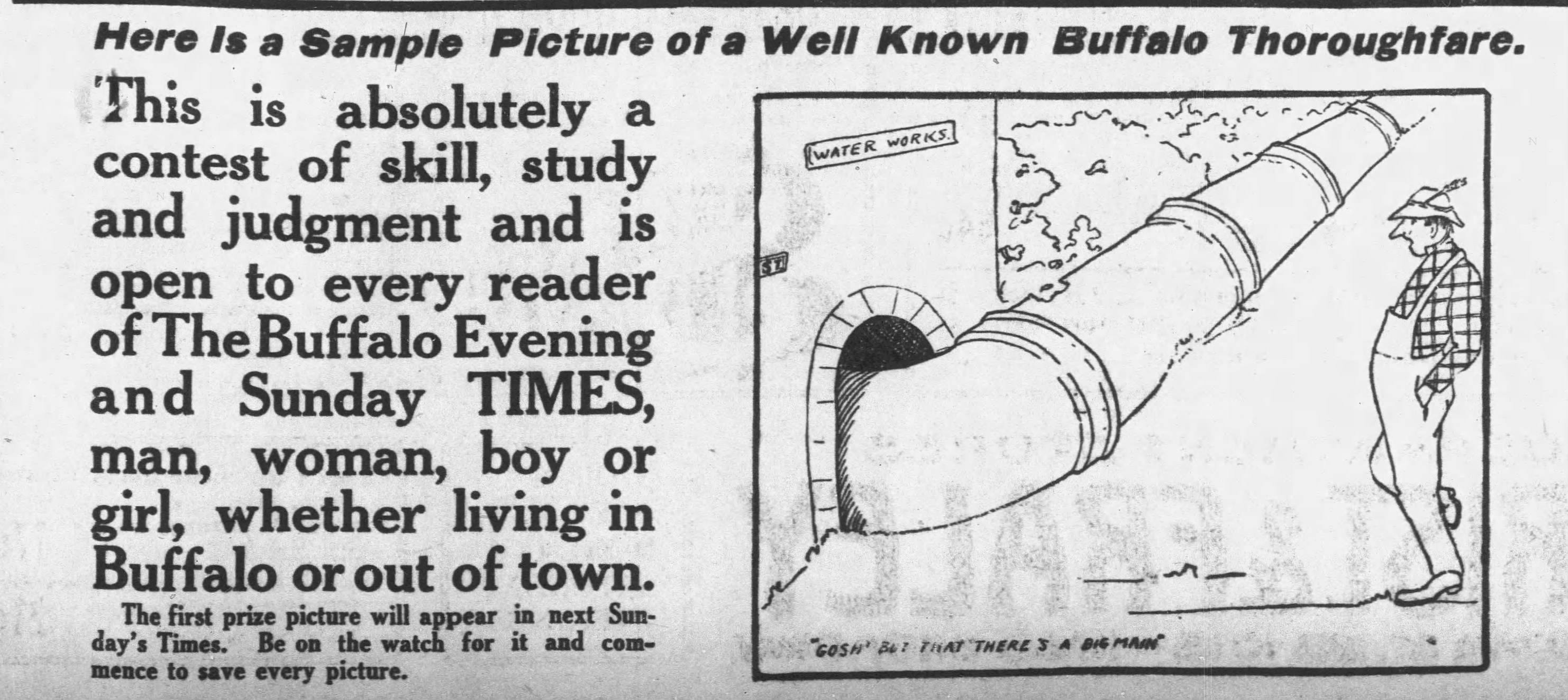
street_contest_1 (1)

Can you guess what street this picture represents?

Time for some end-of-summer fun!  In November of 1910, the Buffalo Times newspaper launched the “Great Street Picture Contest.”  The idea behind the contest was to guess what street is represented by a picture.  Each day, a new picture would be printed in the Buffalo Times, with players instructed to keep track of all of the streets and then, at the end, submit the street contest forms to the newspaper for prizes.  The first picture for the Great Streets Picture Contest was published on Sunday, November 20, 1910. 

There were 581 prizes that were given out.  The prizes amounted to $6,604 in value (approximately$218,401 in 2024 dollars).  Some of the prizes:

  • First Prize – a 1911 five-passenger, four-door, torpedo body Reo Touring Car, including top, windshield, “etc, etc”, purchased at the Poppenberg Auto Co at 674 Main Street (best known today as the Former Tent City/the new Wurlitzer Lofts)- valued at $1,650 ($54,567 today)
  • Second Prize – a 1911 KRIT Runabout with mohair top, windshield, gas or electric lamps, Prestolite tank or generator and gas headlights from the Bison Motor Company at 1204 Main Street (now the site of Delta Sonic) – valued at $900 ($29,764 today)
  • Third Prize – a beautiful Krakauer Player Piano, purchased at Denton, Cottier & Daniels at Court and Pearl Street(Denton, Cottier & Daniels relocated to Amherst, but they JUST closed this year after 197 years in business – since 1827) – valued at $750 ($24,832 today)
  • Fourth Prize – a beautiful Krakauer Piano, also from Denton, Cottier & Daniels – valued at $450 ($24,803 today)
  • Fifth Prize – a handsome Upright Piano purchased at C.H. Utley, 557 Main Street (now a part of M&T Center at Fountain Plaza) – valued at $400 ($13,228 today)
  • Sixth Prize – a five-horsepower twin-cylinder Indian Motor Cycle purchased from Neal, Clark & Neal at 645 Main Street – valued at $275 ($9095 today)
  • Seventh Prize – a Regent style Columbia Grafonola(a brand of phonograph player) purchased from the Columbia Phonograph Company at 622 Main Street(the Theater Place building best known as home to Sue’s and The Tralf – now Electric City) – valued at $200 ($6,614 today)
  • Eighth Prize – one of the latest style Pony Coats from N. Lefkowitz, furrier at Main and Chippewa Streets – valued at $100 ($3307 today)
  • Ninth Prize – a Lady’s Diamond Rink from A.E. Sipe, Diamond Importer in the Brisbane Building (still standing today, and there’s even still a jewelry store there today -New Generation Jewelers!) – valued at $75 ($2,480 today)
  • Tenth Prize -a Gent’s Gold Watch from T. C. Tanke at 378 Main Street (now the location of the Main Place Mall) – valued at $50 ($1,653 today)
  • Other prizes included things like other jewelry, bicycles, furniture, and an encyclopedia set.  The 66th to 265th prizes were a Diamond-pointed Fountain Pen valued at $1.00($33 today) and the 266th to 581st prizes were all books valued at $1.00 each ($33 today).

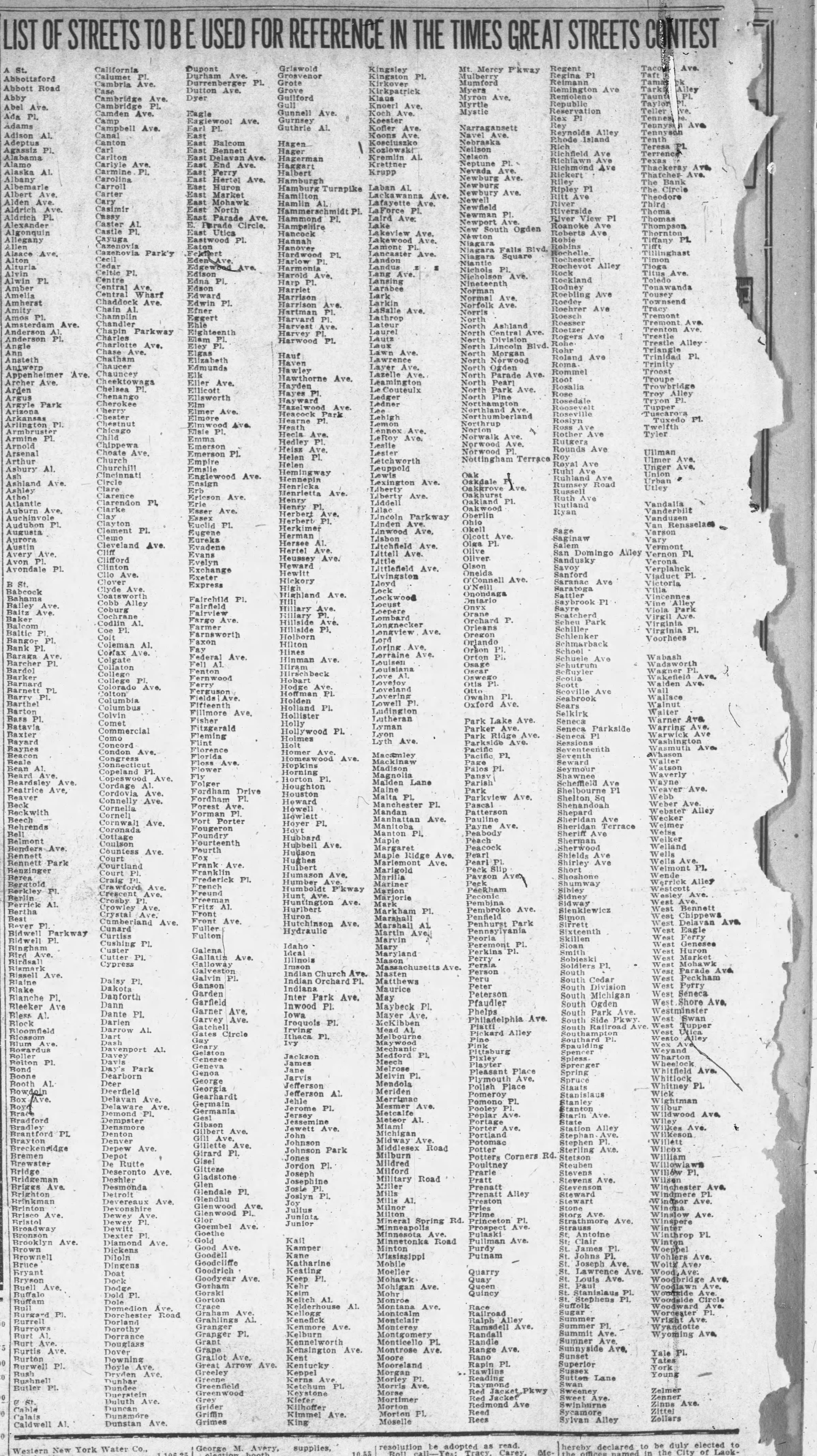
The contest was open to every reader of the Buffalo Times, “man, woman, boy or girl, whether living in Buffalo or out of town.”  The contest boasted that there was no cost to enter, however, you had to get a copy of the Buffalo Times each day – so indirect costs.  The paper was 1 cent during the week and 5 cents on Sundays (33 cents on weekdays and $1.65 on Sundays in today’s dollars).  Buffalo Times helped people out by also printing a list of all of the streets to help people know which street names were used for the 90 streets that were selected for the contest. 

Greats_Streets_Contest list of streets

Because there were so many prizes, they assumed that everyone who entered would be able to win a prize of some sort.  Entries must only include one guess per street picture, but each person was allowed to send in a maximum of three complete sets of answers.  Prizes were awarded to the persons who submitted complete or nearest complete lists of correct answers to the published pictures.  Employees of the Buffalo Times and their families were not eligible for prizes.  All contestants who won prizes had to sign a statement that they were not connected directly or indirectly with any employee of the Buffalo Times.  If there was a tie where certain people tied in the number of correct answers, “the award will be made on a basis of neatness.”  PENMENSHIP!!! 

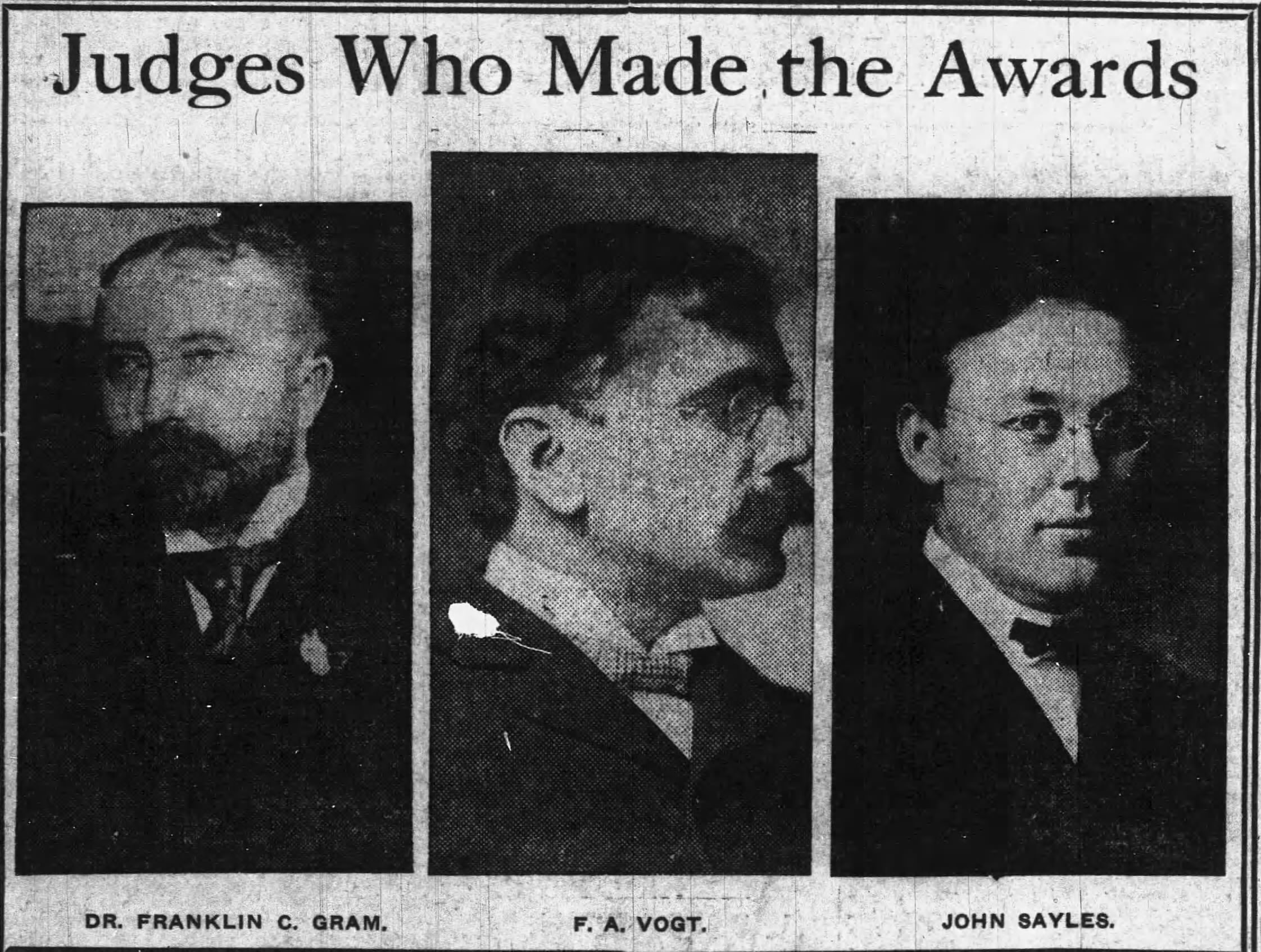
streets_contest_judgesThe contest ran until March 1911.  The judges took three weeks to review the responses.  A staff of 20 tabulated all of the results examined and checked the lists of submitted answers against the correct answers.  Judges then reviewed the submissions and made their awards.  The judges were Professor Frederick A Bogt, principal of Central High School; Dr. Franklin C Gram, registrar of vital statistics for the Department of Health; and John Sayles, secretary to Mayor Fuhrmann.   The Times reported that “it is unnecessary to say that a more competent and fair-minded trio of public citizens could not have been invited to assume these duties, which were both onerous and responsible.”  To keep things fair, the judges were not given the names attached to the submissions when they were selected for the awards. 

streets_contest_judges_certificate   

The Times received 20,000 answer submissions for the contest!   Some submissions were very uniquely submitted – one contestant submitted his answers in the rear of a miniature automobile he had constructed himself.  One lady submitted her answers attached to a beautiful satin pillow she had made.  Some submissions were painted in various colors; one submission colored each of the Streets Contest photos and submitted the colored versions with the answer forms.  

One man had been ill and passed away shortly after the contest ended – his widow submitted his answers, telling the Times that the contest had helped him pass the time through his illness.  He received a special post-humous award just based on that fact, and the Times sent the submission back to his wife so she could have them for sentimental value.  They did not publish which of the winners he was.  

The first prize winner was E.H. Lufkin.  He was a sign painter employed by Scott Sign Company.  He roomed at 16 East Eagle Street.  Mr. Lufkin was a lucky guy based on my research – in 1884, he won first prize in a five-mile race at the Buffalo Roller Skating Rink.  In 1927, Mr. Lufkin was also one of the winners of the Buffalo Times’ baseball contest!   The second prize winner was Miss Marion Kennedy, daughter of Professor Joseph Kennedy, principal of School No. 27.  She lived with her parents at 205 Breckinridge Street and was in 7th grade in School No. 18.  She said that the contest helped her brush up on her local geography.  The third prize winner was Mr. Thomas Patterson.  He lived with his family at 549 Goundry Street in North Tonawanda.  He won the player piano.  The fourth Prize winner was Thomas Pakenham, who lived at 376 Ellicott Street.  The fifth prize winner was Phil Kost, who lived at 269 Washington Street.  

The Times ran a streets contest again in 1913, with new images to represent streets.  In 1913, the prizes were given in gold!  The first prize was $1,000 in gold.  Second Prize was $500 in gold.  Third prize was $250 in gold.  Five prizes of $100 in gold were given, ten prizes of $50 in gold, twenty prizes of $25 in gold, and fifty prizes of $10 in gold.  In total, $5,000 in gold was given away in 1913.  Does anyone know how to calculate the value of gold in 1913 vs today?  

Here’s some more of the images:

streets_contest_1913_64    street_contest_7  

I will be running a series of the pictures on my facebook page for people to guess what streets are depicted, so head to facebook.com/buffalostreets to make some guesses over there on what streets are in the pictures!

My last tour of the summer will be on this coming Monday, September 2nd, at 2pm.  Celebrate Labor Day with a tour!  More information about the tour can be found here:  facebook.com/events/1002890391057778

Want to learn about other streets? Check out the Street Index. Don’t forget to subscribe to the page to be notified when new posts are made. You can do so by entering your email address in the box on the upper right-hand side of the home page. You can also follow the blog on Facebook. If you enjoy the blog, please share it with your friends; It really does help!

Sources:

  • “Four Guess Correctly in Times Baseball Contest.”  Buffalo Times.  April 29, 1927, p3.
  • “581 Prizes Worth In All $6604.00 Given Away Absolutely Free in the Times Great Street Contest”.  Buffalo Times.  November 28, 1910, p7.
  • “$5,000 in Gold:  Street Contest of Unparalleled Magnitude.”  Buffalo Times.  February 7, 1913, p10
  • “Roller Skating Match.”  Buffalo Sunday Morning News.  August 17, 1884, p1.  
  • “Names of Winners in the Times’ Great Street Contest.”  Buffalo Times.  April 9, 1911, p1.  
  • All Images from the Buffalo Times.

Read Full Post »

This week marks 13 years that we’ve been on this Buffalo Streets journey together!  AND I have scheduled some dates for walking tours for the season!  

Once again, I am giving two distinct tours – Discover Downtown – Then and Now and Discover Lower Main Street.  These tours will be free, as I want to ensure they are accessible to all, but donations will be graciously accepted.  All money received will go directly into continuing to build up Discovering Buffalo, One Street at a Time.

lafayettesquareDiscover Downtown – Then and Now – we will look at the area around Lafayette and Niagara Squares and the core of Downtown Buffalo.  We’ll talk about the history of the central part of Downtown as the city grew and the buildings in the area.  You’ll also get an up-close look at the progress of the Main Street Multi-Modal Access and Revitalization Project (Cars Sharing Main Street), which is currently working on replacing the 35-year-old metro rail track bed.

This tour meets outside of Public Espresso in the Hotel Lafayette, 391 Washington Street, at the corner of Washington Street and Clinton Street.  The tour will be about 1.5 miles and will be a loop that ends near the starting point.

Click for Facebook event link for Discover Downtown Then And Now tour here.

This tour will be offered:

  • Saturday, July 6th at 2:00pm
  • Wednesday, July 31st at 5:30pm
  • Saturday, August 10 at 2:00pm
  • Monday, August 19 at 5:30pm
  • Monday, September 2nd at 2pm  (LABOR DAY)  

lowermainDiscover Lower Main Street – this tour looks at the area of Lower Main Street, south of Church Street, portions of the former canal district, and the Erie Street corridor.  We’ll talk about some of the earliest history of Buffalo, how the area has changed over the last 150 years, and you’ll get a glimpse of the construction happening right now at the former location of Memorial Auditorium.

This tour will start at the Tim Hortons in Harbor Center, 1 Scott Street, corner of Main and Scott Streets.  The tour will be about 1.5 miles and will be a loop that ends near the start.  This tour does include going down one staircase, and walking up 2 other staircases, each about 15 steps.
 

This tour will be offered:

  • Wednesday, July 3rd at 5:30pm
  • Sunday, July 14th at 2:00pm
  • Sunday, July 28th at 11:00am
  • Saturday, August 24th at 2:00pm

To RSVP for any of the tours, you can email buffalostreets@gmail.com, RSVP to the facebook event links, or feel free to just show up!  Tours will be rain or shine. Looking forward to seeing some of you on tours!  I always enjoy getting to talk history with people in person.  I may add some tours in the fall depending on how the weather shakes out.  

street_contest

Example image for the street contest from 1910.  Guess the street!

Hope you’re all enjoying the start of summer!  Also coming later this summer, I will be running a contest on my facebook (facebook.com/buffalostreets) account and Instagram (instagram.com/discoveringbuffalo) that was run in a Buffalo newspaper back in 1910 where there were cartoon images that represented a street and you’d have to guess what street they meant.  They ran for 90 days in the newspaper, so we’re gonna have some fun with that (some of them are hard!)  

I have some new posts coming soon, I promise.  I’ve been working on a post that includes info about one of the worst commercial district fires in Buffalo History, which was eerie given the recent fires that occurred last week!  I have Thanks for sticking with me over the last 13 years.  It’s been a fun adventure learning about streets with all of you.  Your feedback and stories truly mean the world to me, even when I don’t have time to respond to them all.  Come out for a walking tour and let’s talk more about Buffalo!!  

Read Full Post »

Happy Women’s History Month!!  As any reader of this blog knows, our streets are often named after rich white men.  I think when we think of women’s history, we often remember the big changemakers, but I think it’s important to remember all the women who lived fairly regular lives.  These women were daughters, maids, workers, wives, and mothers. They may never have held elected office, owned large amounts of real estate, or run successful businesses. And I think it’s important to celebrate these women, remembering that our lives today are built on these women.  Behind every man I’ve written about, there was almost always a woman on the sidelines.  Many of those women are forgotten to history, their names written as Mrs. Husband’s Name. Even more are completely forgotten in the pages of history all together.  So, we remember those women.

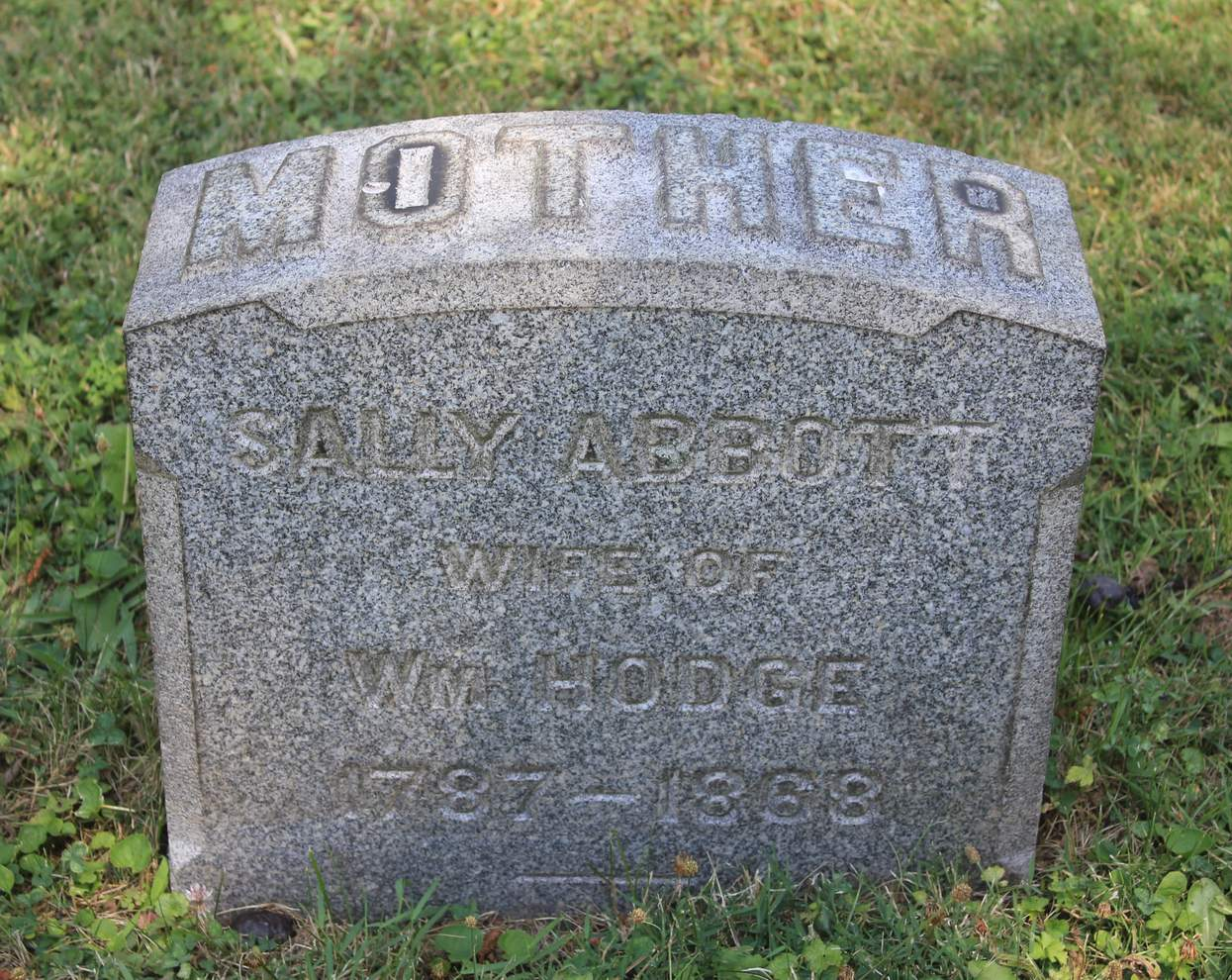
I remember women like Sally Hodge. Sally married William Hodge when she was 14 years old. Sally arrived in Buffalo in 1805 as the 17-year-old bride of 23-year-old William and the mother of two babies. They came from Richfield, NY, by wagon to Utica, where they embarked on a boat up the Mohawk River, into Wood Creek, through Oneida Lake, down the Oswego River into Lake Ontario to the Niagara River. When they reached Lewiston, the boat was taken out of the river and carried on a wagon by an ox team and put back into the river past Niagara Falls and they traveled down to Buffalo Creek. The total trip took 20 days. Twenty days of boat travel with two babies under 3! The Hodge family had no money and no land. They existed on their own ingenuity and what they could do with their own hands. The family lived on the outskirts of town, near Main and Utica, well out of the Village of Buffalo limits. Sally had more children – Sophia in 1807, Philander in 1809, Sabrina in 1811, and Julia in 1813. Sabrina unfortunately died at 16 months old in May 1812.

On December 30th, 1813, during the Battle of Buffalo, the Hodge family originally thought they were ok. They figured that the Americans would not be defeated, plus they were well outside the Village (which only reached Tupper Street). When they saw the militia hurrying past their house, they realized it was time to leave. Sally bundled up her children and fled. The day was bright, but cold. There had been a heavy snowfall, which still lingered in the woods, but the roads were clear. The roads were full of villagers fleeing into the forest. The Hodges threw some household goods into a wagon, along with their children ages 11, 10, 7, 5, and a 2-month-old baby. Fleeing their home, they went to Harris Hill in Clarence. More than 500 settlers fled their homes. About 100 houses and numerous other buildings were reduced to ashes. Where there had been a thriving village with a promising future was left a scene of devastation and ruin where barely a living thing could be seen. The Hodge house was burned to the ground on New Year’s Day 1814, reportedly the last building burned by the British.

Six days later, on January 6th, 1814, Mr. Hodge brought his family back into town to live in the ruins of their house while he rebuilt it. Imagine living in a burnt-out shell of a house as a 26-year-old with your 5 children! Now imagine doing it in the middle of winter. While the Battle of Buffalo was over, the war had not yet ended. Twice during that winter, enemy troops crossed the river again. Thankfully, they were driven back by soldiers stationed here. Most of those who returned had little to live on except what was issued by the commissary department of the army. Sally’s next baby was born stillborn in December 1815. I can’t help but wonder if perhaps the trauma of all of this may have something to do with it? Sally went on to have more babies in 1816, 1821, 1824, 1826, 1830 and 1833. The rest of the babies all lived to adulthood. In total, Sally had 13 babies in 30 years. Hodge Street is named for her husband. I haven’t been able to find a photograph of her; all that remains is her gravestone.

Do you think Sally Abbott Hodge ever imagined a world where her life could have been different? A world where she could have choices? A world where Kathy Hochul, a girl who grew up in WNY, serves as Governor? Women back then were made of steel. Our city was built on the backs of these women. Women like Sally Hodge who persisted in a world where 14-year-old girls were expected to simply get married and have babies.

Here are the highlights of some of our streets named after women. 

  • Mary Talbert Blvd – Mrs. Talbert was considered the “most famous colored person in the country” during her time.  Read about her here in Part OnePart Two and Part Three.
  • Lovejoy Street – Sarah Lovejoy was the only woman killed defending Buffalo during the War of 1812.  You can read about her here.  
  • St. John’s Place – Margaret St. John’s home was the only house spared during the Burning of Buffalo during the War of 1812.  You can read about her here.  
  • Ripley Place – Mary Ripley was a teacher at Central High School.  She was charged with taming the boy’s study hall classes, which were the source of riots and police calls during the 1860s.  You can read about her here.
  • Marion Street and Wade Avenue – both named for Marion Wade Nicholson, an insurance saleswoman and singer. You can read about her here.
  • Sprenger Ave – Named for Magdalena Sprenger Warner by her husband. Likely the only street in Buffalo named after a Jewish woman. You can read about her here.
  • The Bristol Home – while Bristol Street is named for a man, this post about it discusses the Bristol Home, a home for women, run by women which existed in Buffalo for many decades. You can read it here.
  • Lovering Ave – Sarah Lovering Truscott, along with her niece and daughter give this street its name.  Her niece, Mary Lovering, was one of the first society women in Buffalo to earn her living outside of the home.  You can read about them here.  
  • Gill Alley – Helen Gill decided to build a home in the Elmwood Village after her husband died.  This was unusual at the time, since most Victorian era homes were run by the man of the house.  You can read about her here.  
  • Gladys Holmes Blvd and Mary Johnson Blvd – Gladys and Mary were community activists on the East Side of Buffalo, living in the Talbert Mall.  You can read about them here.  
  • Minnie Gillette Drive – Minnie Gillette was our first Black County Legislator and helped to save the Old Post Office in Downtown (now ECC City Campus).  You can read about her here.  
  • Ora Wrighter Drive – Ora Wrighter was a community activist on the East Side of Buffalo.  You can read about her here.  
  • Wasmuth Avenue – Caroline Wasmuth was the first female land developer in Buffalo, back in the 1880s.  You can read about her here.  
  • Austin Street – While the street is named after her husband, Livinia Austin took over his business (with her daughter Delia) after his death and did some developing of her own, including converting the Unitarian Church at 110 Franklin Street from a church into a commercial space.  The county is currently rehabbing the building for use once again, calling it the Lincoln Building.  You can read about Livinia and the Austin family here. Lavinia Austin
  • Shumway Street – while the street is named after Mr. Shumway, he was influential for women as he introduced to the New York State Legislature the first bill to guarantee the protection of a married woman’s property rights, which resulted in New York’s Married Women’s Property Act of 1848. You can read more about him here.
  • Many of the streets with women’s names were named after the children of a developer or landowner.  Examples of some of these streets that I’ve written about here include – Alice, Edith, Fay, Gail, Janet, Kay, May, Phyllis and Millicent. 

Of course, I have to give a shout-out to the original Buffalo Streets girl herself, H. Katherine Smith.  She was a reporter for the Buffalo Courier for more than 40 years, and she was blind!  I wish I could tell her how much her story inspires me every single time I read one of her articles. I owe her such a debt of gratitude for her work; so much of my research is based on the work she did in the 1930s documenting the next of kin of so many street namesakes!

Of course, these women are just a few examples of some of the great Buffalo Women over the years!  We’ll have a new post this week for International Women’s Day that will discuss TWO more streets named after women. In the comments, feel free to tell me your favorite stories about your favorite Buffalo Women!  I’ll go first: In 1881, Maria Love established the nation’s first daycare, the Fitch Creche on Swan Street, providing daycare services to the working poor.

Read Full Post »

Today, we’re not covering a street.  I wanted to share some quick updates about a couple of things. 

This week, I became a bit of a Taylor Swift influencer.  I shared a post from my Patreon account from June about how Taylor’s Great-Great-Grandparents are from Dunkirk, New York.  It’s gotten a LOT of views this week.  It’s been really fun and very silly.  A lot of people think history is really boring (I’m sure most of you reading this don’t think that), but I think this is one of those instances where history can be really fun.  I know some of you are probably sick of hearing about Taylor, but I’m a fan.  I think it’s pretty cool that her family had a music store here in Western New York.  Here’s the link to the Taylor post if you’re interested in learning more:  https://www.patreon.com/posts/83061148  

The Taylor story got picked up by a bunch of news outlets:

Secondly, did you read my last post about Hersee Alley?  Remember I mentioned not being able to find pictures of the house at 33 Linwood?  Photos were found in the Holy Trinity Lutheran Church archives!!!  David Hehr, who provided a great description of the house that I included in the previous post, was able to find these.  These photos definitely match up to his memories!  

IMG_2574

Late 1960s view of 33 Linwood Ave. Source: Holy Trinity.


IMG_2573

Late 1960s view of the rear of 33 Linwood. Source: Holy Trinity


IMG_2575

Detail of 33 Linwood. Source: Holy Trinity.

Once someone invents a time machine, I will be going back in time to visit this house, because it truly looks awesome!.  Other places I plan to visit: to May 1901 for the Opening Day of the Pan American Exposition; to WWII era Lackawanna to see Bethlehem Steel at peak operation; to 1865 Buffalo to take a walk down Swan Street when it was the “fashionable neighborhood”; and probably to 1910s St. Patrick’s School on Division Street so I can see my Great Grandma Susie in school and see if the nuns really made her put her gum on her nose as often as she said they did!

Lastly, I started a new job a couple of weeks ago.  I am now a Revitalization Specialist with the New York State Department of State.  Still in the urban planning field, just now at the state level.  I’ll be working on revitalization projects in communities across Western New York.  As you all know, starting a new job is a big change, so I thank you in advance for your patience as I may not be able to get out as many posts in the next few months – I promise I have a bunch of stuff coming up that just needs to be flushed out and finished so stay tuned!  This also means I won’t be on the upcoming University Express schedule for the spring/summer.  But don’t worry, I’ll be back once things get settled!  I do hope to do tours again this summer, so we have that to look forward to as well.  

20240120_134456

Me in the Grosvenor Room at the Downtown Central Library.

I hope you’re all staying warm and doing alright after winter arrived with a vengeance here in Western New York.  To the ex-pats who’ve moved to sunnier climates, please send us some warmth or at least some sunshine!  The library reopened after being closed for a couple of days, so I’m back in the Grosvenor Room today, working on some research for some upcoming posts.  Some things to look forward to – information about a convent, a skating rink, a penitentiary, and a housing project.  That sounds like the start-up of some kind of joke….I promise they’re all related to different streets!  If anyone wants to guess what streets those things refer to, I’ll give you a gold star.

All the best to you all!  I hope 2024 will be a great year.  It’s certainly been an adventure for me already!  

Love, 

Angela

And, of course, GO BILLS!!!!

Read Full Post »

Update:  Unfortunately, the tours on Saturday September 16th and Monday September 25th have been cancelled.  I apologize for any inconvenience.  I have COVID.    

At long last, I have scheduled some dates for walking tours for this season!  For those who have reached out asking about this years tours, thank you for your patience – this summer has been kind of crazy!

Once again, I’m giving two distinct tours – Discover Downtown – Then and Now and Discover Lower Main Street. These tours will be free, as I want to ensure they are accessible to all, but donations will be graciously accepted. All money received will go directly into continuing to build up Discovering Buffalo, One Street at a Time.

5aDiscover Downtown – Then and Now – we will look at the area around Lafayette and Niagara Squares and the core of Downtown Buffalo.  We’ll talk about the history of the central part of Downtown as the city grew and the buildings in the area.  You’ll also get an up close look at the progress of the Main Street Multi Modal Access and Revitalization Project (Cars Sharing Main Street) which is currently working on replacing the 35 year old metro rail track bed.

This tour meets outside of Public Espresso in the Hotel Lafayette, 391 Washington Street, at the corner of Washington Street and Clinton Street.  The tour will be about 1.5 miles and will be a loop that ends near the starting point.

This tour will be offered:

(Canceled) Saturday September 16th at 1pm.  More info at link:  https://www.facebook.com/events/318564317283457

Monday October 2nd at 5:30pm.  More info at link:  https://www.facebook.com/events/859451828498834/

foot_2-608wDiscover Lower Main Street – this tour looks the area of Lower Main Street, south of Church Street, portions of the former canal district, and the Erie Street corridor.  We’ll talk about some of the earliest history of Buffalo, how the area has changed over the last 150 years, and you’ll get an view of the construction happening right now at Heritage Point.

This tour will start at the Tim Hortons in Harbor Center, 1 Scott Street, corner of Main and Scott Streets.  The tour will be about 1.5 miles and will be a loop that ends near the start.  This tour does include going down one staircase, and walking up 2 other staircases, each about 15 steps.

This tour will be offered:

Sunday September 10th at 11am.  More info at this link:  https://www.facebook.com/events/1347975509263485

Canceled Monday September 25th at 5:30 pm.  More info at this link:  https://www.facebook.com/events/256819873947207

To RSVP for any of the tools, you can email buffalostreets@gmail.com or feel free to just show up! Tours will be rain or shine. Looking forward to seeing some of you on tours!  I always enjoy getting to talk history with people in person.

I will be on the schedule for University Express again this fall, talking more streets!  The sessions begin in October and schedules for that will come out soon, so keep your eyes out for more info about that as well.  I’ll be at a few locations that are new to me, so I’m looking forward to hopefully meeting some new people!

Hope you’re all enjoying these last few weeks of summer.  You might find me at a couple more Bisons games, trying to soak up the waning days of baseball season!  Go Herd!

Read Full Post »

Screenshot (39)

Hager Street shown in red. Approximate boundary of Hager Farm shown outlined in blue/purple color.

Hager Street is a street in the Hamlin Park neighborhood of the East Side of Buffalo.  The street runs for two blocks, between Northland Avenue and East Delavan Avenue.  The street is named for early Hamlin Park resident and developer, August Hager.  Mr. Hager developed Hager Street, along with Viola Park, Pansy Place, Pleasant Place, and Daisy Place.

august hager 2

August John Hager. Source: ancestry user Christine Middleton

August John Hager was born in Bliescastle, Bavaria on June 7, 1830 to John and Theresa Hager.  Mr. Hager came to Buffalo in 1849.   His first job in Buffalo was at a hotel. He worked at the hotel for a year and a half, before he became involved in the business of selling the types of fuel used in oil lamps as a door-to-door salesman.

In 1852, Mr. Hager went into the liquor sales business with Charles Gibbons as Gibbons & Hager. He worked hard and saved his money.  During the Civil War, a war tax was put on liquor.  Mr. Hager anticipated this tax coming and made a large order to have a full stock right before the tax went into effect.  Mr. Hager and Mr. Gibbons each made $20,000 ($370,300 in today’s dollars) more than they would have after the tax.  By 1865, he sold the liquor business and considered retiring at the age of 35, having raised enough money to live comfortably.  That only lasted a short while before he decided to open a small grocery store  in 1870 at the corner of Bennett Street and Batavia Street (now Broadway).  The grocery store was also very successful, so he sold that business and entered the wholesale tobacco business.  His tobacco business was located at 270 Batavia Street (now Broadway), with a large warehouse in the rear.  The business was one of the largest tobacco businesses in the City of Buffalo and dealt with all varieties of tobacco from Connecticut, New York, and Ohio.  In 1880, Mr. Hager’s business was doing approximately $50-60,000($1.5 to 1.8 Million in today’s dollars) of business annually and carried a stock value of about $15,000($443,000 today).

Mr. Hager married Mary Ann Backe on September 21, 1852, at St. Mary’s Church on Broadway.  They had nine children:  John Baptiste, Mary Ann , Otillie, Charles August, Jacob, Frank, Edward August, August John, and Rose.

Mr. Hager served as Alderman of the old Fifth Ward from 1865-1868.  At the time, the Fifth Ward was bounded by Broadway and Eagle Streets, between Michigan Avenue and approximately Fillmore Avenue.  While Mr. Hager was Alderman, one of the issues for the entire country was how to deal with the Civil Rights Amendment passed after the Civil War.  A Black man named Henry Moxley petitioned Buffalo’s Committee on Schools, requesting that his children attend Public School 32.  At the time, the City Charter prohibited the admission of Black children to the Public Schools, but required the City to provide one or more free schools for Black children.  The Common Council was upholding the fact that the Black children could not attend the Public Schools, only the schools provided expressly for them.  There was only one school for Black children, while there were Black children living throughout the school district, so it was difficult for many of the children to travel from their homes to the Black school.  During the discussion about this at the  Common Council meeting, Alderman Hager pointed out that the Civil Rights Bill gave Black children equal rights with white children and questioned if the Common Council of Buffalo or the City Charter was superior to the laws of Congress.  Alderman Hager put forth a resolution that “the superintendent is hereby directed to admit the children of Henry Moxley, a colored citizen and taxpayer, to Public School No 32, and to admit all colored children to the respective public schools in the boundaries of which school districts their parents reside”  The resolution was referred to the Committee on Schools, giving the Committee the power to make recommendations on admittance of Black children.  The Committee refused to put forth a recommendation for three months, stalling in hopes it would be forgotten.  This led to parents across the city, led by Henry Moxley, to withdraw their children from the Black School and send them to District schools beginning on September 1, 1867.  Eighteen Black children entered the district schools.  On September 16th, the Committee on Schools recommended denial of admission for the Black students in district schools.  On September 24th, Superintendent Fosdick (Father of the Fosdick of Fosdick Street) inspected the Black school, determined it to be sufficient and began physically expelling the Black students from the schools.  Althia Dallas, at age 13, insisted on remaining and claimed she had the same right to attend as white kids.  According to Fosdick, he then “took hold of her and led her out of the school”.  Go Althia for standing up to the superintendent!  On October 11, 1867, Fosdick was charged with assault and battery for forcibly ejecting the children from the school in violation of the Civil Rights Act.  On January 10, 1868 the case of Althia Dallas against John S. Fosdick came to trial before State Supreme Court Justice Charles Daniels.  Daniels ruled in favor of Fosdick.  The case was appealed on May 4, 1868.  The judges reaffirmed the earlier judgement.  Buffalo’s Blacks had not yet succeeded in integrating the schools.  After the passage of the 15th Amendment in 1872, Superintendent Thomas Lothrope worked towards integrated schools.  While Mr. Hager was no longer an Alderman, Common Council once again took up the issue and Black children were given the right to attend the District Schools.  By 1880, there were 75 Black children attending 16 different Buffalo Public Schools and only 35 students at the Black School, so the Black School was closed.

hager house

Hager House on East Delavan.  Source:  Ancestry User Christine Middleton

In 1874, Mr. Hager purchased a farm on East Delavan approximately 30 acres in size, near what was then the outskirts of Buffalo.  At the time, East Delavan was still a mud road.  He built a large 3-story, ten room house.  The house was on property bounded by Delavan, Florida, Pleasant Place and Hager Street.  Their property also included a large barn, green house, hennery and fish pond.  The property was surrounded by large shade trees along with cherry, apple and pear trees.  The house stood about 200 feet back from Delavan, with a landscaped lawn and groves of evergreens and willow trees.  The property sloped to the rear to a small pond fed by natural springs and surrounded by old elm trees.  The property was known as Elmwood Park and was sometimes referred to as Hager Park.
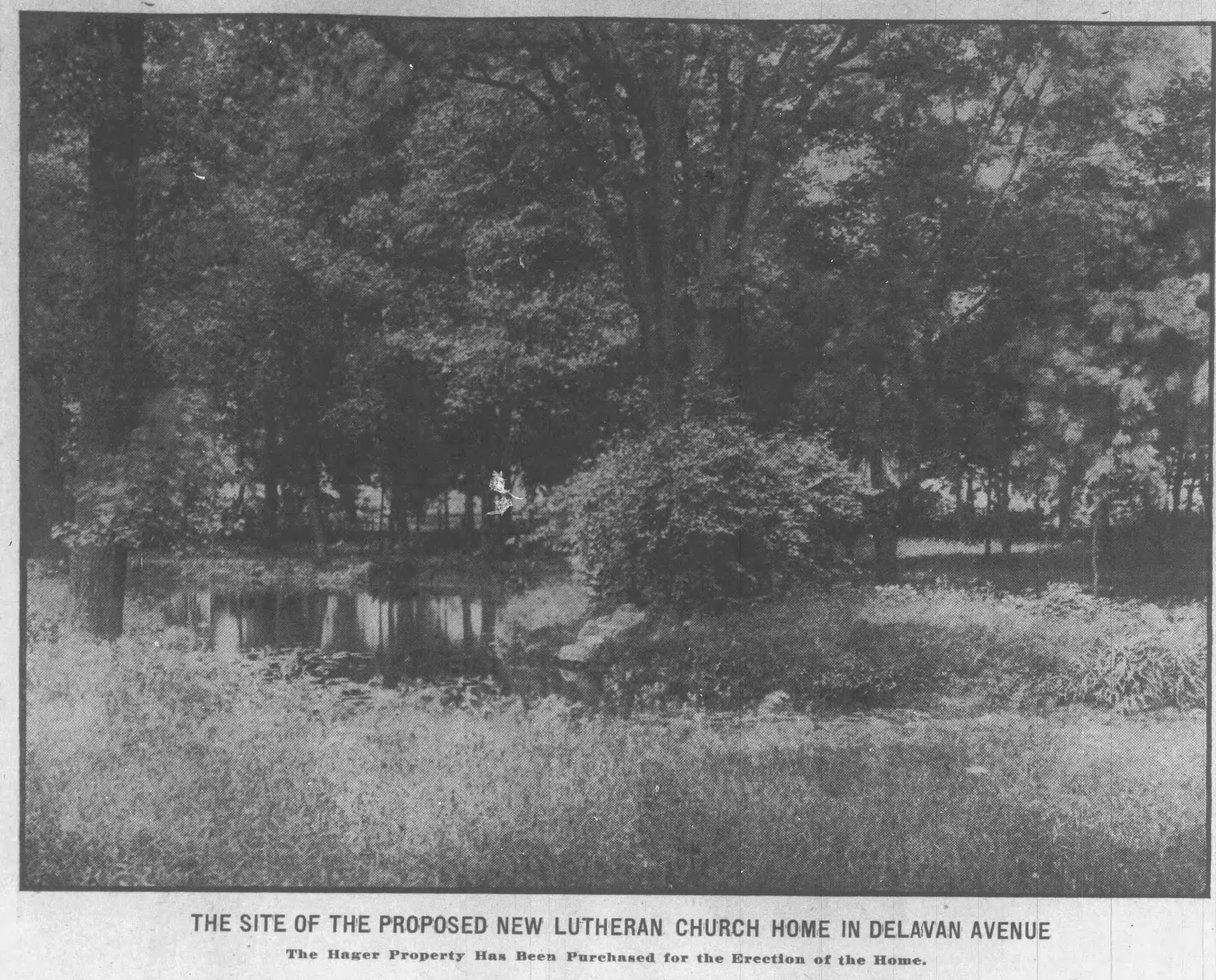
Hager_Home (1)

The rear of the Hager Park Property and Pond in 1906. Source: Buffalo Times, February 11, 1906.

He used his business savvy to develop the property around his house and gave houses and land to each of his children as they married.  Mr. Hager formed a land company which developed Viola Park, Daisy Place, Pansy Place, and Pleasant Place.  Pansy, Viola, and Daisy were named after some of Mr. Hager’s favorite flowers.

He was appointed Parks Commissioner in April 1898, a post that he served until his death.  Mr. Hager was described as “an honest, fearless and efficient representative of the public” in his municipal offices.   He was a strong advocate for the improvements of the park system in Buffalo.  Mr. Hager was very interested in flowers, and had a large greenhouse at his home so he could have flowers all winter long.  He took a great interest in helping to select flowers and trees for the parks during his time as Commissioner.

Mr. Hager served as director of the Roman Catholic Cemetery Association at Pine Hill and was one of the first directors of the German Roman Catholic Orphan Asylum.  He was also a member of St. Vincent’s Church (now the Montante Center at Canisius College) and a member of the Catholic Mutual Benefit Association (C.M.B.A.)  He was immensely proud of his American Citizenship.  His brother, Edward, returned home to Germany each summer, but August never returned to his homeland.

hager grave

August Hager’s grave in Cheektowaga

August Hager died on November 14, 1901. He is buried in Pine Hill Cemetery (the United German and French Cemetery, now part of the Mount Calvary group of cemeteries) in Cheektowaga.  After August’s death, the property on Delavan was listed for sale.   August’s wife Mary died a year later in December 1902.

The house was still listed for sale in September 1903.  The children were looking to sell the house to close out their parents estate.  In 1905, J.P. Staderman, husband of the youngest Hager daughter Rose, was using the home as “Home for Pets”.  Mr. Staderman was working with the Humane Society to board animals while their owners went away for summer vacations.  Boarding a cat cost $2/month ($67/month in today’s dollars) or 75 cents a week($25.15 today).  Boarding for dogs varied according to the size of the animals.  They also boarded canaries.  The Home for Pets only lasted one summer.

lutheran_church_home_walden

Lutheran Church Home’s Original Location on Walden Avenue. Source: Buffalo Courier, June 1896.

In February 1906, the Hager Homestead was sold to the Lutheran Church Home for the Aged and Infirm for $13,000($435,985 in today’s dollars).  The Lutheran Church Home was founded in 1896 to provide care for seniors, particularly for those from German, Swedish, and English Lutherans in the City.  Eleven churches – St. Johns, German Trinity, First Church, Lancaster, Holy Trinity, Christ’s, Swedish Trinity, Concordia, Church of the Atonement, German Church of the Redeemer and English Church of the Redeemer – came together to form the Church Home charity.  The Lutheran Church Home’s first location was in a rented home at 390 Walden Avenue near Goodyear Street.  Within a year, the Home had outgrown it’s space and expanded to 388 Walden Avenue as well.  The two houses were connected by a second floor hallway.

Hager_Home

Hager Home on East Delavan. Source: Buffalo Times, February 11, 1906.

In 1906, the Lutheran Church Home purchased the Hager House from the heirs and moved their 25 residents into the Hager family house.  The Lutheran Church Home celebrated their 10th anniversary in Hager Park in June 1906.  The large grounds allowed the property to be used by the Lutheran community for events, particularly fundraising days for the Church Home and large open houses were the public was invited to come visit the Church Home and meet residents and enjoy the property.

A large building to allow them to provide accommodations for an additional 60 residents was constructed along East Delevan in front of the Hager house.  The new building was connected to the Hager House and opened in December 1907.  The Hager House was demolished in the 1950 when an addition was placed on the rear of the Lutheran Church Home Building.

lutheran church home postcard

Lutheran Church Home Postcard, circa 1905

In 1956, the rear portion of the Hager Park property became the location of the Niagara Lutheran Home.  The property was donated by the Lutheran Church Home to the Niagara Lutheran Home.  Niagara Lutheran Home was organized by 59 Lutheran churches in Western New York and provided housing for 99 individuals needing critical care.  In today’s terms – the Lutheran Church Home was an assisted living facility, whereas the Niagara Lutheran Home provided skilled nursing and rehab.  When Niagara Lutheran Home opened in May 1956, it was the first nursing home of its kind in New York State.  It was also the first institution in the United States outside of hospitals in which nurse’s aides and Gray Ladies would serve. Gray Ladies were American Red Cross volunteers who provided friendly, personal, non-medical services to sick, injured and disabled patients.  The facility was not limited to Lutherans, members from all Protestant faiths were admitted.

In the 1990s, Niagara Lutheran Home expanded and added a facility at 1040 Delaware Avenue in addition to their site on Hager Street.  In 1996, the Niagara Lutheran Health System was incorporated and 52 acre of land on Broadway in Lancaster was purchased to become the location of Greenfields Continuing Care Community.  In 1998, the 120 residents of the Niagara Lutheran Home on Delaware Avenue moved to the Lancaster site and the Delaware Ave Home was closed.  In 2001, 92 residential apartments at Greenfield Manor and 49 assisted living apartments at Greenfield Court were opened in Lancaster.  In 2006 the Greenfield Outpatient Rehabilitation Clinic was dedicated in Lancaster.

In 2006, the Lutheran Church Home became a part of the Niagara Lutheran Health System.  In 2013, after 107 years on East Delavan, the residents of the Lutheran Church Home moved to Greenfield Terrace in Lancaster.   When the Lutheran Church Home building closed, the complex included 65 resident rooms, a full commercial kitchen that had been remodeled in the 1990s, a 75-seat dining area, a social hall, a library, a chapel, three elevators, a detached two-level masonry garage and parking for more than 35 vehicles.  In 2014, the Lutheran Church Home sold the property at 217 and 227 East Delevan to 217 Group LLC (an entity of Ellicott Development Company) for $450,000.

20230423_184128

Modern view of 217 Delavan Ave.  Photo by Author

The former Lutheran Church Home building became home to the Community Music School of Buffalo in 2019.  The Community Music School was founded in 1924 and serves more than 500 students each year!  Their mission is to share the gift of music with the diverse communities of WNY and make it affordable for families of all incomes.  Community Music School shares the building with CCNY Inc, PIE Analytics, and Lakeshore Connections.

In 2015, the corporate offices of the Niagara Lutheran Health System moved from 64 Hager Street to a new office building at Greenfields.  The Niagara Lutheran Home was sold at the end of 2015 and the 164 residents were moved to Greenfields, consolidating the care to one site in Lancaster, consolidating the Niagara Lutheran Health system out in Lancaster. The former Niagara Lutheran Home facility on Hager Street operates under new ownership as Humboldt House, a skilled nursing facility.
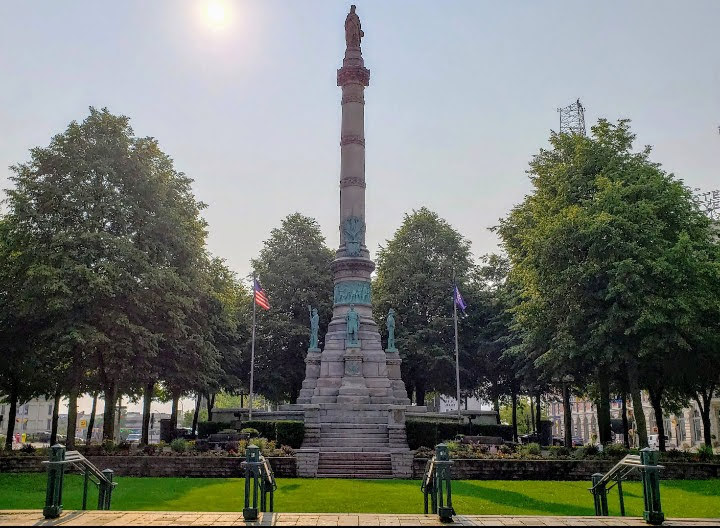
Screenshot_20211230-123110_Photos~2

Soldiers and Sailors Monument. Designed by Charles Hager.  Photo by Author.

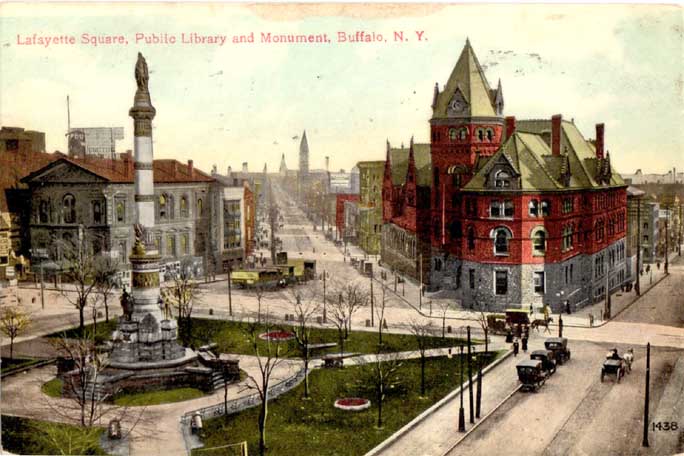
Some of the other members of the Hager family also accomplished some important things in Buffalo.  August Hager’s son Charles Hager owned a contracting company which built the J.N. Adam Memorial Hospital in Perrysburg, many of the grain elevators along the waterfront and the Soldiers and Sailors Monument in Lafayette Square.  August’s son Jacob Hager was a city plumbing inspector.  August’s son Edward August Hager was a dairy farmer.  He had 20 cows on his property on Delavan Avenue.  At the time, the Hager farm part of the city was quickly developing, and as houses came closer to the pasture, Edward A. Hager gave up his cows.  He then was involved with the city parks and streets departments managing the hundreds of city-owned horses.

3973_PlanningMill2020Pic

EM Hager & Sons Planing Mill Building on Elm Street

You may have also heard about the Hager family due to the EM Hager & Sons Company.  August Hager’s brothers Edward M. Hager came to America and lived with August when he ran the grocery store.  Edward worked at the store for awhile, then went to Newark N.J. to learn the carpentry trade.  When he returned to Buffalo, he established the EM Hager & Sons Company in 1868 on Mortimer Street.  The company built many of Buffalo’s early factories, grain elevators and other buildings.  E.M. Hager and Sons moved to 141 Elm Street in 1883.  The company was in operation until the 1980s.  The Elm Street building has recently been renovated and is know referred to as the Planing Mill.  It is a mixed used development with apartments and office space.

Want to learn about other streets? Check out the Street Index. Don’t forget to subscribe to the page to be notified when new posts are made. You can do so by entering your email address in the box on the upper right-hand side of the home page. You can also follow the blog on facebook. If you enjoy the blog, please be sure to share it with your friends.  Interested in getting even more content from me?  You can become a Friend of Buffalo Streets on patreon.   You can go to https://www.patreon.com/buffalostreets/

Sources:

  • “August Hager”  Memorial and Family History of Erie County, New York.  The Genealogical Publishing Company, Buffalo:  1906.
  • Smith, H. Katherine. “Hager Street is Memorial To Former Chief of City Parks”.  Buffalo Courier Express Sept 22, 1940. Sec5, p6.
  • “August Hager, Leaf Tobacco”.  Commerce, Manufactures and Resources of Buffalo and its Environs.  Commercial Publishing Company; Madison, Wisconsin:  1880.
  • “August Hager Appointed Park Commissioner by Mayor Diehl”.  Buffalo Times.  April 30, 1898, p8.
  • “Houses for Sale”.  Buffalo News.  July 5, 1902, p8.
  • “Houses for Sale”.  Buffalo News.  September 15, 1903, p10.
  • “Home for Pets for the Summer”.  Buffalo Commercial.  July 20, 1905,  p13.
  • “A Noble Lutheran Charity”.  Buffalo Commercial.  April 8, 1896, p11.
  • “Hager Homestead Has Been Sold”.  Buffalo Commercial.  February 3, 1906, p12.
  • “New Lutheran Church Home:  Pretty Site for Old Folk”.  Buffalo Morning Express. February 3, 1906.
  • “To Build a Home for Old People.”  Buffalo Morning Express. February 11, 1906, p10.
  • “Dedication of Lutheran Church Home for the Aged”.  Buffalo News.  November 30, 1907, p4.
  • “Ellicott pays $450,000 for Lutheran Church Home”.  Buffalo News.  August 8, 2014, p38.
  • “Lutheran Home is Dedicated as Symbol of Faith”.  Buffalo News.  May 8, 1956, p21.
  • Watson, Stephen T.  “Lutheran Health Selling Facility”.  Buffalo News.  September 11, 2014, p39.
  • White, Arthur O.  “The Black Movement Against Jim Crow Education in Buffalo, New York”.  Phylon, Vol 3, No4.  pp. 375-393.  (accessed via https://sci-hub.ru/10.2307/274041)

Read Full Post »

Angela Keppel_Hamburg October 22 2019 (1)

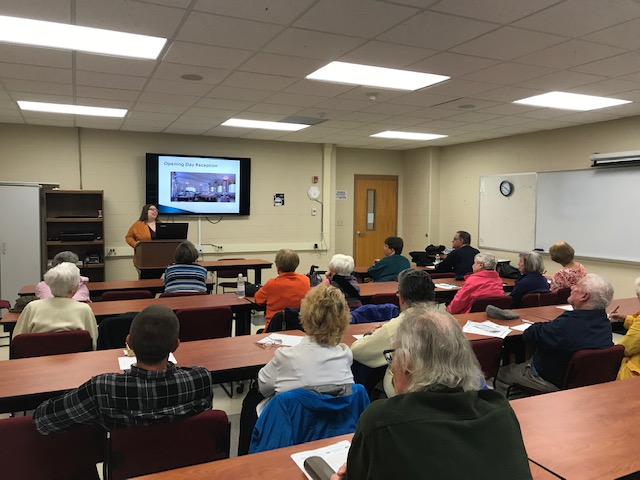
Myself speaking to a group

Want to hear me speak in person?  I will be presenting again through Erie County’s University Express program this semester!  I will be giving another Discovering Buffalo, One Street at a Time talk.  I will technically be presenting Part 6 of the talks, but don’t fret, there’s no need to have attended previous talks to come to this one.

Here’s the course description:

“Did you ever wonder how streets get named? Who was Mr. Goodell? What does Cordage Alley have to do with Great  Lakes Shipping? Learn about how our local history is written on our street signs and about some of the people who gave their names to our streets.”

I’ll be giving the talk seven times so you’ll have lots of chances to catch it.  I’ll be at the following times and places:

  • Thursday May 4 at 1pm, Tosh Collins Senior Center
  • Thursday May 18 at 6pm, Amherst senior Center
  • Wednesday June 7 at 12:15pm, Baptist Manor
  • Friday June 16 at 1:30pm, Orchard Park Senior Center
  • Wednesday June 28 at 10:30am, Schiller Park Senior Center
  • Tuesday July 11 at 10am, Clemmon Hodges Sr Community Center
  • Monday July 24 at 1pm, Town of Evans Senior Center

University Express really puts together a great program of classes – everything from “Balancing the Middle East” to “Women in the Civil War” to “Great American Poets” to “Cooking with the Commissioner” and everything in-between.  There’s really something for everyone!  For more information and to learn about the other classes being offered, you can see the entire University Express Catalog here:  https://www4.erie.gov/universityexpress/sites/www4.erie.gov.universityexpress/files/2023-04/final_000003_university_express_spring_2023_catalog_1.pdf

337689159_1526242001112754_5545674992415642265_n

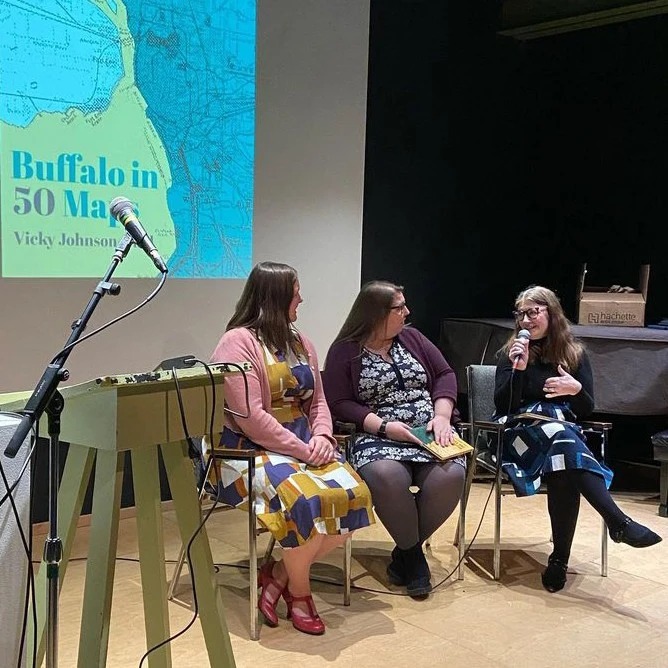
Panel discussion for Buffalo in 50 Maps – Vicky, myself and Jessie

I was recently on a panel with Vicky Johnson-Dahl in celebration of the release of Vicky’s book Buffalo in 50 Maps, hosted by Talking Leaves Books and Hallwalls Contemporary Art Center.  Jessie Fisher and I joined Vicky to talk about maps and Buffalo and more!  The discussion was filmed, so you can watch the panel discussion here:  https://www.youtube.com/watch?v=rQRQS-8WUPM

You can get a copy of the book from Talking Leaves, either in person on Elmwood or ordered via the Talking Leaves website.

tour

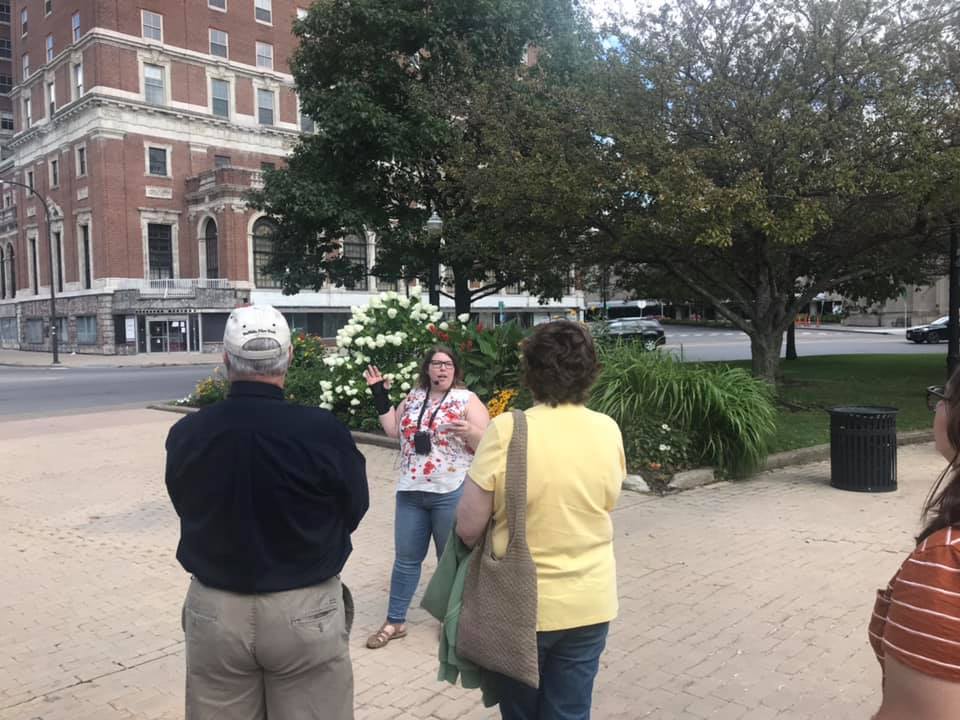
Giving a Downtown Walking Tour

Now that it’s finally getting warm again, I’m going to be launching walking tours again this spring/summer!  Tours will likely start next month and run through the fall.  I want to get some feedback about what people are looking for from tours, so I put together a very brief survey (only 4 questions) about what topics people want to learn about and what times are better for tours.  If you’re interested, please click this link to take the survey:  https://forms.gle/xzh64GAqGGEt6mxU7

20230402_142730 (1)

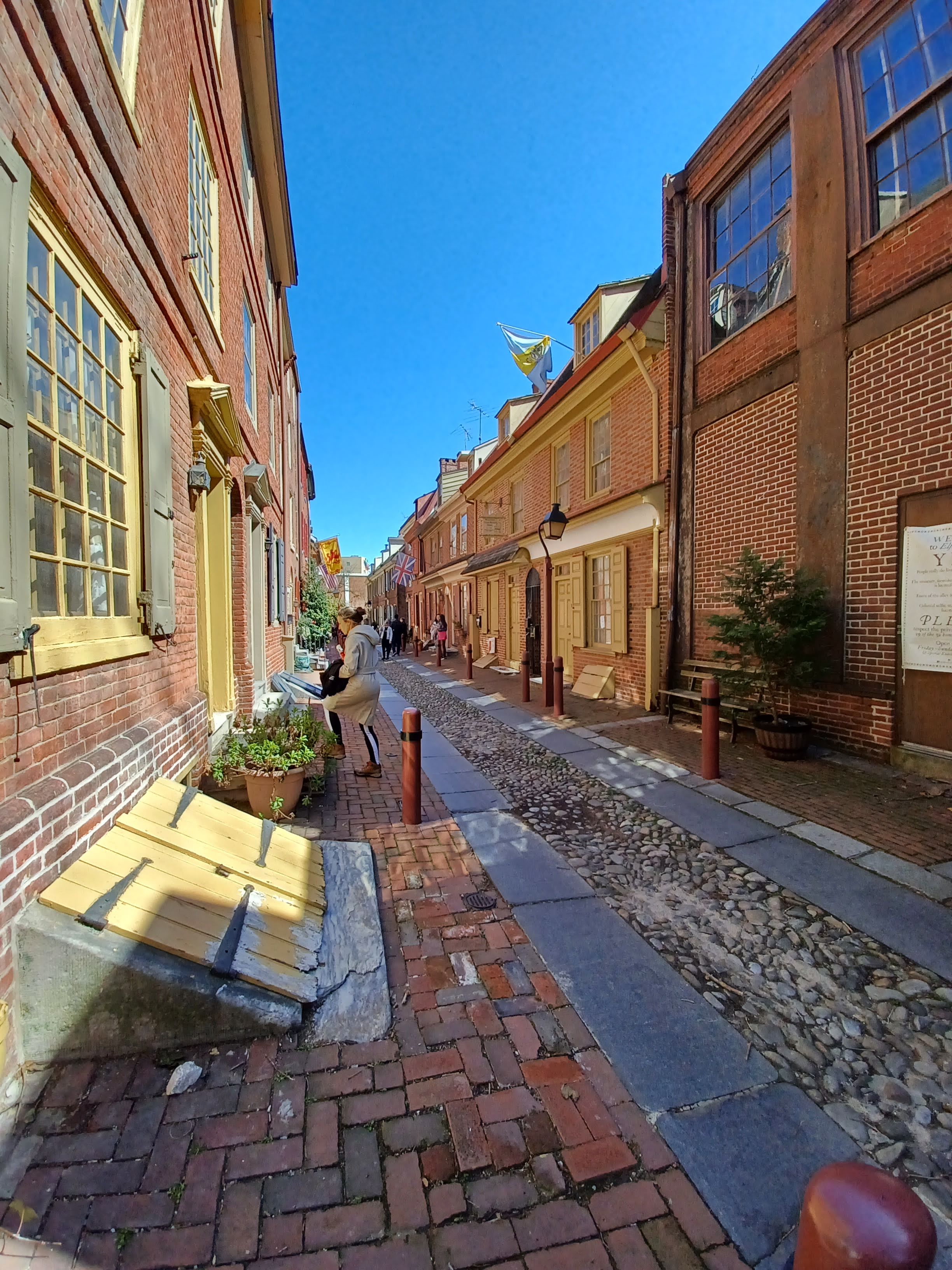
Elfreth’s Alley, Philadelphia

And so you don’t feel deprived, here’s some history factoids for today.  I was in Philadelphia last week for the National Planning Conference.  I stopped by Elfreth’s Alley.  This narrow street dates from 1703!  The houses were developed between 1703 and 1836 along the alley. It’s considered to be the oldest continually residential street in America!  The street is named for Jeremiah Elfreth, a blacksmith and property owner.  As time passed, there were more factories and other development around the Alley.  In 1934, the Elfreth’s Alley Association was founded to preserve the history of the alley.  Part of what they did was to restore the name Elfreth’s Alley (it had been changed to Cherry Street over the years!).  People still live in the homes along the alley (two of the houses are a museum, but the rest are privately owned).  Since it’s a tourist destination, I’m sure it gets crowded and noisy at times, but can you imagine living in a house where people have been living for 320 years?  Pretty amazing if you ask me!

20230403_134618

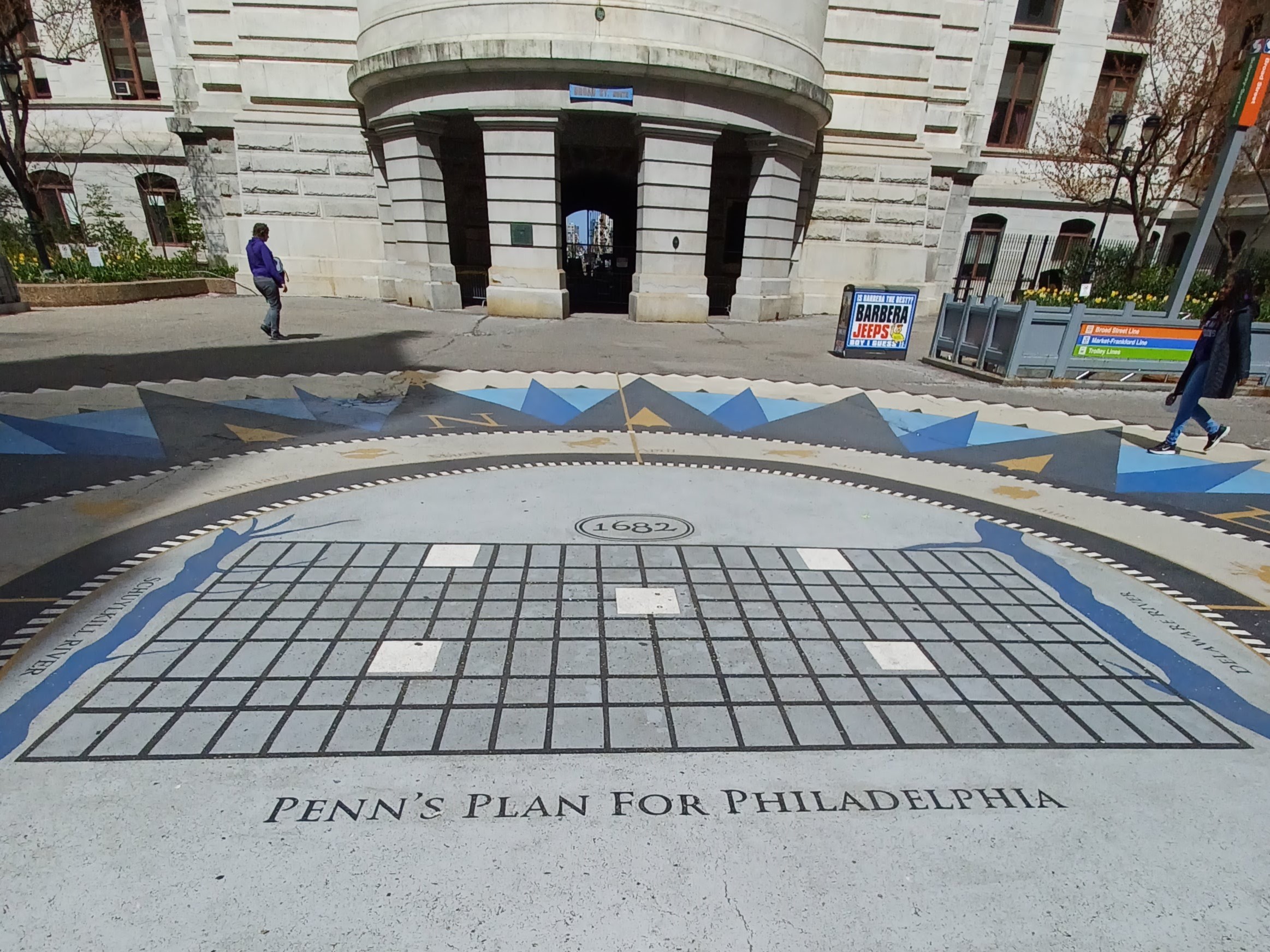
William Penn’s Plan for Philadelphia in the courtyard of Philly’s City Hall

Did you also know that Philadelphia was the first American city with a planned street grid?  William Penn’s Plan of 1682 laid out the blocks with wide main streets (100 feet wide – wider than any street in London at the time!) and narrow side streets between.  The location he chose was strategic for trade – centered between the two rivers, the Delaware and the Schuylkill.  It’s designed as a two mile by one mile rectangle. It was also the first plan in America to set aside land for public squares and spaces for recreation, as well as to set aside areas for future growth and development.  As other cities were established, many of them were based on the Philadelphia model.  The plan creates a nice compact Center City which is part of Philly’s charm for sure!  Hoorah for street grids!  If you’re wondering, Buffalo’s is from 1804 and was laid out by Joseph Ellicott, but most of you who follow this blog likely already know that! If you don’t, you can read up on it at this link

Interested in getting even more content from me?  You can become a Friend of Buffalo Streets on patreon.   You can go to https://www.patreon.com/buffalostreets/    Patreon is a site where you can help support creators like me.  As you know, I have been telling the story of Buffalo’s streets here for more than a decade!  This blog is my hobby (and my passion).  But it’s something I do, without pay, in my free time.  Becoming a patron can help support the blog and keep it going.  The money will go towards helping to provide for fees for website hosting, as well as memberships to newspapers.com and ancestry.com which help me complete my research. Supporting on patreon will help to keep buffalostreets.com free and accessible to everyone.  If you sign up at the $5/ month tier, you will get monthly newsletters from me with bonus content.  The content will consist of the kinds of interesting tidbits I find while researching that doesn’t quite have a place here on the blog – and observations when I travel, like the info from Philadelphia.  If you’d prefer to make a one time contribution, you can also do that at paypal.me/akepps Thank you to those who have already signed up or who have contributed.  It really does mean the absolute world to me!!

Don’t worry, you don’t have to contribute – I’ll still be posting the same free content you’ve all come to know and love over the years!  Thank you to everyone for your support over the years, it really means a lot to me!

We’ll be back to more regularly scheduled content soon….what street do you want to learn about next?

Read Full Post »

Black History Month

Screenshot (32)

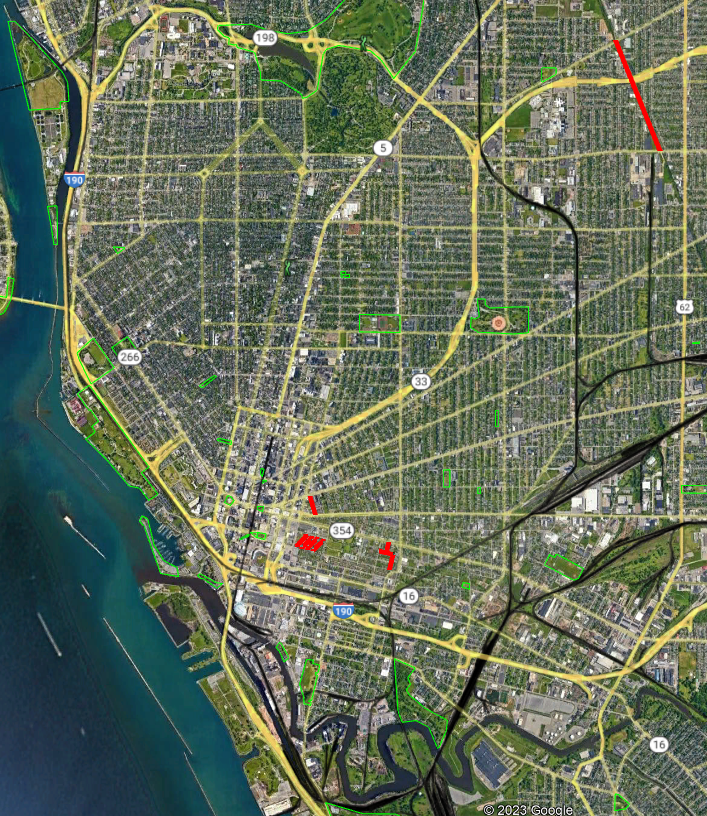
Streets Named After Black People Shown in Red

Last week we talked about President’s Day.  This month is also Black History Month.  Did you know there’s kind of a connection between the two?  Black History Month started with celebrations of Abraham Lincoln and Frederick Douglass’s birthdays on February 12 and 14th respectively.  They both figure largely into Black History in the United States – President Lincoln for issuing the Emancipation Proclamation and Frederick Douglas was a Black abolitionist, author and orator.  After their respective deaths, the Black Community began celebrating their contributions to African American liberation and civil rights on their birthdays.  In 1924, Carter Woodson, who pioneered the field of African American Studies, introduced “Negro History and Literature Week”.  It started as being recognized by his college fraternity, Omega Psi Psi.  In 1926, it was launched as Negro History Week by Woodson and the Association for the Study of Negro Life and History (ASNLH).  By the 1940s, some communities began to recognize February as Negro History Month.  As the  Civil Rights movement arose in the 1960s, the week became Black History Month in additional places.  By 1976, the month had become widespread and President Ford urged Americans to participate in the observance of the month.  Rooting Black History Month in February, the month honors the legacy of Lincoln and Douglass, and includes the history and achievements of Black History in general.

history week

Notice in the Buffalo Times newspaper from 1930 about Negro History Week in Buffalo.

Negro History Week was recognized in Buffalo as early as 1924.  Local lectures were given at the Michigan Street YMCA, an important institution in Buffalo’s Black Community and information about the week was reported in the newspapers, including the Buffalo American (a Black Newspaper) and The Buffalo News.

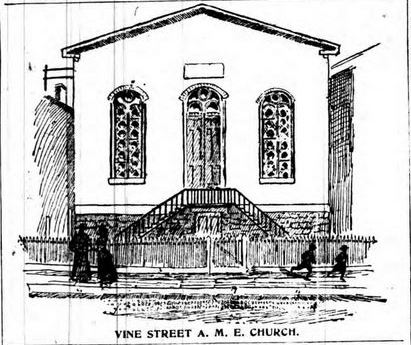
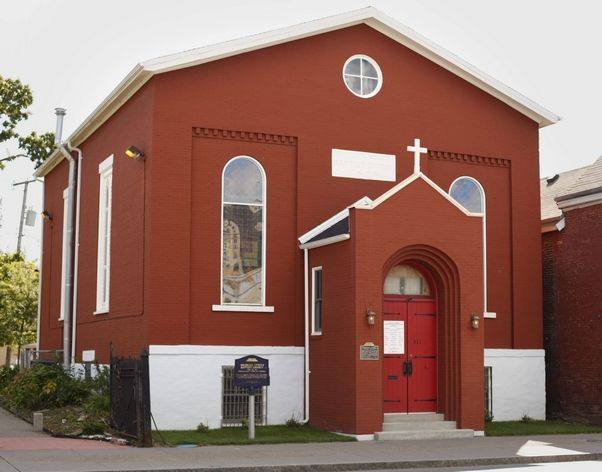
The Black Community has early roots in Buffalo.  The first recorded Black man to live here was Joseph Hodge in the 1790s.  A Black Community grew in Buffalo, centered around Michigan Avenue.  In 1831, the Colored Methodist Society was organized as a religious body, the first African-American faith based institution in Buffalo.  The congregation worshipped in a house on Carroll Street and in 1839 they moved into a frame building on Vine Street.  Vine Street is no longer extant, it was off of Michigan Street between Eagle and Broadway; it was removed when William Street was rerouted.  In 1845, the original Vine Street Church was replaced by a new brick structure. The Vine Street African Methodist Episcopal Church remained on Vine Street until 1928, when they moved to Eagle Street, where they were located for another 25 years.  They moved to Michigan Avenue in Cold Spring in the 1950s and still operate as Bethel AME Church.

64271_715204868571604_5678797682244199413_n

Michigan Street Baptist Church

The Michigan Street Baptist Church was founded in 1836 and in 1845, they built their church around the corner from the Vine Street Church.  The Michigan Street Baptist Church is still standing on Michigan Avenue, and is an anchor institution of the Michigan Street African American Heritage Corridor.

Michigan Street was home to a large celebration in April 1870 to celebrate the ratification of the 15th Amendment, which granted African American men the right to vote.  There was a 38-gun salute, worship services and a parade that ran down Michigan to Seneca, Seneca to Main, Main to Virginia, Virginia to Delaware, Delaware to Eagle, Eagle to St. James Hall.  The Hall was full for a celebration and a reading of President Grant’s proclamation upon the adoption of the Amendment.

Over the years, some streets have been named after members of Buffalo’s Black Community.

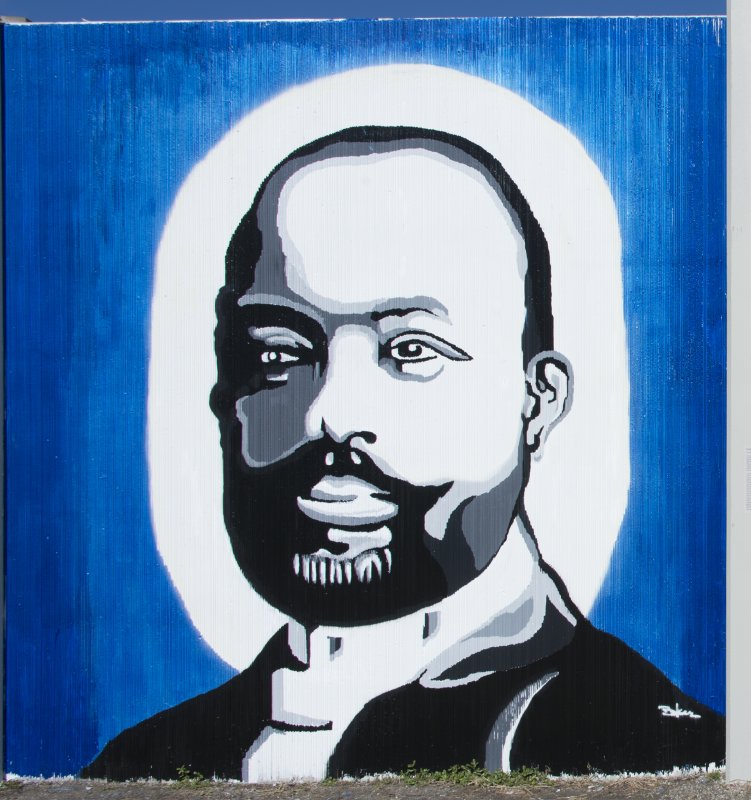
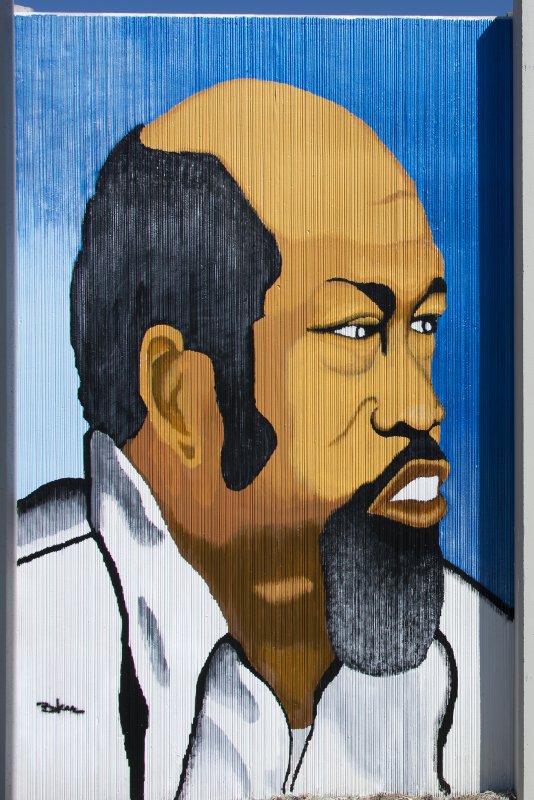
  • Nash Street – Named after Jesse Nash, one of Buffalo’s most prominent African American citizens in the first half of the 20th Century and the long time pastor of the Michigan Street Baptist Church.  His house is still located on Nash Street and now operates as a museum.  You can visit the Nash House Museum

    19._reverend_j._edward_nash_sr._-_akg8317

    Dr. Nash’s Portrait on Buffalo Freedom Wall. Source: Albright Knox Art Gallery

    on Saturdays from 11am to 4pm.

  • Mary Johnson Blvd and Gladys Holmes Blvd – Named for Mary Johnson and Gladys Holmes, two community advocates in the Ellicott Neighborhood
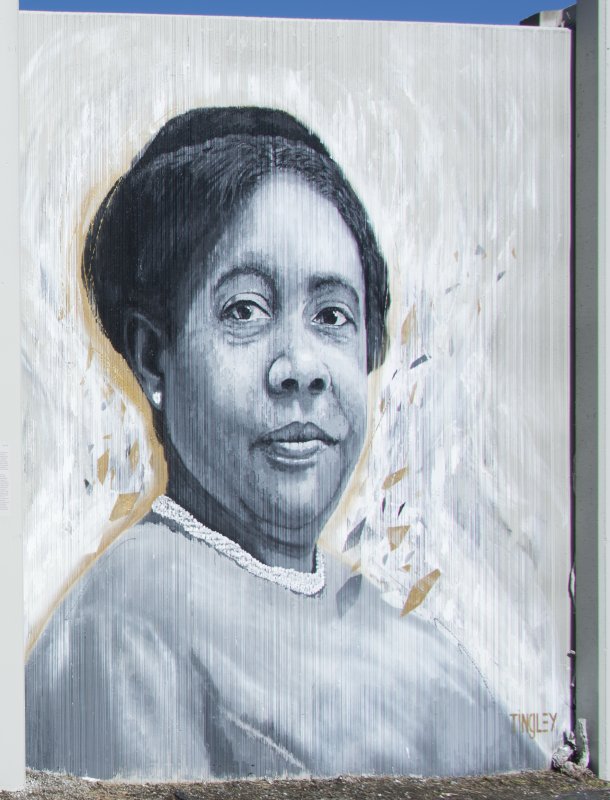
  • Mary B Talbert Blvd – Named for Mary Burnett Talbert, who was named the most famous colored person in the country during her time.  She worked to advance rights for Black people and was a part of the Niagara Movement – which had it’s first meetings at her house on Michigan Avenue.  Three posts are dedicated to her, you can read them here:  Part OnePart Two, and Part Three

    18._mary_b._talbert_-_akg8318

    Mary Talbert’s Portrait at Buffalo Freedom Wall. Source: Albright Art Gallery

  • Delmar Mitchell Drive – Named for Delmar Mitchell, the first African American elected to City-Wide Office
  • Ora Wrighter Drive – Named for Ora Wrighter, A Community Activist who fought for the people
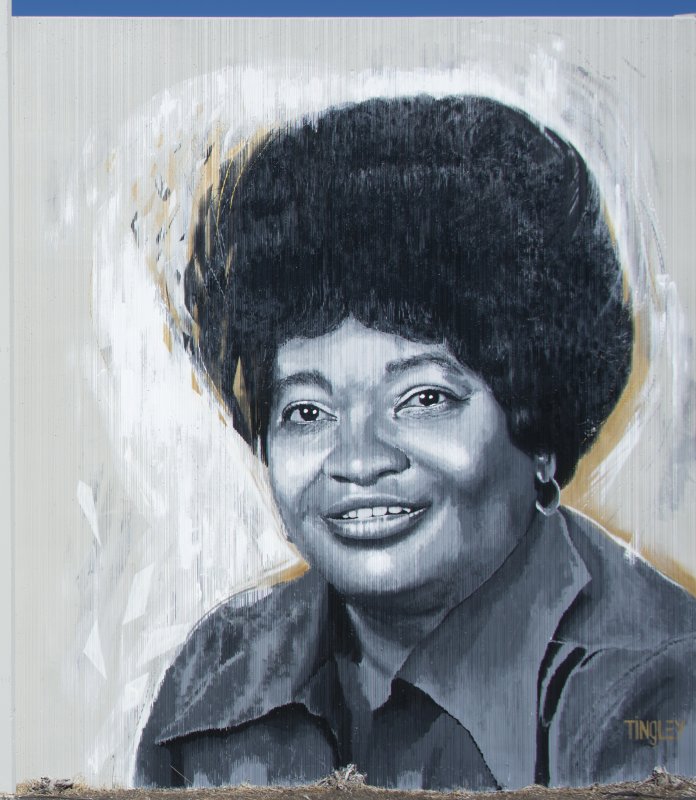
  • Minnie Gillette Drive – Named for Minnie Gillette, the first African American County Legislator

    26._minnie_gillette_-_akg8314

    Minnie Gillette Portrait on Buffalo Freedom Wall. Source: Albright Knox Art Gallery

  •  King Peterson Drive – Named for King Peterson, the First (Acting) Black Mayor of a Major City.  He served as Acting Mayor in 1956 while the Mayor and Common Council president was out of town.  It was such big news that a Black man was a mayor, even temporarily, it was printed in papers across the country, including Chicago and LA.

    5._king_peterson_-_akg8325

    King Peterson Portrait on Buffalo Freedom Wall. Source: Albright Knox Art Gallery.

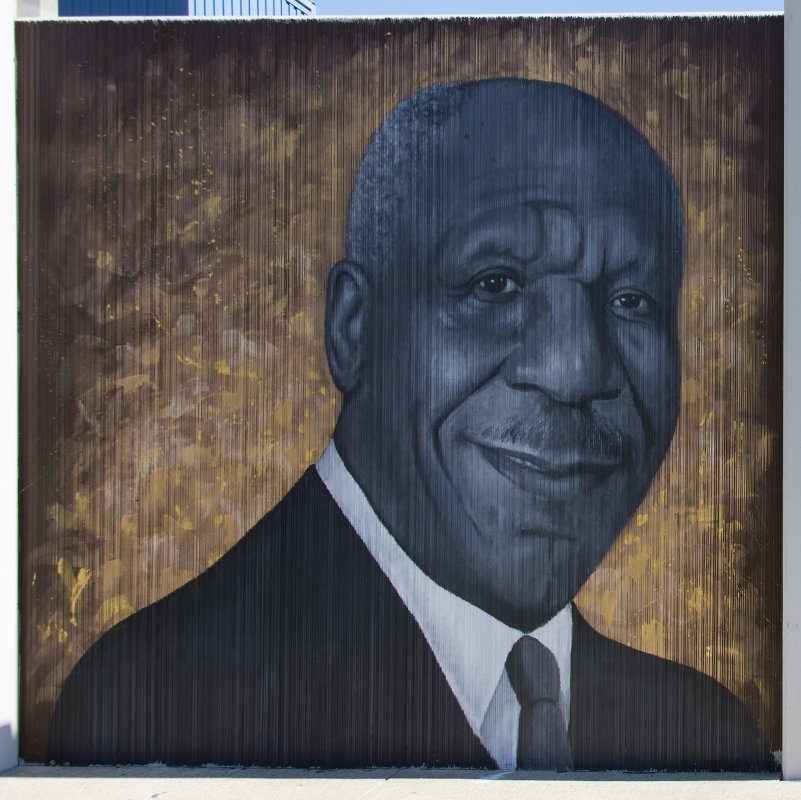
  • William L. Gaiter Parkway – Named for William Gaiter, former president of BUILD (Building Unity, Independence, Liberty and Dignity) the activist Black organization.

    7._bill_gaiter_-_akg8324

    Bill Gaitor Portrait on Buffalo Freedom Wall. Source: Albright Knox Art Gallery

As you can see, despite Buffalo’s strong Black Community since it’s founding, there are still few recognitions of the accomplishments of our Black Community Members in the form of street names.  Many of these street names have only been designated in the last few decades.

To learn more about important Black Buffalonians and the Black history of Buffalo, I encourage you to visit the following websites:

  • Uncrowned Community Builders – This website is run by the Uncrowned Queens Institute for Research and Education on Women, Inc, founded by Barbara Seals Nevergold, PhD and Dr. Peggy Brooks-Bertram, PhD..  They have been working to research, document and preserve the regional histories of African American women and men in WNY since 1999.  The project began as a part of the Women’s Pavilion Pan Am 2001 for the 100th anniversary of the Pan American Exposition to document the contributions of African American women and African women’s involvement in the Exposition and the contributions of African American women in the century after the Exposition.  They expanded their mission to also include “Uncrowned Kings” in addition to the “Uncrowned Women” and their website became Uncrowned Community Builders.  Their website is a tremendous resource and they have compiled biographies of more than 1200 African American men and women!
  • African American History of Western New York – This website is run by The Circle Brotherhood Association, a group of African American men practicing, and dedicated to, the quality of life, successful manhood and parenting, economic growth and development, and the pursuit of excellence and spiritual development.  Their website looks at the historical presence of Blacks in Buffalo, Rochester, Jamestown, Syracuse, Geneva, Ithaca, Corning, Niagara Falls, Canandaigua, Fredonia and WNY from 1700 to 2000.

I was really moved last week by the words of Judge Susan Eagan last week during the sentencing of the racist responsible for the May 14th massacre at Tops on Jefferson.  Judge Eagan spoke about the history of systemic racism and how it’s the responsibility of all of us to ensure that we put an end to it.  Here is an except from her statement:

The ugly truth is that our nation was founded and built in part on white supremacy, starting with the treatment of Native Americans by the first European settlers to the cruel, inhumane economic engine nation building practice of slavery, to indentured servitude, to Jim Crow laws, to government policies creating segregated public housing with communities of color often placed in environmentally hazardous locations, to the manner in which expressways were built, dividing urban neighborhoods to create easy access to government-subsidized developments in the suburbs with restrictive covenants prohibiting the sale of suburban homes to African Americans, to redlining practices in communities of color further devaluing those neighborhoods, to the GI Bill, a well-deserved financial boon to our servicemen unless of course, you were a serviceman of color, to the war on drugs and mass incarceration disproportionately of men of color to the school-to-prison pipeline, to inequities in education, employment opportunities and compensation to the existence of food deserts and inadequacies in health care.

Our history is replete with both individual and systemic discriminatory practices, many of them still firmly in place today. In fact, it is these very policies and practices that contributed to and made this atrocity possible.

The effects of these policies, some current and others decades and centuries old, created the segregation in our city and enabled this defendant to research and identify this target to maximize the impact of his evil intent. All of these policies and systems either sponsored or tolerated by the government and implemented by individuals were designed to destroy the very fabric of family life, opportunities for success, the creation of generational wealth and even the mere existence of hope in communities of color. The harsh reality is that white supremacy has been an insidious cancer on our society and nation since its inception. And it undermines the notions of a meritocracy in the land of opportunity that we hold so dear.

However, white supremacy is not inevitable, or unstoppable. It has been carefully cultivated and nurtured by individuals and the government for centuries. This is the history that we have all inherited. It has been passed down from generation to generation. We must acknowledge that history, see that history for what it is, recognize it and learn from it, or we are doomed to repeat it.

Let ours be the generation to put a stop to it. We can do better. We must do better. Our own humanity requires it. As an individual, we must call out injustice in our daily lives when we see it.

We must reject racism in all of its forms. We must be conscious of the power of our words and actions and the impact they have on those around us, both intended and unintended. We must demand better of our public servants in their efforts to address inequity and we must embrace government policies aimed at creating and fostering diversity, equity and inclusion. We must make the outpouring of support, love and compassion that followed this heinous act an everyday practice. We are stronger together.

These are hard and challenging times. Our characters are being tested. The future of our nation is at stake. Are we up to the challenge?

I believe that we are.

In the words of poet laureate Amanda Gorman, “There is always light. If only we are brave enough to see it. If only we are brave enough to be it.”

Perhaps soon we will have more streets named for Black people.  Of the more than 230 streets I’ve written about, I’ve only uncovered 9 streets that are named for Black people. Many of the streets are short, one-block streets as opposed to major thoroughfares.  Street names reflect our local history and commemorate figures and events that are deemed to be important to the local community.  Street names tell us a lot about our community – geographically of course they tell us where we’re going, but the names also show us what’s deemed important politically, socially and historically.  There’s a reason there’s so few that are named after Black people, and it’s a problem.  I know that naming a street doesn’t make up for all of the systemic racism that has plagued our city, but it could be a start.
Want to learn about other streets? Check out the Street Index. Don’t forget to subscribe to the page to be notified when new posts are made. You can do so by entering your email address in the box on the upper right-hand side of the home page. You can also follow the blog on facebook. If you enjoy the blog, please be sure to share it with your friends.

Read Full Post »

Screenshot (31)

Streets Named After Presidents

Happy President’s Day!  Buffalo has a fairly rich presidential history!  I thought today we could talk about streets named after Presidents.

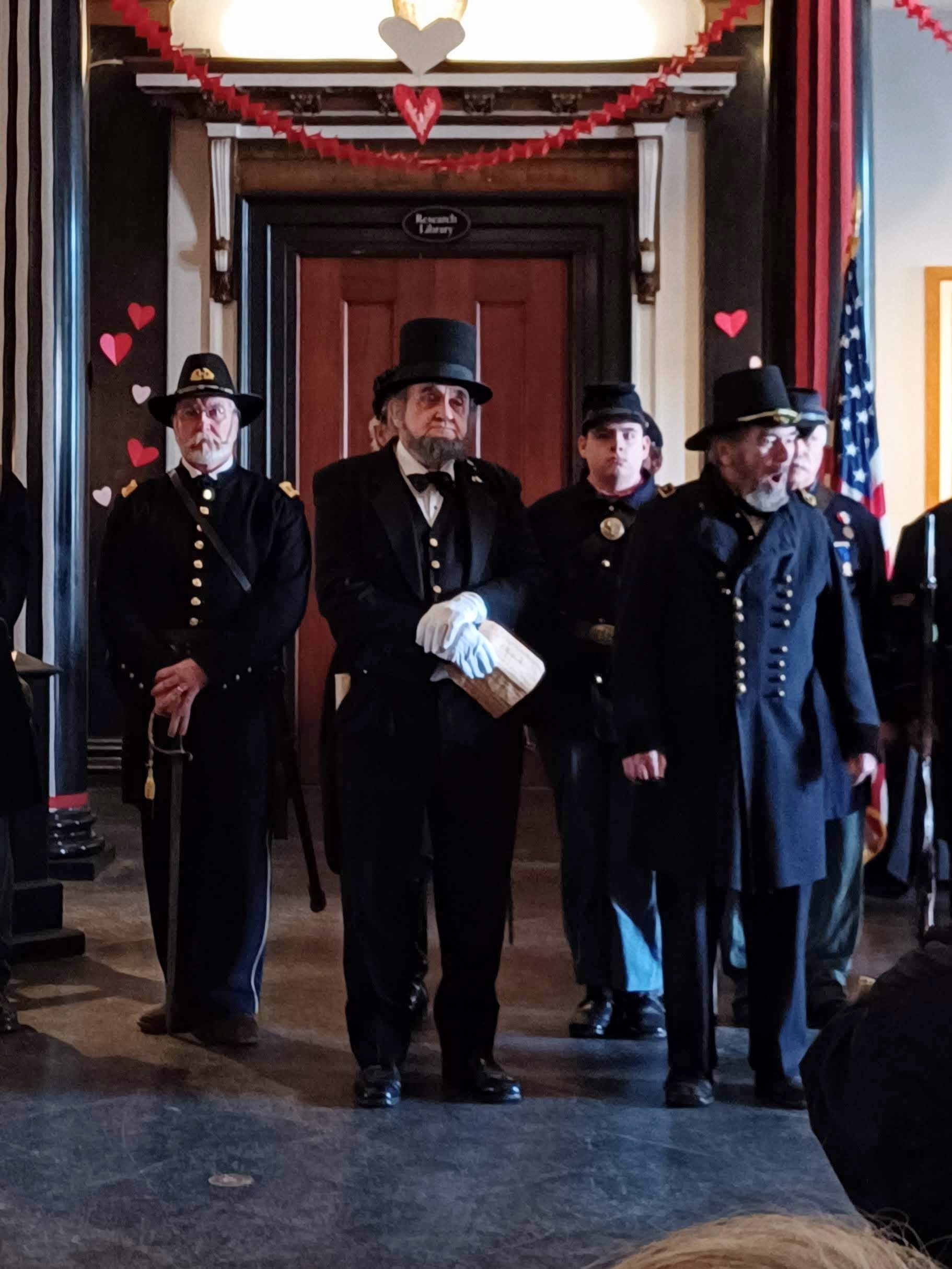
A Buffalonian is actually part of the reason there’s a President’s Day as a national holiday.  In 1874, Buffalonian Julius Francis took up the cause of preserving and promoting the memory of President Lincoln.  He petitioned the state and federal governments to establish Lincoln’s birthday as a holiday and spent the rest of his life fighting to accomplish his dream.  He collected Civil War artifacts and memorabilia to house in a museum.  Mr. Francis owned several drug stores and was a bachelor.  He declared his cause to memorialize Lincoln as “my wife and my life.”  He held the first seven observances of Lincoln’s Birthday at his own cost, renting a hall, arranging speakers and allowed the public to attend free of charge.  He succeeded in persuading New York to create a State Holiday, but failed to get the US Government to follow, despite many petitions.  He founded the Buffalo Lincoln’s Birthday Association.  He left his house at 145 Eagle Street as well as six $1,000 bonds to the association when he died in 1881.  The funds were used to hire New York sculptor Charles E. Niehaus to make the statue of Lincoln which now sits on the Buffalo History Museum portico, looking out over the Gala Waters/Hoyt Lake.  Although Lincoln’s Birthday has never been designated as a National Holiday, Mr. Francis did succeed in getting several states to designate Lincoln’s Birthday as a legal holiday.  While we refer to today as President’s Day, and it is a day where we honor the legacies of all of our presidents, the official Federal Holiday is actually Washington’s Birthday.  Thanks to Julius Francis, Buffalo has celebrated Lincoln’s Birthday every year since 1874, which is the longest continual celebration of Lincoln’s birthday – longer even then the places where Lincoln lived!  The celebration is now held annually at the Buffalo History Museum.

20230212_115230_2

Lincoln’s Birthday Celebration, February 12, 2023. Photo by author.

There have been 45 men who have been president (serving 46 presidencies – Grover Cleveland had nonconsecutive terms).  Of those men, there are streets in Buffalo named after 17 presidents.

There are 10 streets which have presidential names, but I don’t have documentation that they were named after the President, as I am unsure of the name’s origin at this time.  There are 3 more streets which have presidential names, but are named after someone else with the same name!  There are 15 Presidents who do not have streets in Buffalo named after them.  These are mostly the modern era presidents, because Buffalo was already built out and new streets weren’t being built.

Here’s the breakdown of which presidents have street’s named for them.

Streets Named After Presidents:

  • Washington Street – “First in war, first in peace, and first in the hearts of his countrymen” is the famous quote from George Washington’s eulogy….we can also add, first President to get a street name in Buffalo to his list!  In 1825, North and South Onondaga Streets merged to become Washington Street.  There’s also a short street named Mount Vernon Ave in South Buffalo, which was the name of Washington’s plantation in Virginia.
  • Adams – There are several streets in the Pratt-Willert neighborhood of the near East Side which bear the names of many of the early presidents.  These streets were originally developed around the same time, so perhaps the developer was a presidential fan!  In addition to Adams, the following other streets are located in the neighborhood:
    • Madison
    • Monroe
    • Johnson – which is not to be confused with Johnson Park, which is named for Buffalo’s first Mayor, Ebenezer Johnson. 
  • Jefferson  – Of course, Jefferson Avenue is one of the major north-south corridors on the East Side of Buffalo.  It is named for President Jefferson.  There’s also a Monticello Place, not far from the intersection of Jefferson and Main Streets, named for Jefferson’s Virginia plantation.
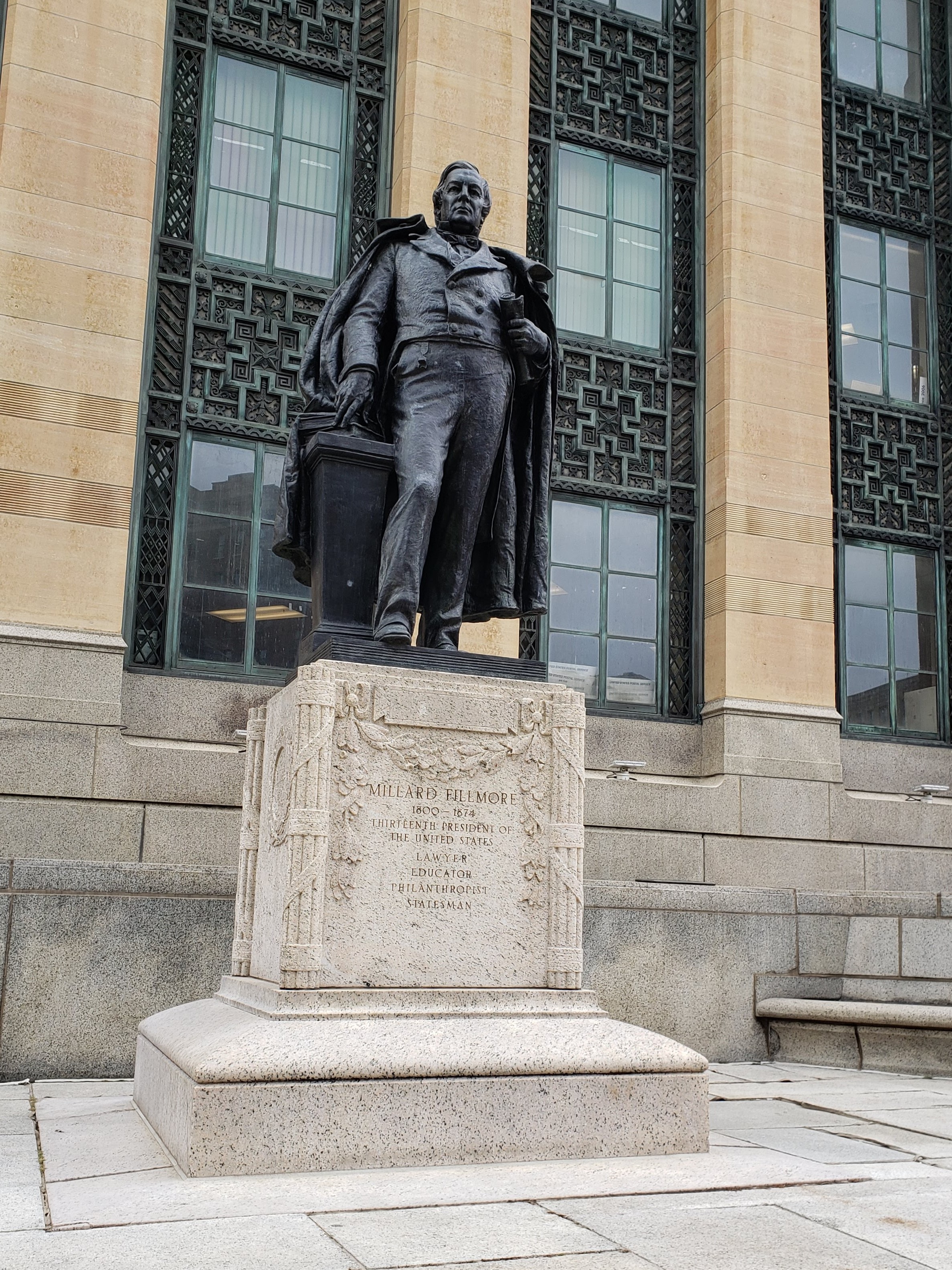
  • 20200225_130032

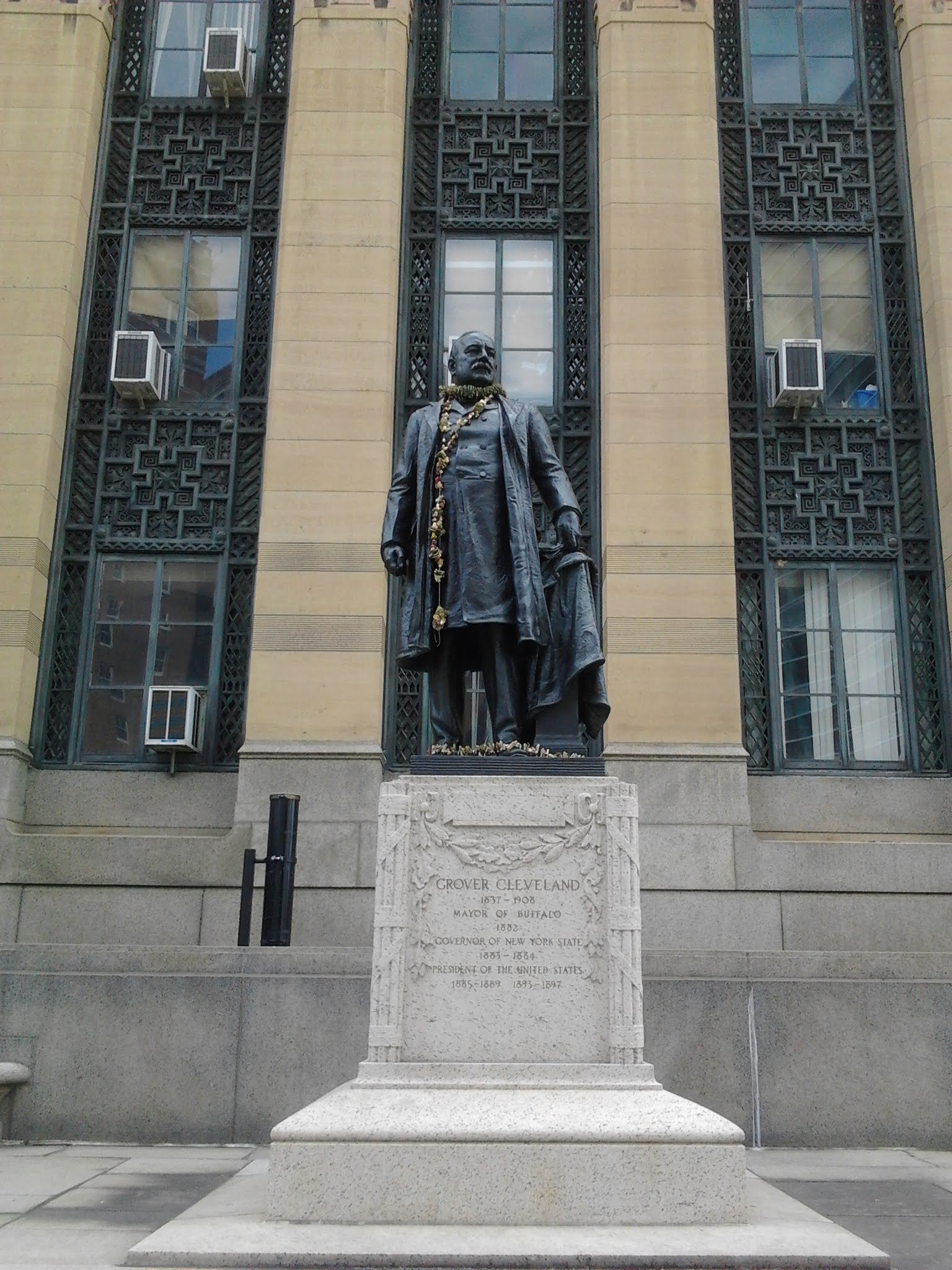
    Statue of Millard Fillmore outside of City Hall. Photo by Author.

    Fillmore – Millard Fillmore lends his name to Fillmore Avenue, another major north-south street on the East Side.  Was originally an Olmsted Parkway.   Millard Fillmore brought us many of our institutions here in Buffalo.  While he was president, he also signed the Compromise of 1850 into law.  While he was the first chancellor of University of Buffalo, UB has recently removed his name from the campus.  

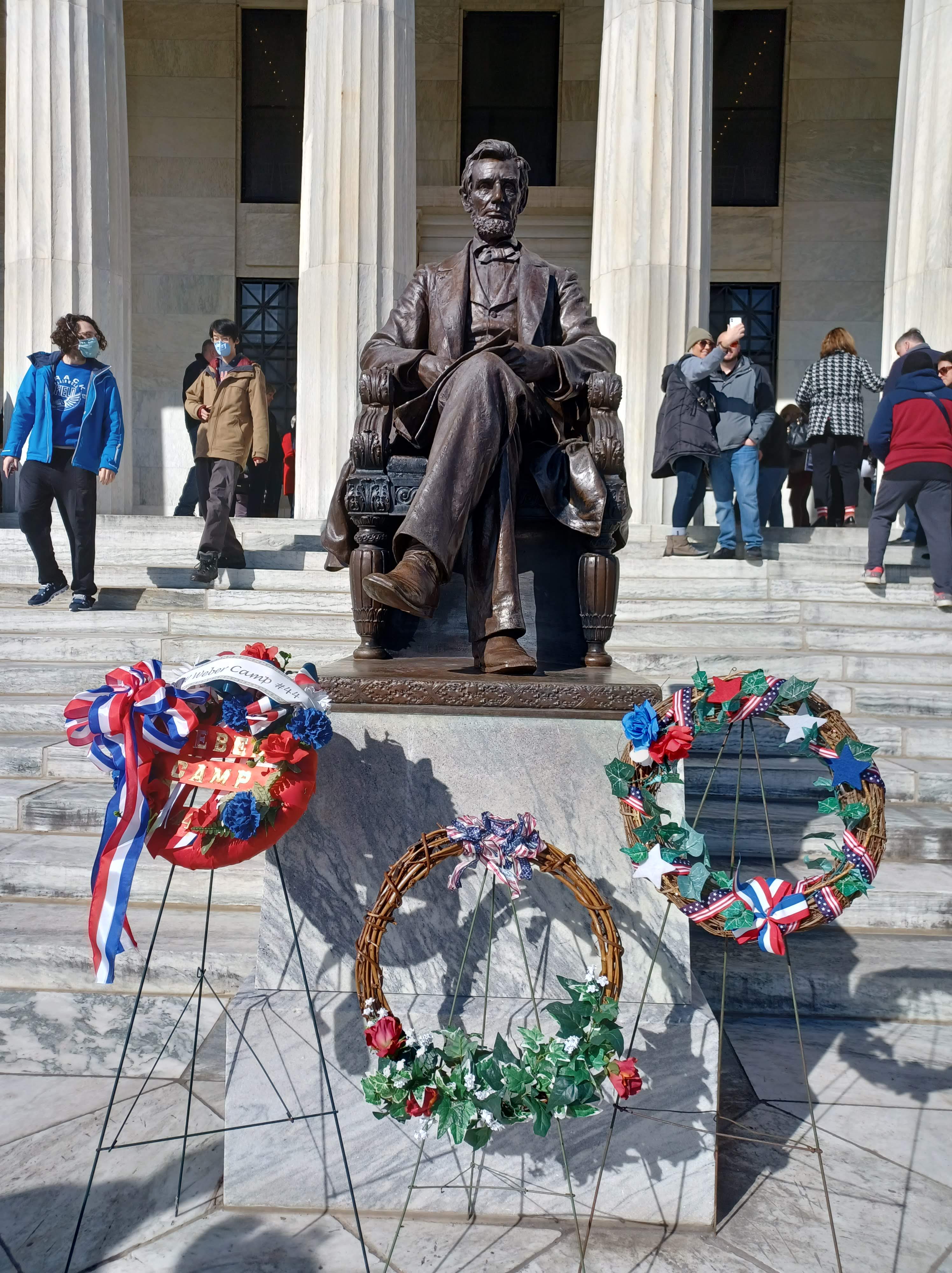
  • 20230212_120316

    Wreaths at the Lincoln Statue at the Buffalo History Museum celebration of Lincoln’s Birthday, Feb 12, 2023. Photo by author.

    Lincoln – Lincoln Parkway is an Olmsted Parkway.  Olmsted named these parkways after civil war heroes – Bidwell and Chapin, and Lincoln.  Thanks to Julius Francis, Buffalo is home to the longest running celebration of President Lincoln’s Birthday, which has been held ever year since 1874!  The Lincoln Statue at the Buffalo History Museum was commissioned by the Buffalo Lincoln Birthday Association to be placed in the new building that was constructed in 1901.  A Lincoln life mask is also on display now in the Museum’s Continuum Exhibit on the second floor.  There’s a second Lincoln Statue on Lincoln Parkway in the rose garden at Delaware Park. It was sculpted in 1935 and presented to the City of Buffalo in memory of Louis Spitzmiller and Julia Spitzmiller.  Mrs. Spitzmiller left a $250,000 bequest in her will for the statue to be built.  

  • Grant – The street was laid out and the name was decided in March of 1864.  At that time, Ulysses S Grant would have been Commander General of the US Army.  I believe the street was named in his honor, but I am not 100% sure.
  • Garfield – Garfield Street in Riverside is named for President Garfield.  The streets were built on land that had been owned by William Bird.  The executors of his will gave land for two parallel streets – one to be named Garfield and the other to be named Arthur, after Vice President at the time, Chester Arthur.
  • Arthur – see Garfield.
  • 2012-05-13 14.56.55

    Statue of Grover Cleveland outside Buffalo City Hall. Photo by Author.

    Cleveland – Grover Cleveland is one of Buffalo’s presidential connections.  Cleveland Avenue bears his name today.  Become Sheriff, Mayor, Governor, President…Get a Street Named After You.  

  • McKinley – After President McKinley died here, there was almost immediate calls to name a street for him.  One of the suggestions was to rename Lincoln Parkway for him (since he was shot not far from the parkway) and then rename Bidwell and Chapin to Lincoln and Garfield.  In this way, the three streets which form Soldiers Circle would have represented the three martyred presidents at the time.  Seems a little ominous, so thankfully they named the new parkway in South Buffalo after President McKinley instead. 
  • 5ef2acf0bc503

    Theodore Roosevelt statue outside the TR Inaugural Site on Delaware Avenue. Source: Buffalo News.

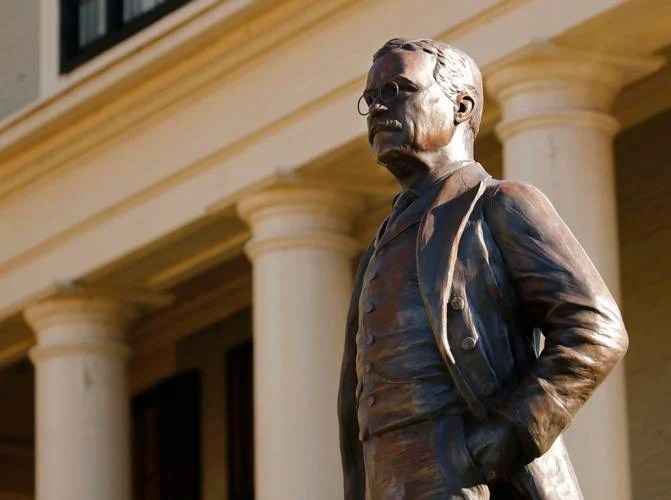
    Roosevelt Ave – named for Theodore Roosevelt.  There’s also Theodore Roosevelt Plaza in Downtown and the Roosevelt Apartments, a senior housing building on Main Street.  And of course, the Theodore Roosevelt Inaugural Site Museum, the location where Teddy’s presidency started in 1901.

  • Taft – Taft Place is located in the Central Park neighborhood.  It is nearby to Sagamore Terrace, which is named for Sagamore Hill, President Roosevelt’s home. 
  • Coolidge – Coolidge Road in South Buffalo was built in 1926, right when President Coolidge was becoming president.
  • Kennedy – There is a Kennedy Road in Cheektowaga, and JFK High School in Cheektowaga was named for Kennedy.  It is reportedly the first high school in the Country to be named after him!

Streets with Presidential Names, but are Not named for the Presidents:

These are streets have the name of a President but are named after someone else.

  • Hayes – Hayes Place is not named for President Hayes, but rather after engineer Edmund B. Hayes, who also gives his name to Hayes Hall at UB.
  • Wilson – Wilson Ave often gets listed as a street named after a president since it’s close by some of the streets named for other presidents.  It’s named for Guilford Reed Wilson
  • Clinton – Sorry, Bill, our Clinton Street is named for either Dewitt Clinton, Governor of New York from 1817 to 1823 or his son, George William Clinton, an early Mayor of Buffalo.  Governor Clinton is often best known for “Clinton’s Ditch” a name that was used to describe the construction of the Erie Canal, which ended up being much more successful than expected!  Governor Clinton first visited Buffalo in 1810.  During that trip, he wrote in his diary, “the Village has a population of 500.  It has 5 lawyers and no churches”.  Bill Clinton visited several times while he was President, and most recently while campaigning with Hillary Clinton.  We’ll have to ask him what he wrote in his diary about his visits!

Possible Presidential Streets:

These are streets which have a Presidential name, but I do not yet have documentation as to the origin of the name.

  • John Quincy Adams  – There is a Quincy Street off of Broadway.
  • Jackson – There is a Jackson Ave in Sloan.
  • William Henry and Benjamin Harrison – There is a Harrison Street in the Seneca Babcock Neighborhood.
  • Tyler – There is a Tyler Street in University Heights.
  • Polk – There is a Polk Place in North Buffalo
  • Taylor – There is a Taylor Place in South Buffalo.
  • Pierce – There is a Pierce Street in Kaisertown.
  • Harding – There is a Harding Ave in South Buffalo.
  • Hoover – There is a Hoover Ave in the Village of Kenmore.  I am unsure if it is named for President Hoover, though it likely is as Hoover Elementary School elsewhere in the village was named for him.

No Streets:

There is no Van Buren Street or  Buchanan Street.  Most of the Presidents after President Hoover don’t have streets named after them.  This is because Buffalo has been fully built out since Hoover was president, so very few new streets were being built.  This is likely why Hoover is in Kenmore and Kennedy is in Cheektowaga.  The suburban areas were still building new streets whereas the city was built out.  There is a Johnson Street, but it is named after Andrew Johnson and not Lyndon Johnson.  Perhaps someday they were rename a street after one of the more modern presidents.  

Did you know that Lincoln’s birthday is one of the reasons we also celebrate Black History Month?  Click here for more on that and a list of streets named after Black Buffalonians!  Want to learn about other streets? Check out the Street Index. Don’t forget to subscribe to the page to be notified when new posts are made. You can do so by entering your email address in the box on the upper right-hand side of the home page. You can also follow the blog on facebook. If you enjoy the blog, please be sure to share it with your friends.

Read Full Post »

310733014_10108246800352938_940767624567560204_n

Accepting the award

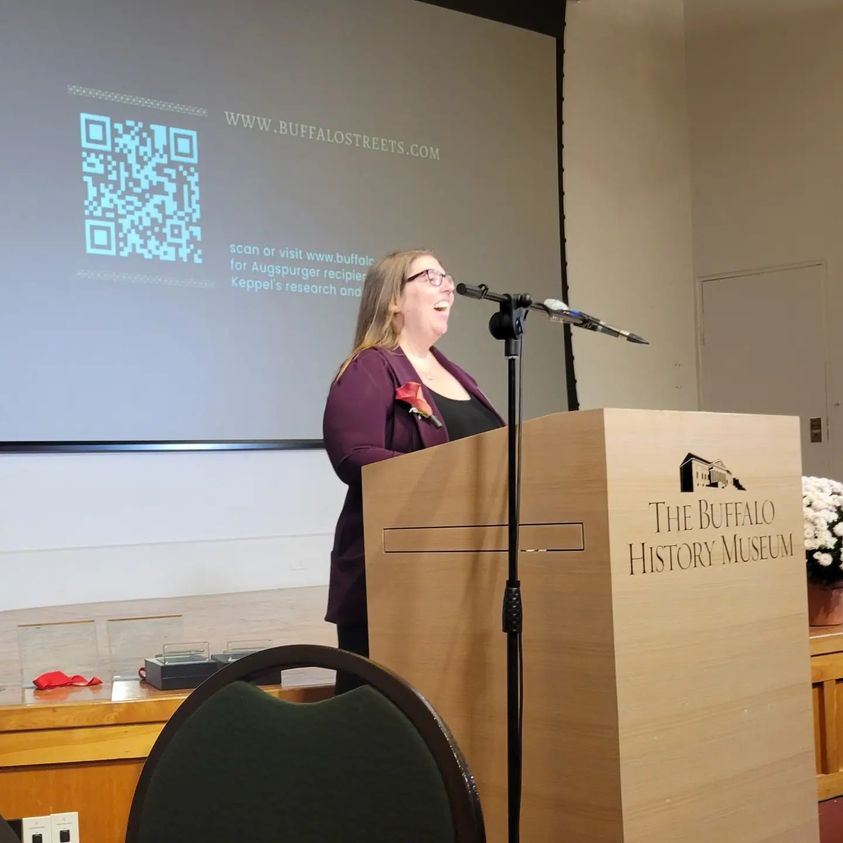
I was awarded the Owen B. Augspurger award from the Buffalo History Museum!  The award was established in 1974 in honor of Mr. Augspurger, who was a former History Museum president.  The award is presented to an individual for outstanding service to the cause of local history.  The award is given out annually at the Museum’s Red Jackets Awards Ceremony, which was held last night.  I am honored to be among the distinguished list of past recipients.

Here are the remarks I gave during the ceremony:

I’m so honored to be receiving this award.  My streets project started because I went to the library to find out how Keppel street got its name.  I know it’s not named after my family, as my dad is an immigrant and all of our Keppel family is still in the Netherlands.  All these years later, and I still haven’t gotten to the bottom of the Keppel street name, but I’ve learned about so many streets along the way.  I was boring my friends telling them the stories I was uncovering, so I started to write the stories to share them on a blog, and Discovering Buffalo, One Street at a Time was born.  I never really thought it was something that other people would really care about.  But I think my blog works because streets are something that are personal to us all.  Everyone comes from a street – whether it’s the street where dad lived when he first moved to town,  the streets where grandma and grandpa lived, they’re all full of memories.  And so there’s a connection, even if the person the street was named after had little to do with the actual street.  It’s a way to connect with our history in a hyper local way.  When I started, I thought I’d maybe have 12 followers.  And now there’s more than 9,000 of us!

As a professional urban planner, I get to live part time in the future, looking forward to new development projects, looking at how to build a better community for our future.  Because of my work in history, I get to live in the fabulous juxtaposition between the past and the future.  I cannot help but look at projects like the new Ralph Wilson Park they’re building at Lasalle Park and be really excited for what’s coming, but in my mind, I also see the canal slips and heavy industry that 1932 Buffalo decided to turn into a park to celebrate the city’s centennial. I live in the Hotel Lafayette, a grand historic hotel, and sometimes, if I squint my eyes, I can see those who came before walking down the hallways.  I get to live our history every single day, living and working in the heart of downtown which our city grew, radiating out from Niagara Square like spokes on a wagon wheel.

I think Mr. Augspurger and I would have gotten along, both because of our interest in local history and also Mr. Augspurger’s work on downtown development projects like the Main Place Mall and the parking ramps.  One of the things I do for my job is to track parking, so I can tell you that the Augspurger Ramp is about 74% occupied.

Thank you to everyone who has followed along, to Debra for nominating me, to the History Museum, and to everyone who has shared my posts, or come to hear me speak.  My favorite thing is when people share their stories with me, which adds to the rich tapestry of the city that lives in my brain.  I hope to keep learning and keep sharing for a long time to come!

20221007_101602_2 (1)

FLIP-1664832224652

Owen B. Augspurger Parking Ramp

Those of you who came to my University Express Talks last fall will know that I have been researching urban renewal plans of the 1950s and 60s and how they impacted Downtown and the neighborhoods around it.  The creation of Main Place Mall, which Mr. Augspurger helped make happen, was Buffalo’s first private urban redevelopment plan.  Previous urban redevelopment projects had been to create government owned housing projects.  I know that Main Place Mall gets a bum rap, but it was a successful mall for many decades after opening and holds a special place in the retail history of downtown.  I have fond memories of going to the food court for lunch on school field trips and sneaking off to grab a book at Walden Books while every else ate lunch.  Mr. Augspurger also helped to create the off street parking program for downtown, hence the parking ramp was named for him.  Mr. Augspurger was also involved in helping to save the Ainsley Wilcox mansion and create the Teddy Roosevelt Inaugural Site, which long time readers of my blog will know was also the house of Judge Masten!

I really truly appreciate all of you have been along for this journey!  I have some new posts coming soon!   I’m working on rewriting the very first post I ever wrote, now that I have some new research.  Also coming up will be posts about when the corner of Walden and Bailey was “way out in the country”, some info about the Erie County Penitentiary, and a story about a man who had too many handkerchiefs!

311008698_10101224026408531_7956246527794844950_n

House of Lewis Falley Allen on what is now Niagara Street.

I have also began working on trying to little deeper into some of the people I’m researching.  One of the things I want to do is talk about “the help”.  I think it’s important to remember that these men who “built” Buffalo, they built it with lots of help.  I’ve been working to dig into my research to try to find info about live-in help that lived with some of the families I write about.  I want to try to give a glimpse into what early Buffalo life was like for the influential, and give a name to those who have been forgotten to history.  For example, I have learned that Lewis Falley Allen had a staff of five to run his household.  The staff in 1880 included housekeeper, Elizabeth Ryan, a 50 year old woman from Ireland and her 20 year old daughter Agnes who served as a servant; servants Rosa Bronson, a 16 year old girl, from New York; Emma Hudson, 27 year old woman from Canada; and John Hogan, a 24 year old man from Ireland.  Look forward to more info like this in future posts.

Lastly, I will be giving my last walking tour of the season on Sunday, October 9th at 1pm, Discovering Lower Main Street.  Click here for more about the tour.  The tour ends right next to Southern Tier Brewery if anyone wants to watch the end of the Bills game after the tour.  Hope to see some of you there!

Read Full Post »

Older Posts »

Field Notes

Live from Buffalo, NY

Grants.gov Community Blog

Connecting the grant community to #LearnGrants

Dienna Howard

I create, therefore I am.

Hidden Waters blog

Companion blog for the book "Hidden Waters of NYC"

Hoping for a Tail Wind

Because I definitely brought way too much gear.

priorhouse blog

Photos, art, and a little bit of LIT.

Sheepie Niagara

Bleating the Beat Since 2015