Happy Women’s History Month!! As any reader of this blog knows, our streets are often named after rich white men. I think when we think of women’s history, we often remember the big changemakers, but I think it’s important to remember all the women who lived fairly regular lives. These women were daughters, maids, workers, wives, and mothers. They may never have held elected office, owned large amounts of real estate, or run successful businesses. And I think it’s important to celebrate these women, remembering that our lives today are built on these women. Behind every man I’ve written about, there was almost always a woman on the sidelines. Many of those women are forgotten to history, their names written as Mrs. Husband’s Name. Even more are completely forgotten in the pages of history all together. So, we remember those women.
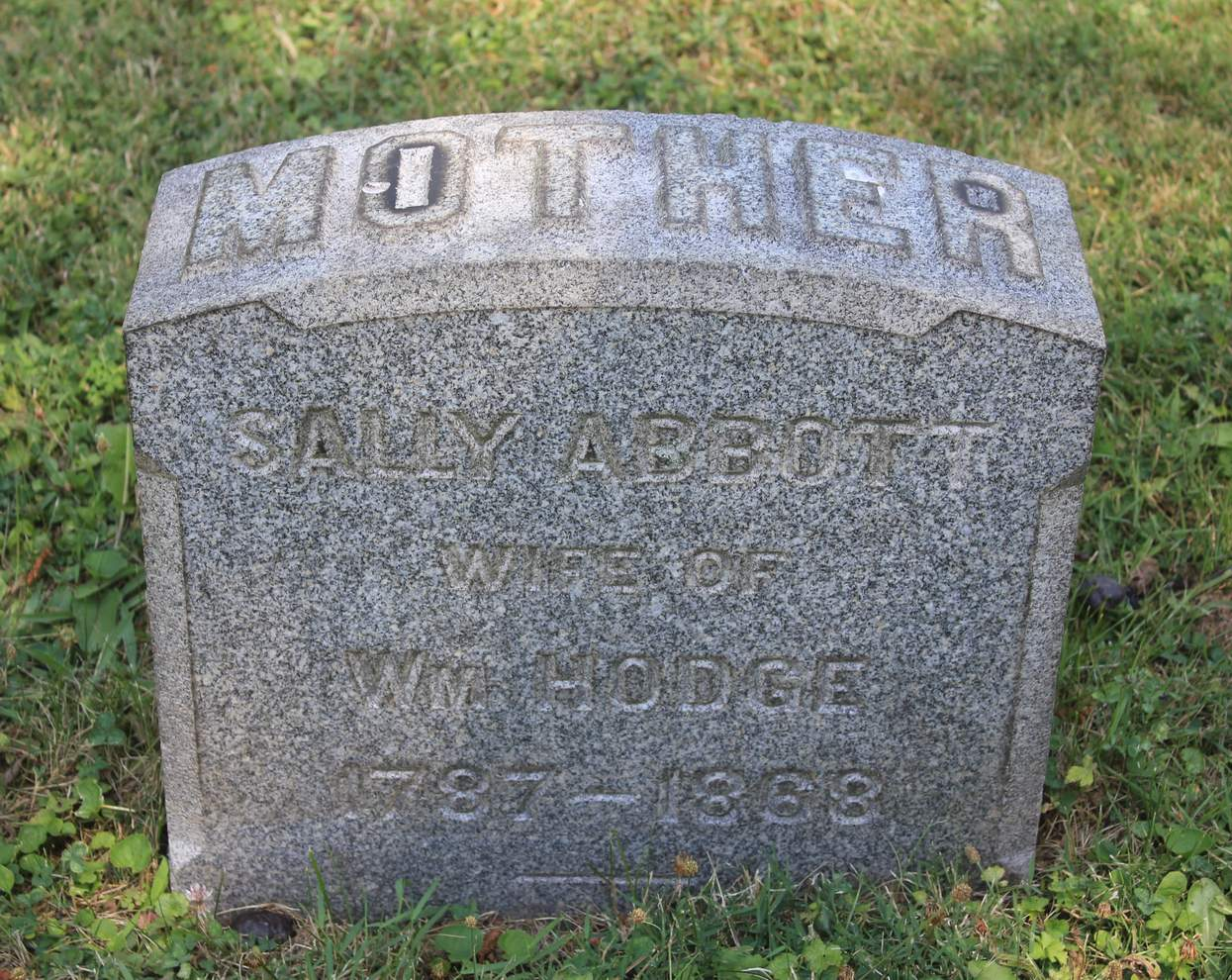
I remember women like Sally Hodge. Sally married William Hodge when she was 14 years old. Sally arrived in Buffalo in 1805 as the 17-year-old bride of 23-year-old William and the mother of two babies. They came from Richfield, NY, by wagon to Utica, where they embarked on a boat up the Mohawk River, into Wood Creek, through Oneida Lake, down the Oswego River into Lake Ontario to the Niagara River. When they reached Lewiston, the boat was taken out of the river and carried on a wagon by an ox team and put back into the river past Niagara Falls and they traveled down to Buffalo Creek. The total trip took 20 days. Twenty days of boat travel with two babies under 3! The Hodge family had no money and no land. They existed on their own ingenuity and what they could do with their own hands. The family lived on the outskirts of town, near Main and Utica, well out of the Village of Buffalo limits. Sally had more children – Sophia in 1807, Philander in 1809, Sabrina in 1811, and Julia in 1813. Sabrina unfortunately died at 16 months old in May 1812.
On December 30th, 1813, during the Battle of Buffalo, the Hodge family originally thought they were ok. They figured that the Americans would not be defeated, plus they were well outside the Village (which only reached Tupper Street). When they saw the militia hurrying past their house, they realized it was time to leave. Sally bundled up her children and fled. The day was bright, but cold. There had been a heavy snowfall, which still lingered in the woods, but the roads were clear. The roads were full of villagers fleeing into the forest. The Hodges threw some household goods into a wagon, along with their children ages 11, 10, 7, 5, and a 2-month-old baby. Fleeing their home, they went to Harris Hill in Clarence. More than 500 settlers fled their homes. About 100 houses and numerous other buildings were reduced to ashes. Where there had been a thriving village with a promising future was left a scene of devastation and ruin where barely a living thing could be seen. The Hodge house was burned to the ground on New Year’s Day 1814, reportedly the last building burned by the British.
Six days later, on January 6th, 1814, Mr. Hodge brought his family back into town to live in the ruins of their house while he rebuilt it. Imagine living in a burnt-out shell of a house as a 26-year-old with your 5 children! Now imagine doing it in the middle of winter. While the Battle of Buffalo was over, the war had not yet ended. Twice during that winter, enemy troops crossed the river again. Thankfully, they were driven back by soldiers stationed here. Most of those who returned had little to live on except what was issued by the commissary department of the army. Sally’s next baby was born stillborn in December 1815. I can’t help but wonder if perhaps the trauma of all of this may have something to do with it? Sally went on to have more babies in 1816, 1821, 1824, 1826, 1830 and 1833. The rest of the babies all lived to adulthood. In total, Sally had 13 babies in 30 years. Hodge Street is named for her husband. I haven’t been able to find a photograph of her; all that remains is her gravestone.
Do you think Sally Abbott Hodge ever imagined a world where her life could have been different? A world where she could have choices? A world where Kathy Hochul, a girl who grew up in WNY, serves as Governor? Women back then were made of steel. Our city was built on the backs of these women. Women like Sally Hodge who persisted in a world where 14-year-old girls were expected to simply get married and have babies.
Here are the highlights of some of our streets named after women.

- Mary Talbert Blvd – Mrs. Talbert was considered the “most famous colored person in the country” during her time. Read about her here in Part One, Part Two and Part Three.
- Lovejoy Street – Sarah Lovejoy was the only woman killed defending Buffalo during the War of 1812. You can read about her here.
- St. John’s Place – Margaret St. John’s home was the only house spared during the Burning of Buffalo during the War of 1812. You can read about her here.
- Ripley Place – Mary Ripley was a teacher at Central High School. She was charged with taming the boy’s study hall classes, which were the source of riots and police calls during the 1860s. You can read about her here.
- Marion Street and Wade Avenue – both named for Marion Wade Nicholson, an insurance saleswoman and singer. You can read about her here.
- Sprenger Ave – Named for Magdalena Sprenger Warner by her husband. Likely the only street in Buffalo named after a Jewish woman. You can read about her here.
- The Bristol Home – while Bristol Street is named for a man, this post about it discusses the Bristol Home, a home for women, run by women which existed in Buffalo for many decades. You can read it here.
- Lovering Ave – Sarah Lovering Truscott, along with her niece and daughter give this street its name. Her niece, Mary Lovering, was one of the first society women in Buffalo to earn her living outside of the home. You can read about them here.
- Gill Alley – Helen Gill decided to build a home in the Elmwood Village after her husband died. This was unusual at the time, since most Victorian era homes were run by the man of the house. You can read about her here.
- Gladys Holmes Blvd and Mary Johnson Blvd – Gladys and Mary were community activists on the East Side of Buffalo, living in the Talbert Mall. You can read about them here.
- Minnie Gillette Drive – Minnie Gillette was our first Black County Legislator and helped to save the Old Post Office in Downtown (now ECC City Campus). You can read about her here.
- Ora Wrighter Drive – Ora Wrighter was a community activist on the East Side of Buffalo. You can read about her here.
- Wasmuth Avenue – Caroline Wasmuth was the first female land developer in Buffalo, back in the 1880s. You can read about her here.
- Austin Street – While the street is named after her husband, Livinia Austin took over his business (with her daughter Delia) after his death and did some developing of her own, including converting the Unitarian Church at 110 Franklin Street from a church into a commercial space. The county is currently rehabbing the building for use once again, calling it the Lincoln Building. You can read about Livinia and the Austin family here. Lavinia Austin
- Shumway Street – while the street is named after Mr. Shumway, he was influential for women as he introduced to the New York State Legislature the first bill to guarantee the protection of a married woman’s property rights, which resulted in New York’s Married Women’s Property Act of 1848. You can read more about him here.
- Many of the streets with women’s names were named after the children of a developer or landowner. Examples of some of these streets that I’ve written about here include – Alice, Edith, Fay, Gail, Janet, Kay, May, Phyllis and Millicent.

Of course, I have to give a shout-out to the original Buffalo Streets girl herself, H. Katherine Smith. She was a reporter for the Buffalo Courier for more than 40 years, and she was blind! I wish I could tell her how much her story inspires me every single time I read one of her articles. I owe her such a debt of gratitude for her work; so much of my research is based on the work she did in the 1930s documenting the next of kin of so many street namesakes!
Of course, these women are just a few examples of some of the great Buffalo Women over the years! We’ll have a new post this week for International Women’s Day that will discuss TWO more streets named after women. In the comments, feel free to tell me your favorite stories about your favorite Buffalo Women! I’ll go first: In 1881, Maria Love established the nation’s first daycare, the Fitch Creche on Swan Street, providing daycare services to the working poor.


<
div dir=”ltr”>M L Schmidt
Sent from my iPhone
716-472-4194
<
div>“You are not wh
I always find such inspiration in your posts. I would love to find out the origin of Grant St as it was my maiden name.
Grant Street is named after President Grant.
Congratulations on such an insightful and inspiring story of the early women of Buffalo and their streets! They indeed, were made of steel! Thank you.
thank you
I really enjoy reading about the many streets in Buffalo,NY named after women and then learning what these women did to deserve this honor.
[…] Next time you’re over on the Lower West Side, or maybe taking the pedestrian bridge into Ralph Wilson Park, think of the Penitentiary and all the people sentenced to the site over the years; think of Louise Bethune, a woman architect breaking down barriers and designing prisons; and think of women like Sally Mae Cunningham and Rosetta Petruzzi who fought to improve conditions for everyone around them. I think sometimes, during months like Women’s History Month, it’s important to remember the major women who accomplished major things, but it’s also important to remember the work of regular women, too. Sally Mae and Rosetta were moms fighting for a better neighborhood. It’s important to remember them and all the other unsung women who’ve been working hard for decades to make their communities better. Happy Women’s History Month! Want to learn about other influential Buffalo women? Check out my roundup of Streets Named after Women here. […]