Feeds:
Posts
Comments

Archive for October, 2023

Screenshot (84)Sidway Street runs for three blocks between South Park Avenue and a railroad line property in the First Ward neighborhood of South Buffalo.  The street is named for Jonathan Sidway and runs through land that used to be a farm that was owned by the Sidway family, an influential early Buffalo family.

jonathan sidway

Jonathan Sidway. Source: Ancestry.com User lhstjohn1

Jonathan Sidway was born on April 1, 1784 in Goshen, New York in Orange County.  He worked as a farmer in the Goshen area until he came to Buffalo in 1812.  His parents, James and Rebecca Sidway also came to Buffalo around that time.  Jonathan was looking for work in the shipping business when he came to Buffalo.  He became a successful merchant and the owner of the brigs Union and Huron and the Schooner Rachel.  These were some of the first vessels to sail out of the Buffalo Harbor.  Jonathan Sidway was also founder of Buffalo’s first gas company and a director of Farmers and Mechanics National Bank. He was also involved in real estate, including a large farm on Doat Street and the farm where Sidway Street is now located.

Screenshot (82)

Approximate boundary of the former Sidway Farm in the First Ward.

Mr. Sidway married Parnell St. John on January 1, 1826.  Parnell was the daughter of Margaret St. John.  During the Burning of Buffalo during the War of 1812, Margaret St. John’s house was one of only three buildings left standing after Buffalo was burned by the British.  St. John Place is named for the St. John Family.  Jonathan and Parnell Sidway had 9 children – daughters Katherine, Maria, Parnell and Helen, and sons Dewitt, Jonathan, Franklin and James.  Only Katherine, Jonathan, Franklin and James lived to adulthood.  The Sidway family were members at First Presbyterian church.  The Sidway family originally lived on a farmhouse on Elk Street (now South Park Avenue) on the land that became Sidway Street.  When the City of Buffalo was formed in 1832, the Sidway farm was along the eastern boundary of the city of Buffalo, which was considered to be “way out in the countryside.”

Shea_s_Music_Hall_Bethune__Bethune_Fuchs

Michael Shea’s Proposed Music Hall to be built on the site of Jonathan Sidway’s former house in 1895. Designed by Bethune, Bethune and Fuchs. Source: Buffalo Courier

On January 3, 1826, Mr. Sidway purchased Holland Land Company Lot 27 – located on the east side of Main Street between Huron and Chippewa Streets (now the location of M&T Center at Fountain Plaza, just north of the Gold Dome bank).  In the mid-1830s, Jonathan Sidway built a two-story frame house on the site.  The house had an orchard and gardens.  Over the years, the block became more commercialized and the family moved north of downtown.  The Sidway house on Washington Street was demolished in the 1895 for Michael Shea to build a concert hall.  The Concert Hall was designed by architects Bethune, Bethune & Fuchs (the firm of Buffalo Gal Extraordinaire – Louise Bethune, the first female architect!  However, newspaper articles of the time indicated that this building was designed by W.L Fuchs, not by Louise.)  The building was to be an Italian Renaissance style building, built of brick with a frontage along Washington Street of a light buff colored brick.  It was to have a grand lobby, fitted with mirrors and onyx trimmings and a mosaic floor.  It was to be one of the largest theatres in the country.  It was to have 24 dressing rooms, which were conveniently located and of sufficient size, which were not found in any other Buffalo theatre at the time.  The main auditorium was to be 91 feet square and have a seating capacity of between 700 and 800, and 55 feet high ceilings.  The building was to be lit by electricity with a large chandelier in the center of the auditorium, 34 feet in diameter.  The theatre was to be funded half by Iroquois Brewery and half by Mr. Shea.  It was expected to cost between $75,000 and $100,000 (between $2.7 and $3.6 Million in today’s dollars).  However, they had difficulty getting loans to build a building on for theatrical purposes, so the plans were abandoned and it was decided that stores would be built on the site instead.  Mr. Shea eventually did build a theater in this area –  the west side of Main Street between Huron and Chippewa was the long time home to the Hippodrome Theatre which opened in 1914.  And of course, Michael Shea eventually got his large, super grand theatre on the next block to the north – now known as Shea’s Performing Arts Center, still a popular theatre today!

1872 atlas sidway

1872 atlas map showing the Sidway Mansion. Hudson Street is located at the bottom of the image. Note the house on the lower part of the block with the circular drive in front of it and the pathway leading to the carriage house in the center of the block. The carriage house was later a part of son Franklin Sidway’s property at 30 Plymouth after the property was subdivided and parts of it are still standing today.

In 1843, the Sidway family moved from Washington Street into a large home at 290 Hudson Street. The house was originally built by Benjamin Rathbun around 1834 for Mayor Pierre Barker and was also considered to be far out in the country at the time.  The house sat on the center of the block, bounded by Plymouth, West, Hudson and Pennsylvania.  The house was surrounded by old trees and flowering shrubs in a park-like setting.  The grounds were laid out in large circles, one directly in front of the house  and another between the house and West Avenue.  The house was considered to be one of the most beautiful in the City.  It had ornate gilt cornices above the doors and windows, exquisite lace curtains hung in the windows.  The house had three drawing rooms on the first floor facing the West Avenue side of the house.  The rooms were furnished with carved rosewood furniture upholstered in satin damask.  On the other side of the main hall was a sitting room with large black marble mantle and a dining room with a glass enclosed piazza in front of it.  The house was so large that in order to be comfortable in it during the winters, the family would close off the upper rooms.  They kept a cow in the backyard barn to provide milk for the family.

SidwayBlock_ from RootNeal website

Sidway Block – Main Street is on the right, Upper Terrace is in the foreground. Source: https://www.rootneal.com/

In 1832, Jonathan Sidway built one of Buffalo’s first brick block buildings.   The Sidway Block consisted of 19 stores.  The Sidway Block was located along Main and Upper Terrace at 172-194 Main Street and 7-25 Upper Terrace (now a part of One Seneca Tower).  Mr. Sidway had owned a portion of the property since 1819!  The offices of Jonathan Sidway’s ship chandler firm – Sidway, Skinner & Moore were located on the second floor of the building.  The building stood for more than 130 years before it was torn down.  Starting in 1905, the building was home to Root & Neal, an industrial supply company.  Root & Neal moved to Peabody and Perry Streets in 1960 and they still in business today as a fourth generation Buffalo-business.

city_atlas_2_42

1894 City Atlas. Sidway Block outlined in red. Note Bemis Alley and John Street, two non-extant streets on the same block as the Sidway Block of buildings.

As you can see in the image above, to the rear of the Sidway Block were two additional streets that no longer exist – Bemis Alley and John Street.  Bemis Alley was named for Asaph Bemis, Jr, who married to Jonathan Sidway’s daughter Katherine in 1844.  Asaph Bemis was a grocer and Alderman.  Asaph was the daughter of Asaph Bemis, Sr. and Aurelia St. John.  Aurelia was Parnell St. John Sidway’s sister.  So, Asaph and Katherine were first cousins who married!  I’m not sure who John Street is named for….but I wonder if it were in homage to the St. John family?  St. John Place did not exist in Buffalo until the late 1880s and John Street was named before that.  I wasn’t able to find any information about John Street, so it’s all just conjecture. Bemis Alley and John Street are no longer extant, they are now part of the site of Seneca One Tower.
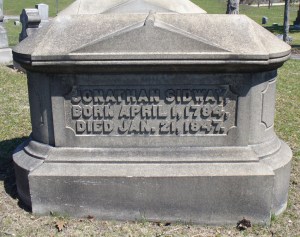
sidway graveJonathan Sidway died in 1847.  His estate was estimated to be worth $1 Million (about $30 Million in today’s dollars).   Sidway street was laid out and named in Jonathan’s honor in January of 1854.  The street was proposed by Alderman Asaph Bemis.  Both Fitzgerald Street and Katherine Street were laid out and named during the same council meeting, so I believe that Katherine Street may have been named for Katherine Sidway Bemis.  Do any First Ward historians know?  I wasn’t able to find any sources indicating any rationale behind the name.
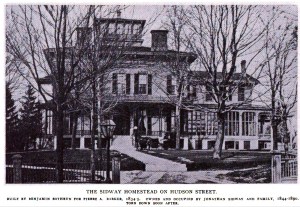
sidway mansion from picture book of earlier buffalo

Sidway Mansion on Hudson Street.  Source:  Picture Book of Earlier Buffalo.

Mrs. Parnell Sidway lived in the Hudson Street house after the death of her husband, until her death in 1879.  After Mr. Sidway’s death, several family members came to live with the family to help Parnell with the kids – who were ages 20, 15, 13, and 8 when Jonathan died.

In 1850, Parnell, Jonathan Jr, Franklin and James lived in the house with Parnell’s sister-in-law Elizabeth Sidway(who had been Jonathan’s sister-in-law technically), along with servants Francis Skinner, Elizabeth Lafever, Mary Bertrand, William McDonald, M Dolan and Anna Page.

drawing room sidway house picture book of earlier buffalo

One of the Drawing Rooms at the Sidway Mansion.  Source:  Picture Book of Earlier Buffalo

In 1860, the house was home to Parnell and her sons, Franklin and James.  Daughter Katherine and her husband, Asaph Bemis also lived with the family, along with Parnell’s brother, Le Grand St. John, and servants John McGinnis, Bridget McGinnis, Margaret Hoag, and Agnes Kearns.

In 1870, Parnell lived with son Jonathan, his wife Caroline and their children Gertrude, Jonathan, William and Kate.  Also living in the house were servants Jane Baudin, Sarah Smith, Elizabeth Jeffcott, Nellie Riley, Ann Singleton and William Smith.

1575879

1872 Atlas showing the Sidway family properties near Sidway Street that were still owned by the Sidway family – Franklin, Jonathan Jr, Mrs. Parnell Sidway and Katherine Bemis.

When Parnell Sidway was close to death in 1879, the Buffalo Times reported that “she has survived her husband thirty years and has managed his big estate with great ability.  She has been a woman of great force of character and was benevolent and generous to a large degree.”  Mrs. Sidway had also been involved with the Old Settler’s Festival, along with Mr. and Mrs. Bristol who we learned about in our last post.

After Parnell’s death, in 1880, the Hudson Street house became home to Parnell’s son Franklin Sidway, his wife Charlotte Spaulding Sidway, and their sons Harold, Franklin, Edith and Clarence.  They were joined by their servants Ann Dewey, Ellen Hanrahan, Mary Dewey, John Beckman, Peter Villikes, Jennie Villikes, and Annie Clark.

The Sidway Mansion was demolished around 1891 and the property was sold off to be developed with houses.  Franklin Sidway built a house on the family property at 30 Plymouth Avenue. The 30 Plymouth Avenue house includes the original brick stable from the Sidway Mansion, both of which are still standing today.  The Sidway property at 30 Plymouth Avenue, was sold by son Frank Sidway in 1907.  It has been subdivided into apartments, but it is still standing.

Edith_Sidway_Stevens

Edith Sidway Stevens and her husband Stevan Stevens in their office at the Spaulding Block in 1959. Source: Buffalo News. Note the picture of the Sidway block in the rear, which I believe is the same picture seen earlier in this post.

The Sidway Block building stood for more than 13 decades.  After Jonathan’s death, his wife Parnell took over the firm of Sidway, Skinner & More, which shifted from ship chandlery to real estate over time.  Sons Franklin and Jonathan Jr and daughter Katherine were all involved with the company as well.  Son James became a firefighter, and unfortunately perished at the age of 25 in the fire which destroyed the American Hotel on Main Street near Court Street in 1865.  Franklin married Charlotte Spaulding, whose father was Elbridge Spaulding and had the Spaulding Exchange, a mercantile operation across the Terrace from the Sidway block.  Franklin helped to manage the Spaulding Exchange and the offices of the Spaulding Exchange were located in the Sidway Block.  The Sidway Block stood until the late 1960s.  In later years, only the first floor spaces were occupied, with the exception of the second floor offices of Stevens & Strong, a real estate company run by Steven Stevens, the husband of Edith Sidway – a fifth generation Buffalo Sidway.  Edith worked as a real estate agent and had a desk in the offices, following a long tradition of Sidway women who had offices in that space, starting with her Great Grandmother Parnell St. John Sidway!

The Sidway Block was demolished in 1969 as part of the Waterfront Renewal project undertaken by the City of Buffalo.  The City was looking to take possession of the property to convey the land to Cabot, Cabot & Forbes for the Marine Midland Project to build the tower now known as Seneca One Tower.  In December 1967, exactly 154 years after Margaret St. John refused to let her house burn during the War of 1812, Margaret’s Great-Great Grandaughter, Edith Sidway Stevens was interviewed while sitting in her office, the last occupant in the Sidway Block, watching buildings get demolished all around them.  She was quoted as saying, “We would have stayed indefinitely, we had no interest in going anywhere else.  Oddly, we like the location.”

The Sidway Block property underwent condemnation proceedings in February 1969 and the Supreme Court set a price of $282,750 (about $2.4 Million in today’s dollars) for the property.  City Council appealed the price.  The City of Buffalo had given the owners a low-ball offer of $104,000 for the property (about $850,000 in today’s dollars).  City Counsel met with the Sidway family owners and a compromise price of $250,000 was arrived at for the property, which would have saved the City $32,000 (about $260,000 in today’s dollars).  City Council then refused to accept the compromise price, preferring to go through the Courts.  The Court then affirmed the fair market value at $282,750 and the City had to pay that, as well as the additional costs of the appeal.
Sidway exterior building

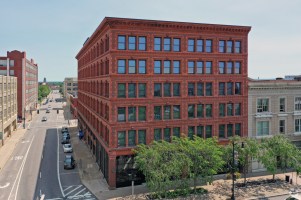
Sidway Building at Main and Goodell. Source: Matthew Friend, Google Maps Images

In 1907, Franklin Sidway erected the Sidway Building, a six-story terra cotta building designed by architects McCreery, Wood and Bradney.  The building was located on the site of the house where Franklin’s wife, Charlotte Spaulding, had grown up.  It must have been confusing when people would refer to the Sidway Building and the Sidway Block, which were two separate buildings on Main Street in either end of the Central Business District!  The building has been renovated into apartments.
Charlotte_Sidway_School,_Grand_Island,_New_York

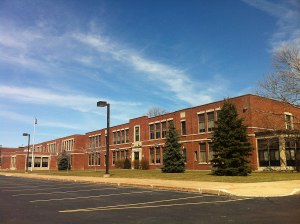
Sidway School, Grand Island. Source: Wikipedia

Franklin Sidway and Charlotte preferred country life to city life.  Franklin built a home on Grand Island in 1898, called River Lawn, and they moved to River Lawn from their home at 30 Plymouth Avenue.  River Lawn was occupied by Charlotte Spaulding Sidway until 1931 when the 400-acre estate was sold to New York State to become a part of Beaver Island Park.  Charlotte was the daughter of Elbridge Spaulding.  Charlotte Sidway Elementary School on Grand Island is named after Charlotte, who passed away just before the school opened.  You can learn more about the Sidway Building, River Lawn and Charlotte’s family in the post about Spaulding Street here:  https://buffalostreets.com/2022/12/23/spaulding/

So the next time you drive past Sidway Street or the Sidway Building, think of the Sidway family and remember when there were farms in the First Ward and that Hudson Street was way out in the country.  And next time you visit Seneca One, stop for a moment to think about the 135 years of the Sidway Block standing at its location.  Want to learn about other streets? Check out the Street Index. Don’t forget to subscribe to the page to be notified when new posts are made. You can do so by entering your email address in the box on the upper right-hand side of the home page. You can also follow the blog on facebook. If you enjoy the blog, please be sure to share it with your friends, it really does help.  This past week, a reader posted an old post in a facebook group and more than 5,600 people read that post this week!  If you’re coming from Buffalo, A Talk of the Town – welcome new readers!!  Interested in getting even more content from me?  You can become a Friend of Buffalo Streets on patreon.   You can go to https://www.patreon.com/buffalostreets/

Sources:

  • “Sidway Street Honors Memory of Pioneer in Shipping, Realty” Courier June 18, 1939, p16.
  • “Fifty Years Ago.”  Buffalo Times.  April 21, 1929, p16.
  • “One Hundred Years Ago.”  Buffalo Times.  July 16, 1922, p32.
  • “Death of Mrs. Parnell Sidway.”  Buffalo Weekly Courier.  April 30, 1879, p7.
  • Cook, Anna Hoxie.  “When Buffalo Was Young – Sidway Mansion on Hudson Street a Show Place.”  Buffalo News.  March 2, 1936, p13.
  • “Relic of Long Ago: Manager Shea’s New Theatre Will Take Place of the Old Sidway Residence.”  Buffalo Commercial.  February 9, 1895, p10.
  • “Bernard Duffy Buys Home on Linwood Avenue:  JB Healy Buys Last of the Old Sidway Homestead Property on Plymouth Avenue.”  Buffalo News.  June 1, 1907, p22.
  • “Shea’s Proposed Music Hall.”  Buffalo Courier.  March 10, 1895, p11.
  • “Mr. Shea’s Theater:  That Magnificent Variety House Will Not Be Built on Washington Street.”  Buffalo Commercial.  May 14, 1895, p11.
  • “Shea’s New Theatre.”  Buffalo Commercial.  February 23, 1895, p11.
  • Turner, Fred.  “The Old Sidway Block:  A Volume of Buffalo History.”  Buffalo News.  October 31, 1959, p15.
  • Zubler, Bud.  “Council Tries to Dicker-Court Costs Added to Bill”.  Buffalo News.  April 2, 1969, p33
  • Smith, H. Katherine.  “Men Of Vision Built the Sidway Block.”  Buffalo Courier Express.  November 20, 1955, p96.
  • Taussig, Ellen.  “Protection of Its Property is a Sidway Family Tradition.”  BuffalO News.  December 30, 1967, p2.
  • “Root Neal Leaving Main Street Where Its Been 52 Years.”  Buffalo News.  February 6, 1960, p16.
Read Full Post »

Screenshot (47)

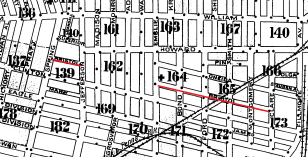
Bristol Street shown in red on the map.  Note the railroad tracks cutting the street into two parts.

Bristol Street is a street in the Emslie neighborhood on the East Side of Buffalo.  The street has two parts, each two blocks long – the first runs from Clare Street to Smith Street.  The road has a dead end where the street is bisected by railroad tracks and then continues from Lord Street to Emslie Street.  Prior to the removal of at-grade railroad crossings the road did cross the railroad tracks, those were removed by 1916.  The street historically was supposed to have continued past Jefferson Street to Spring Street, but only the block between Jefferson and Spring was constructed.  That block of Bristol Street existed until urban renewal removed it in the 1950s.

ny57932893230215394723_map

1899 Sanborn Map key map showing the additional block of Bristol Street between Spring and Jefferson. Bristol Street showing in red

Mr_and_Mrs__Bristol

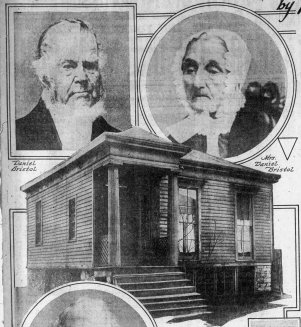
Mr. and Mrs. Bristol in 1873. Source: Buffalo Courier

The street is named for one of the earliest residents of Buffalo, Daniel Bristol.  Daniel Bristol was born in Milford,  Connecticut in 1782.  Daniel Bristol married Mary Lockwood Reynolds in October 1810.  Mary went by Polly and was from Philadelphia.  The Bristols came to Buffalo in 1811.  Daniel was one of the earliest master builders in Buffalo and erected many of Buffalo’s first structures.  When the Village was burned during the War of 1812, they fled with their neighbors.  Mrs. Bristol gathered their treasured belongings and placed them in a large iron kettle and suspended it in their well.  After the war, they came back to help rebuild Buffalo.  When they returned, they fished the iron kettle and her silver out of the well.

Bristol_Home_Buffalo_Times

Mr. and Mrs. Bristol and their home

In 1816, Mr. Bristol built a home for his family on the southeast corner of Delaware Avenue and Mohawk Street.  Daniel and Polly had six children – Cyrenius, William, Peter, Eliza, Erasmus, and Catherine.  The Bristol family property originally extended on Delaware Avenue to Niagara Square and included most of the entire block.  They had a large garden east of his house on Mohawk Street, which led to a stable.   Over the years, portions of the property were sold off and other houses were built on the block, including the house that was purchased by Millard Fillmore in 1858.  The Bristol family house stood until 1923 when it was demolished to build the Statler Hotel.

On March 17, 1817, the Village of Buffalo established their first volunteer fire company.  Daniel Bristol was one of its members.  These men used old-time fire buckets and had no engine, they were what is referred to as a bucket brigade. In 1824, the first engine company was organized, which became known as Cataract Engine No 1.  In 1831, Pioneer Hook & Ladder No 1 was organized on South Division Street, east of Washington Street with Daniel Bristol as a charter member of the company.  The Buffalo Fire Department Engine 1/Ladder 2 is still located on this site.

Bristol Grave

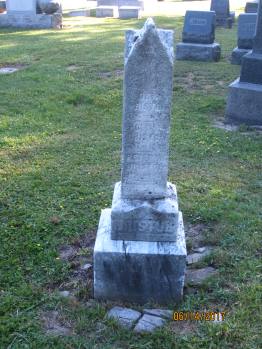
Daniel, Polly and Peter Bristol Grave, Forest Lawn Cemetery.

Polly and Daniel lived to be among the oldest citizens of Buffalo.  They were a part of the “Old Settler’s Festival”, which brought together the older citizens of Buffalo to reminisce.  The Old Settler’s Festival was held at St. James Hall in 1866.  In 1866, there were just 16 residents of Buffalo remaining who had lived here before the Burning of Buffalo on December 30, 1813.  In addition to Dan and Polly Bristol, the others were George Coit, James Sloan, Commodore Stephen Champlin, Moses Baker, Mrs. R.B. Heacock, Lucius Storrs and his wife, Mrs. Kibbe (Mrs. Grosvenor), Mrs. Alvin Dodge, Mrs. Ebenezer Walden, Lester Brace and wife, and Mrs. William Hodge.

Daniel Bristol died on June 30, 1867 at the age of 85.  Polly died on February 28, 1879 at 92 years old.   They were buried in the North Street Cemetery.  His remains, along with those of Polly Bristol and their son Peter, were moved to Forest Lawn in October 1894.  Peter had died in 1838 at just 23 years old. These three Bristols are buried with one stone.

30584-original-bristolssarsaparillars

Ad for Bristol’s Sarsaparilla after they moved to NYC.  C.C. Bristol’s image is in the center.  Source:  https://www.bottlepickers.com/bottle_articles156.htm

Daniel’s son Cyrenius Chapin Bristol, known as C.C. Bristol was born on July 8, 1811.  Some sources claim that he was the first male child born in Buffalo, but that claim is debatable.  At age 15, he went to New York City to learn the drug business.  He returned to Buffalo five years later to work as a chemist and druggist, with an apothecary near the corner of Washington And Swan Streets (now the location of the Ellicott Square Building).  He was considered one of the most well-known Buffalonians in his time.  He invented Bristol’s Extract of Sarsaparilla.  Bristol’s Sarsaparilla was considered to be the “first great American tonic” and was sold across the country and in Mexico for many years.  These almanacs were considered to be “as familiar to 19th century homes as the Bible”. In 1855 when the formula, the formula for Bristol’s Sarsaparilla was acquired by the Comstock Company of New York.  The Comstock Company remained in business until 1959.

CC_Bristol_Bottle

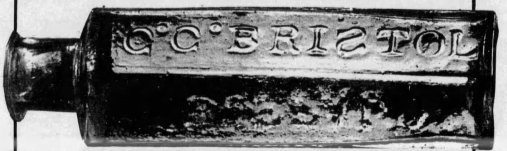
C.C. Bristol medicine bottle. Note the periods at the top of the C’s and the backwards S. Source: Buffalo News, August 1982.

In 1838, C.C. Bristol published “Bristol’s Gazette and Herald of Health”, a monthly that was discontinued in 1842.  In 1844, C.C. Bristol published the first patent medicine almanac called “Bristol’s Free Almanac”.  C.C. Bristol was said to have made “barrels of money” from the drug business and in 1855 when he sold his formula, he invested his money into The Buffalo Daily Evening Republic one of Buffalo’s early newspapers.  He published the paper for five years.  In 1861, the Republic was absorbed by the Buffalo Courier.

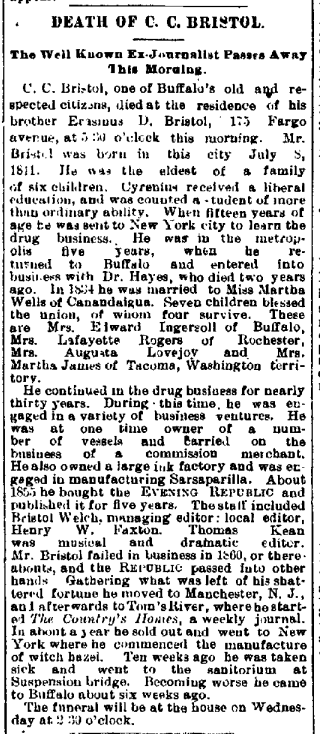
C.C. Bristol married Martha Hayden Wells of Canandaigua, NY in 1835.  He was the only one of his siblings to marry.  C.C. Bristol and Martha had 9 children.  Mary died in February 1866.    C.C. Bristol moved to New Jersey  after Mary’s death but returned to his hometown to end his days in Buffalo.  He died ten weeks later, in December 1884, at the home of his brother Erasmus at 175 Fargo Avenue.  Mary and C.C. were originally buried in the North Street Cemetery, but their remains were moved to Lakeside Cemetery in Hamburg in 1901.

Bristol_Home_sketch

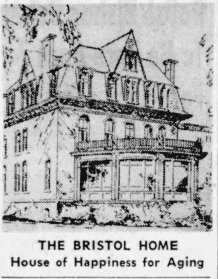
Sketch of the Bristol Home. Source: Buffalo News, March 1957.

There’s another well-known Bristol namesake in Buffalo – the Bristol Home.  The Bristol name comes from a separate family – I was not able to discover a link between the two families, however, they both were long standing families in the New England area so if you go back far enough, they may intersect. Since we’re discussing Bristol today, I figured noone would mind if I included the history of the Bristol Home, since it was a longstanding institution in the City of Buffalo for more than 150 years!

Edward Bristol was born in Buffalo in 1825.  He worked as a merchant.  Edward was a businessman, who owned a furniture store; however, he had a deep interest in religious activities.  He was a charter member of Lafayette Presbyterian Church and the first superintendent of its Sunday School.  He helped conduct religious services at the Erie County Penitentiary.  While he was there, he saw that there were many women at the penitentiary that had nowhere to go.  In 1872, he ended up giving up his business and devoting his life to religious work.  In 1877, he was ordained as a minister and became pastor of Calvary Presbyterian in Rochester.  He lived the rest of his life in the Rochester area.

In May 1867, while still in Buffalo, Mr. Edward Bristol called together a band of women to the home of Mrs. F. H. Root.  The women met to discuss the need for relief and care for women in Buffalo who were alone and in distress, telling the women of the conditions he saw at the penitentiary.  They came up with the idea to start a Home for the Friendless.  The organization consisted of a 41-person Board of Managers.  They were all women, and mainly members of Protestant Churches, as the Roman Catholic church had their own institutions.  Temple Beth Zion was also involved, making the facility not just Christian, but also including Jewish women. The home was non-sectarian, but many of the churches would host Sunday services in the home on a rotating basis.  Some of the churches involved included:  First Presbyterian, Central Presbyterian, North Presbyterian, Lafayette Presbyterian, Westminster Presbyterian, Calvary Presbyterian, St Paul’s, Trinity Church, Church of the Ascension, Grave Episcopal, Church of the Good Shepherd, All Saint’s Church, Delaware Avenue Methodist, Linwood Ave Methodist, Asbury Methodist, Prospect Ave Baptist, First Unitarian Society, First Congregational, Disciples Church of Christ and Temple Beth Zion.  The first president of the Board of Managers was Mrs. Noah Gardner.  Mrs. Gardner died a year later, and Mrs. O. G. Steele became President, a role she held until 1875.  Many of the daughters and granddaughters of the first Board members served as Board members as well, making the Home feel like a true family affair.  Residents of the Home were referred to as inmates by many, but the Home referred to the residents as “The Family”.  This was a home for women, run by women.

The Board of Managers organized and started a quiet campaign amongst their friends to bring about an institution to meet their needs.  It took about six months for them to raise enough money.  They purchased a house at 334 Seventh Street, at the corner of Maryland Streets.  The house was a large, rather plain, old-fashioned house in an unfashionable but respectable part of town.  It was a two and a half story brick house on a lot with 116 feet on both Maryland and Seventh Streets.  The house was often referred to as “the Home on Maryland Street”.   The house was paid for in cash and furnished by donations with items from the houses of the members of the Board.  The Home for the Friendless opened on February 4th, 1868, with space for 12 to 24 women at a time.  Their first residents were four elderly women.  The first year there were 26 residents, and 438 days of board had been provided at the home.  The second year, there were 132 residents who stayed at the home.

The Home was open to all who needed friends – some were impoverished, some bereaved, some sorrowful, some idle, some sinful.  They took in the unfortunates, poor, beaten and abused, women with fatherless babies, respectable girls from the country seeking work and decent women in awkward positions due to home, finance, or travel issues.  Some stayed for two weeks, some for two months – for as long as they needed, but the home was mainly transient in nature.  Children were allowed to stay at the Home as well.  Most of the women were under the age of 21 years.  When they’d leave, some would find respectable homes in Buffalo, some would find jobs, some would return to their friends or family, or some would go on to another city.  The Board of Managers would work with the women to help them find better situations if they could – finding homes or domestic jobs, etc.  Many of the original residents were Civil War widows who were struggling to obtain their husbands pensions.

Each member of the house paid at least $5 to stay there (about $103 in 2023 dollars) as long as they needed up to a year.  Some residents paid more; they paid as they were able.  The policy was not to turn anyone away. Several of the churches contributed to the Home.  The Board of Managers would act as an employment agency, helping people find cooks, nursing aides, laundresses, and seamstresses from among the residents at the house.  They would charge a fee of 50 cents(about $10 in 2023 dollars) to prospective employers.  The institution also raised money each year by hosting a Donation Day.  They would open the doors to the public to come visit the institution and have supper with the residents in exchange for donations of money, clothing, provisions, etc.  Donation Day was the only time of year they would ask the public for money.  They also published a monthly newsletter called “Our Record” which was very successful, both in getting the word out about the Home for the Friendless to the community at large, but also in providing a source of income for the home.  Residents would also sell their needlework, sewing and other crafts to help fund the home.  In the 1980s, the organization boasted that they had never taken on any debt for their entire existence, and they had never had any government funding.

20231007_120602

Ingleside Home on Harvard Place, March 1903. Source: Buffalo Times.

In 1869, they realized that the home was serving two distinct needs – first was for women who were looking for refuge until they could obtain a suitable place and secondly women who were in a more unfortunate situation and may need some help to get on “a better course” for their life.  They referred to these women as those who had been “tempted and fallen”.  The Ingleside Home for Reclaiming the Erring was opened in 1869 at the corner of 13th and Vermont Streets.  They had several locations before settling at 70 Harvard Place near Main Street.  The building pictured here burned down and was replaced with the still extant building in 1929.  The Ingleside name comes from the Scottish word for “a home fireside.”  Ingleside was mainly a home for unwed mothers.  The Ingleside Home operated until 1977.  The home has been renovated into apartments.

Also in 1869, because they couldn’t care for the very sick, the Board of Managers of the Home for the Friendless worked to make arrangements with Buffalo General Hospital, which got its start in 1858.  The part of the hospital devoted to women had become dilapidated and was vacant for some time.  At the time, the Hospital was not doing well financially and had begun to lack the confidence of the community.  The Board of Managers worked to place the female ward of the Hospital under the management of the Home for the Friendless.  The Home for the Friendless raised money and worked to construct partitions, closest and lockers, they kalsomined the walls (a type of white wash), provided beds, bedding, furniture and clothing for the sick.  They quickly determined that running the Home for the Friendless, the Ingleside Home AND the Hospital was too much for the one organization, so a separate organization was spun off of the Home for the Friendless, the Ladies Hospital Association.  The new wards opened on November 1, 1870.  By 1872, the Ladies Hospital Association had successfully managed to get three of their members seats on the Executive Committee of the Board of Buffalo General Hospital.  The Ladies Hospital Association continued to be an important force for the Hospital, raising most of the funds for the Hospital’s maintenance, expansion and growth, and improvement of equipment.

By the late 1870s, older women began looking at the Home for the Friendless as an option when they didn’t want to stay with families, or they didn’t have families.  They had some money, but not enough to live on.  The Home developed a policy that for $250 (about $7,000 in 2023 dollars), women over 60 could stay for life.  This amount gave them a room, food, clothing, medical attention, nursing, and a decent funeral and a grave.  These residents were referred to as “permanent members” of the Home.  Many of the older women who came to the Home were women who had worked for members of the Board of Managers as maids, cooks, laundresses, seamstresses, secretaries and governesses.  Once they were done with their working career, there were few places for them to go, other than the poorhouse.  In 1871, there were 12 permanent residents.  The Home for the Friendless started to become more of a home for older women.  The transient women started going to the Ingleside Home, the Prison Gate Mission and the Young Women’s Christian Association.

home for the friendless marker forest lawn

Home for the Friendless Marker in Forest Lawn Cemetery.

In 1872, the Home for the Friendless purchased a large plot in Forest Lawn Cemetery with a marker placed in 1879.  Many of the women from the home are buried in the Home’s plot.  In 1873, the house was enlarged to add additional space for the permanent residents of the Home, as well as the transients who still passed through.  The family continued to grow, and they began to look for additional space.

The group set their sights on the former estate of Mrs. Sally Van Deventer, whose mansion had sat on Main Street in Cold Spring.  (Note from Angela:  This is another case where the site is often referred to as “Mr. Van Deventer’s property”, but indeed Mr. Van Deventer was dead when Sally Van Deventer purchased the property.)

Peter Van Deventer and his wife Mary came to Erie County in 1803 from New Jersey, settling in the Newstead area.  The first Town Meeting west of the Genesee River was held at Peter Van Deventer’s house in 1804.  He was chosen as first Supervisor of the Town of Willink.   At the time, the Town of Willink consisted of all of Erie and Niagara Counties.

Peter’s son, Christopher Van Deventer, was born on July 30, 1788.  Christopher attended Williams College and graduated from the U.S Military Academy at West Point in 1809.  He was promoted to Major and served with distinction in the War of 1812 until he was captured at the Battle of Stony Creek.  He was held hostage in Quebec.  Christopher later served as Chief Clerk in the War Department.  This position was second to the Secretary of War and Major Van Deventer served as Acting Secretary whenever Secretary Calhoun was absent.  Major Van Deventer held this position for 11 years.

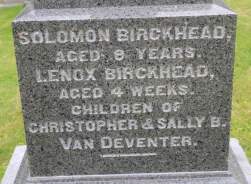
Major Van Deventer was married three times.  First to Marcia Kellogg, with whom he had one daughter, Marcia Van Deventer.  His second wife was Eliza Cooper, who had a son Eugene Winfield Scott Van Deventer.  Christopher married his third wife in Sally Birckhead of Baltimore, Maryland in 1823 and they moved to Buffalo that year.  Sally and Christopher had six children, all born in Western New York – Soloman, Jane, Hugh, James Thayer, Lenox and Susan.  Christopher Van Deventer died in April 1838.

deventer children grave

Van Deventer Children’s grave. Forest Lawn.

In 1841, Sally Van Deventer build a 2-and-a-half-story Italianate home at 1500 Main Street.  The property was two acres, thickly studded with shade trees and laid out with walks and gardens.  Sally exhibited items from her gardens in the first several fairs of the Buffalo Horticultural Society, starting in 1845.  The group eventually became the Erie County Horticultural Society, they are the group that still puts on the Erie County Fair today.  Sally lived at the home with her three children –  Hugh, who became a doctor, John Thayer, who became a lawyer, and Susan, who married lawyer Myron Tyrill.  Unfortunately, the other children did not live to adulthood.  The Van Deventer family also had a staff of three – in 1850, the staff included James Noles, a 25-year-old Irish man, Kate Noles, a 15- year old Irish woman; and Jemima Coleman, a 50-year-old-Black woman.

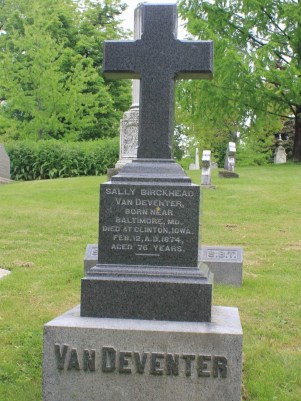
sally vandeventer

Sally Van Deventer Grave. Forest Lawn Cemetery

The Van Deventer property was listed for sale in 1856.  The family dispersed.  Dr. Hugh Van Deventer moved to the New York City Area with his family.  Myron and Susan and her mom Sally moved to Clinton Iowa.  James Thayer Van Deventer and his family also moved to Clinton, Iowa and then moved on to Knoxville, Tennessee.  Susan died in September 1873 of complications from childbirth.  Mother Sally died a few months later in February 1874.  Both Susan and Sally are buried in Forest Lawn Cemetery in Buffalo with the other Van Deventer children.  Their servant, Jemima Coleman, is also buried in Mrs. Van Deventer’s family plot.

The Van Deventer property on Main Street became Spring Abbey, a picnic grove.  Spring Abbey opened for the season in June 1867 by proprietor Adam Clark who renovated the buildings on the property and built a large ballroom for the use of private parties and excursions.  The grounds were open to the public for free.  Spring Abbey also had a beer garden, dance hall, bar and restaurant.  The buildings burnt down in December 1867.  George Weber rebuilt the grounds and constructed the existing building and reopened Spring Abbey in May 1868.  The original building also served as a hotel.  The property continued to be run as a picnic grounds until 1877 when the preparty becomes vacant.

Home for the friendless Buffalo Express

Home for the Friendless as it appeared in 1888. Source: Buffalo Express.

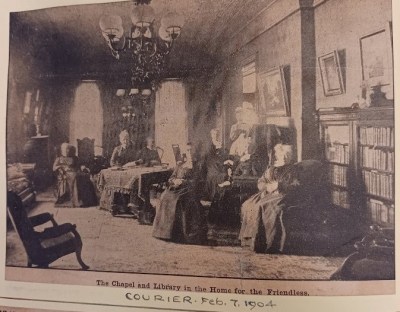
The Home for the Friendless formed a real estate committee consisting of Mr. Pascal P. Pratt, Mr. E. L. Hedstrom, Mr. George Gorham and Mrs. Maria M Welch.  In 1884, the property at 1500 Main Street was purchased by the Home for the Friendless for $25,000 (about $783,000 in 2023 dollars).  The building was altered and remodeled for the purposes of the home.  A three-story building was added to the back of the existing mansion.  The renovations cost $15,287(about $433,000 in 2023 dollars).  The former bar room was turned into the library and chapel used for Sunday services.  The site was dedicated on June 13, 1885.

On March 17, 1886, the family of 34 women moved into their new home on Main Street.  The Home on Seventh Street closed and was sold, having served 2,478 residents during its 20 years of existence.  The building on Seventh Street was used as Buffalo Maternity Hospital for several years before a new Maternity Hospital was built at the corner of Georgia and Seventh Streets.

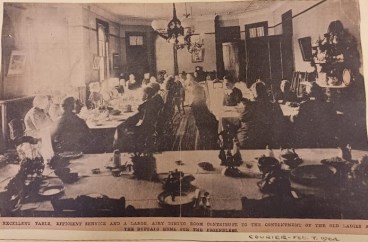
dining room at home for the friendless courier express

Dining Room at Home for the Friendless. Buffalo Courier.

chapel and library home for the friendless

Chapel and Library at Home for the Friendless. Buffalo Courier.

bedroom at home for the friendelss courier express

Bedroom at Home for the Friendless. Buffalo Courier.

In 1893, at the World’s Fair in Chicago, the Home for the Friendless received the Gold Medal for the best managed and most successful charity.  The Home was noted for “its long and extensive career of usefulness and remarkable financial ability shown in the management of its affairs.”

In 1907, William Mills donated money to build the Mills Annex, which added 18 more rooms, which allowed the home to be able to house 50 to 60 permanent residents, staff and transients.  This addition also provided a new kitchen, a veranda, and a sun parlor.  The new wing was built on the rear of the original home.  Until the1920s, the house continued to serve transients, but after that, the house became mostly a house for the aged.  Many of the women who had used the shelter in their youth returned to spend their retirement there.

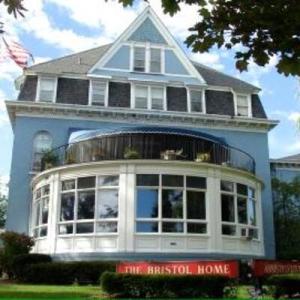
Bristol Home

Bristol Home, 1500 Main Street.

In 1956, the house at 1500 Main Street got a major renovation and remodeling.  Additional staircases were added, allowing the wrought-iron fire escapes to be removed from the property.  The front porch was removed, and a large solarium was added to the front of the house.  Tearing down an old barn allowed for a new driveway, a delivery ramp for the kitchen and increased parking spaces to be built.  After the remodel, the Board and residents finally decided to adopt a new name.  For many years, they had not wanted to change the name of the Home.  Some people felt that Home for the Friendless had a negative connotation, but many of the Board members and residents felt it had a long history.  There were also Homes for the Friendless in other cities and the sense of connection to the history meant the name stuck for a long time.  One of the proposed new names was Springhaven, giving a nod to their location in Cold Spring and their existence as a haven for women.  The name selected was Bristol Home, in honor of Edward Bristol, who had helped to bring the women together to found the Home in 1867.  And so, the Home for the Friendless name faded into history and Bristol Home was born.

bristol home 3In the late 1970s and 80s while Main Street was under construction for the building of the NFTA Metro Rail, there was some talk of Bristol Home moving out to the suburbs.  Bristol Home stood strong, preferring their location in the City which allowed residents to be more centrally located and able to take advantage of all the amenities that living in an urban area provides.

In 2003, Bristol Villages in Clarence opened, with a facility offering assistive living and memory care.  Things change over time and in February 2021, Bristol Home on Main Street closed.  They found alternate living arrangements for their 40 remaining residents and the 45 employees at the Home.  The decision was related to financing.  The costs to run a facility to serve a poor community proved to be too great.  Bristol Villages still operates as the only freestanding nonprofit assisted living facility in Western New York.

In May 2022, the 1500 Main Street property was purchased by Jericho Road Community Health Center, with plans to move its Vive Shelter program for asylum seekers into the space.  This keeps the house at work in providing a safe place for people, a chance to find a new beginning, a similar mission to why the Home for the Friendless was originally founded. The Main Street property allows Vive to provide a better, safer and more comfortable atmosphere for residents.  Since the original Vive structure on Wyoming Street was originally built as a school, it had dorm style rooms, separating by gender.  Since the Home on Main Street has residential rooms, families will be able to stay together.   You can help them meet their goal by donating at their website here:  https://vive.jrchc.org/

So the next time you drive past Bristol Street, think of Daniel and C.C., and maybe drink some sarsaparilla!  And then next time you drive past the former Bristol Home on Main Street, give a wave and think about the Van Deventers and all the woman who have lived on the property over the last 200 years!  Want to learn about other streets? Check out the Street Index. Don’t forget to subscribe to the page to be notified when new posts are made. You can do so by entering your email address in the box on the upper right-hand side of the home page. You can also follow the blog on facebook. If you enjoy the blog, please be sure to share it with your friends.  Interested in getting even more content from me?  You can become a Friend of Buffalo Streets on patreon.   You can go to https://www.patreon.com/buffalostreets/

PS.  From Angela – thank you for understanding when I had to cancel two of my walking tours last month.  I had COVID and felt really bad about having to cancel.  I am feeling better now and planning some new tours for next summer!

Sources:

  • White, Truman C.  Our County and It’s People:  A Descriptive Work on Erie County, New York.  Boston History Company, 1898.
  • Endres, Matt.  History of the Volunteer Fire Department of Buffalo.  W. Graser, Printer, 1906.
  • Sheldon, Grace Carew.  “Seeing Buffalo of the Olden Time:  The Bristol: Sizer Homestead”.  Buffalo Evening Times.  May 11, 1909, p4.
  • “Founders of Our Holiday Festivities”.  Buffalo Courier.  January 24, 1904, p4.
  • “The Statler Stand:  Most Historic Associations of Buffalo on Site”.  Buffalo Times.  March 25, 1923, p40.
  • Burr, Kate.  “Ingersoll-Bristol Joinder of Old Families”.  Buffalo Times.  November 28, 1926, p14
  • “$6,000 Addition”.  Buffalo Express.  April 9, 1907.
  • Roberts, Katherine.  “Sentimentalist and Insurgents will Seek New Name for institution known as the Home of the Friendless”.  Buffalo Times.  August 18, 1935.
  • “Group Strives to Alter Name of Institution”.  Buffalo Courier.  October 10, 1936.
  • History and By-Laws of the Home for the Friendless in the City of Buffalo.  The Courier Company, Printers.  Buffalo, 1888.
  • Knight, Willard M.  Manual, Catalogue and History of the Lafayette Street Presbyterian Church.  Courier Company, Buffalo NY:  1876.
  • “Spring Abbey Season, 1867”.  Buffalo Courier.  June 4, 1867, p8.
  • “New Home of the Friendless”.  Buffalo Commercial.  June 15, 1885, p3.
  • “All Buffalo to have Share in Befriending Family of 69”.  Buffalo News.  September 30, 1937.
  • Burr, Kate.  “If All God’s Chillun (sic) Had a Home”.  Buffalo Times.  October 1, 1930.
  • Death of C.C. Bristol.  https://images.findagrave.com/photos/2023/76/250848919_268ec091-58ae-4604-a924-8ada8f798eda.png
  • White, David.  “A Historical Recap of Medicine Bottles.”  Buffalo News.  August 28, 1982, p148.
  • “Memory Trip Shows City First with Many Things.”  Buffalo News.  November 7, 1935, p14.
  • “48th Annual Donation Day”.  Buffalo Commercial.  September 25, 1922, p5.
  • “Free Picnic – Spring Abbey”.  Buffalo Evening Post.  June 1, 1866, p2.
  • Harris, John.  “Jericho Road completes $2M purchase for new home of Vive”.  Buffalo News.  May 5, 2022, p17.
  • “Origin of Many Street Names”.  Buffalo Times.  January 16, 1927, p67.
  • “Bristol, Cyrenius C) Papers”.  University of Rochester.  https://rbscp.lib.rochester.edu/files/finding-aids/pdf/AB86.pdf
  • “The Home for the Friendless”.  Buffalo Commercial.  October 9, 1875, p3.
  • “Buffalo Changes”.  Buffalo Express.  February 3, 1895.
  • “Home for the Friendless”.  Buffalo Express.  August 11, 1904.
  • Swift, Pat.  “Women Helping Women Made Bristol Home’s Unique Heritage.”  Buffalo news.  March 2, 1986.
  • “Home for the Friendless Gets Another Name – Bristol”.  Buffalo News.  January 16, 1957, p48.

Read Full Post »

Field Notes

Live from Buffalo, NY

Grants.gov Community Blog

Connecting the grant community to #LearnGrants

Dienna Howard

I create, therefore I am.

Hidden Waters blog

Companion blog for the book "Hidden Waters of NYC"

Hoping for a Tail Wind

Because I definitely brought way too much gear.

priorhouse blog

Photos, art, and a little bit of LIT.

Sheepie Niagara

Bleating the Beat Since 2015