
Asbury Alley shown in red. The former right of way of the rest of they alley is shown in yellow.
Asbury Alley is a short, narrow alley running parallel to Pearl and Franklin Streets, north of Chippewa Street in Downtown Buffalo. The alley takes a turn mid-block and runs to Pearl Street. Asbury Alley is one of the few remaining brick streets in Buffalo; however, much of the brick has been covered as asphalt from the parking lots has encroached into the alley. Asbury Alley historically ran another block south to Huron Street, but the majority of the alley south of Chippewa has been covered by the Augspurger Parking Ramp since 1983. The portion of Asbury Alley south of Chippewa which still exists is gated.
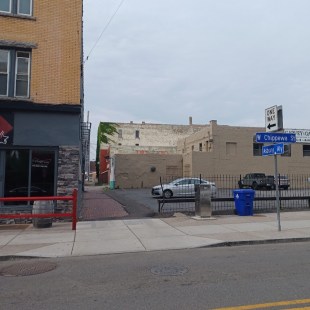
Asbury Alley looking north from Chippewa. Photo by author.
Asbury Alley gets it’s name from a church that used to be located on it. Asbury Church was first established on March 22, 1847. At this time, members of the Niagara Street Methodist Church (located at Niagara and Franklin Street) looked to establish a new congregation in the northern part of the expanding downtown core. They established a church at the northwest corner of Pearl and Chippewa Streets, known as Pearl Street Methodist Church. The first church on the site was a plain brick two-story structure which was ready for services on June 16, 1848. In 1850, the church changed it’s name to Asbury Church after Bishop Francis Asbury, though, as we know in Buffalo, we hold on tight to former names of things, and newspapers of the day alternately referred to the church as both Pearl Street Church and Asbury Church.
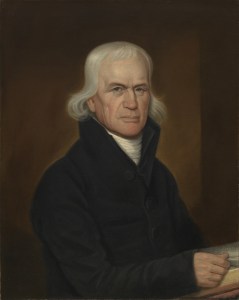
Portrait of Francis Asbury by John Paradise. Source: National Portrait Gallery.
Francis Asbury was one of the first two bishops of the Methodist Episcopal Church in America. He was born in England in 1745. In 1771, he volunteered to come to British North America as a traveling lay preacher. During the Revolutionary War, he was one of only two British Methodist ministers to remain in America. In 1794, Francis Asbury became Bishop of the Methodist Episcopal Church of the United States. He preached in various places, wherever a crowd would come to hear him. He rode an average of 6,000 miles each year, preaching nearly every day. I do not believe he ever made it to Buffalo, which was still a small fledgling village at the time Bishop Asbury died in March 1816. Many Methodist churches across the country use the Asbury name in his honor.
Asbury Church was a strong congregation for many years. The Buffalo Young Men’s Christian Association (YMCA) was organized in the church on April 26, 1852. The organization was founded by a number of young men from members of various city churches who met at Asbury Church to form an association to improve the spiritual and mental condition of young men. They adopted the Boston YMCA’s bylaws and thus the second YMCA in the country was born. By 1870, they had outgrown the building and contemplated joining with Delaware Avenue Methodist Church. Delaware Ave Church had just opened to meet the needs of the residents of Buffalo who were moving to what was considered “uptown” at the time. Many of the residents were moving from the Grace Church area, which was located at Michigan and Division Streets. The merger between Delaware Avenue Church and Asbury Church fell to the wayside when Asbury Church decided to build a new building for themselves instead of merging.
In April 1871, the Asbury Church congregation held their last services in their old church. While the new church was under construction, they held services a the Chapel of the North Presbyterian Church. The cornerstone of the new church was placed on July 13, 1871. The new church was designed by Richard A Waite. The new church was considered to be the finest Methodist church in the City of Buffalo.

Asbury Church. Source: Methodism in Buffalo.
The New Asbury M. E. Church was dedicated in December 22, 1872. During their dedication service, after the sermon, Rev. B. I. Ives arose to deliver a passionate speech to raise funds needed for the new church. The church had cost $50,000 ($1.2 Million today) to build and $25,500 had been raised so far. He asked the congregation to raise the required remainder $24,500 on the spot, calling for pledges of donations of $1,000 then $500, etc…This continued for two hours. They managed to raise $20,000. The congregation was then dismissed with a benediction to come back for evening services later that day. During the evening services, the remaining $4,500 was pledged and the church was dedicated.
Asbury Church struggled to pay off it’s debt from the beginning. While contributions had been made and many additional dollars were pledged, a long time was given to parishioners to make their payments. This did not account for the interest that was accruing on the debt for building the church. Several of the members had business misfortunes of their own and were unable to meet their pledges. After the first six years, little of the debt had even begun to be paid off. It was discouraging to both the members of the church and the presiding elders of the Methodist Church locally, as Asbury was considered to be the most beautiful church edifice in Buffalo if the property were to be sold due to lack of payment. The pastor, Dr. Leak, traveled across the city for two months during 1887, raising money for the church. They managed to pay off their debt and a grand jubilee was held to celebrate.

Delaware Ave Methodist Church, which became Asbury-Delaware Methodist Church when the two congregations merged. Source: Yale Divinity Library
Asbury Church celebrated it’s 50th anniversary in April 1897 with a two day celebration. By 1916, membership in the Delaware Avenue Church at Tupper and Delaware had been declining. Asbury Church was a larger a congregation of 1150 members, with 842 active members, but the Delaware Ave Church had struggled. The church felt there was no longer a need for two downtown Methodist churches as downtown had shifted to a business center as opposed to a residential neighborhood. The value of the Asbury property had increased so it was decided it would be better to prepare to sell the Asbury church site for development purposes, as it was the more valuable piece of property. The decision to merge was made on June 19, 1917, leaving Asbury Church with just a few weeks left in their church. On July 21, 1917, the congregation from Asbury Church moved one block north and one block west to join the Delaware Ave Church at the southeast corner of Delaware and Tupper. The church at Delaware and Tupper became known as Asbury-Delaware Church (also referred to as Delaware-Asbury Church), with the pastors from each of the two churches becoming Associate Pastors at the combined church. Long time readers of the blog may remember that the Delaware Avenue church was designed by architect John Selkirk.
After Asbury Church’s congregation moved out of the property on Asbury Alley, the church building became the first location of the Buffalo City Mission. The City Mission was incorporated with an inter-denominational board of directors and served the community from the church building for four years. The City Mission was granted the use of the church rent free so that the church could continue to be tax-free until the property could be sold for development.

City Mission Building at 85 Broadway. Source: Buffalo Times, March 7, 1931.
In 1922, Mission purchased 85 Broadway and moved to the unique architectural building, which had been Nate Fenton’s Pekin Cabaret, a nightclub. The building on Broadway contained an auditorium, offices, kitchen and rooms for services. When the Mission opened in the new building, the Buffalo Courier reported that, “by its purchase of the former cabaret and dance hall and its decision to destroy none of the decorative effects, the City Mission has put into practice its belief that religion is not necessary a dull, drab affair to be practiced in dreary, distasteful surroundings.” The jazz music changed to Christian hymns, but the Mission took advantage of the bright colored lights and the hand-painted pictures on the walls. In 1930, the City Mission had provided lodging and food to 11,412 men and to 180 women. About 300 men were served each day for meals. In 1940, the City Mission at 85 Broadway was reconstructed with a larger kitchen, dining area, dormitory and new showers. In 1984, the City Mission moved into a new facility at 100 E Tupper. In 2021 a new building was constructed next to the former building on Tupper Ave.
Back to Asbury Alley…. In 1922, after the City Mission moved out, the Asbury Church site at Pearl and Chippewa was being prepared for demolition. The site had been sold to the Peabody Holding Corporation for $250,000 (about $4.5 Million in today’s dollars) to be developed by Harrison Real Estate Corporation. The sale of the property allowed the church to pay off all of their debts. The church building was demolished by the American Salvage and Housebreaking Company. There were plans to building a modern two-story store and office building on the site, with 8 storefronts and a second floor with office suites. The architect for the new building was Harold J. Cook.
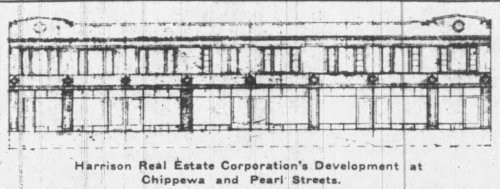
Proposed building at Chippewa and Pearl Streets. Source: Buffalo Courier, January 1922.

Peabody Building as it looked when it opened in 1922. Source: Buffalo Times, May 1922.
When the Peabody Building opened, it was an excellent location, as Chippewa was a major east-west connection through the Central Business District. The building leased up fast. There were ten ground floor store units, eight on Chippewa and two on Pearl. The entrance to the second floor was also on Pearl Street. When the building opened, it created a continuous link of business storefronts along Chippewa Street from Main Street to Delaware Avenue. Demand for the building was great, so the building was erected very quickly. The church demolition began February 20, 1922 and was completed on March 4th. The building was completed on April 29, in just 55 calendar days or 44 working days!
When it opened in 1922, some of the businesses located in the building included C.A. Kremp, Haberdashery; Max F. Drewelow, Cigars and Magazines; Dr. D. J. Walker, Dentist; Dr. Irwin Cohen, Surgeon Chiropodist; The Pennsylvania Locksmith; W. J. Condon, Optometrist; Art Smith Auto Supply Co; Weinert & Hirsch, Merchant Tailors; The Marcel Hair Shop; Sapouna Brothers, hat cleaning/shoe shining; and The Orchid Shop, millinery, lingerie, corsets, hosiery.

Ad for Town Shop for sale b/c of stock damaged by the smoke from the fire, July 28.
In July 1954, the Original Pants Store, located at 31 W Chippewa in the building, caught fire. The fire injured two men and caused $25,000 ($282,000 in 2023 dollars) in damage. The blaze was confined to the pants store, with some smoke and water damage in neighboring storefronts – The Consolidated Tie Shop at 29 W Chippewa and the Town Shop women’s apparel at 35 W Chippewa. The manager of the pants store, Marvin Gumins, was treated for first degree burns on his face. Junior Capitan Charles Weisenburger of Engine 12 cut his hand and was treated at the scene. The two-alarm fire was likely started by careless smoking.

Fire and Smoke at the Peabody Building. February 1959. Note, the building on the left in the photo is still standing at 45 Chippewa today. Source: Buffalo News.
A few years later, the building was not so lucky. On February 19, 1959, a three-alarm fire caused $225,000 damage to the building, which at the time was known as the Nasco Building. The fire originated on the second floor and spread rapidly throughout the building. The first call for the fire was at 9:29 am. The second alarm was at 9:31 am and the third alarm was at 9:32 am. At the time of the fire, the businesses located in the building included the Town Shop, ladies’ wear; Martin, men’s wear’ a hat cleaning and tailor shop operated by Gust Gavras; and Elliott’s Cigar Store. The second floor was occupied by Kurt Brychta, violins; a beauty salon operated by Loretta Bitterman; Louis Weyer, furs; signs by Coffas; Eric & Joseph, a beauty shop; and the offices of Dr. Seymour Saries, podiatrist.
The building was owned by Nasco Corp, who also had offices in the building. More than 80 firefighters battled the fire in temperatures of 5 degrees. The scene described in the paper of “the pall of heavy black smoke blown across Main Street by a frigid west wind” sounds eerily familiar to the scene just a few months ago when the building at 745 Main Street burned down. The 1959 fire caused more than $225,000 ($2.6 Million in 2023 dollars) damage to the stores and offices. It was thought to have been caused by either defective wiring or an overloaded electrical circuit. Included in the loss were two cellos and six violins in Mr. Brychta’s shop. Mr. Brychta was also a violinist with the Buffalo Philharmonic Orchestra. One of the lost violins was a Ruggieri!
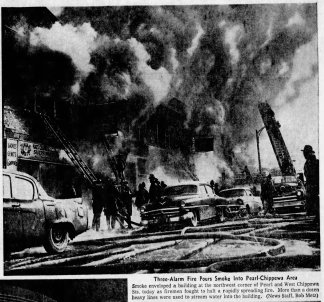
Another view of the fire, 1959. Source: Buffalo News.
A few months later, on April 24, 1959, the firefighters were called back to the scene when the rubble in the wrecked Nasco Building caught on fire again. The two alarm fire was quickly controlled by the fire department.
In March 1960, the City of Buffalo Department of Public Works advertised for bids for the demolition of the fire-damaged building. The site was owned by the City of Buffalo and the Buffalo Urban Renewal Agency for the next few decades and leased out to various parking operators by the Board of Parking.
In June 1996, The Buffalo Urban Renewal Agency put out a Request for Proposals for a developer to redevelop the parcel. At the time, they were considering redevelopment of offices, residential, retail, commercial, entertainment, educational, healthcare or a creative combination of any of the above.

Diner that was going to be located at the lot at Pearl & Chippewa. Source: Buffalo News.
Only one plan was proposed for the site. Mark Goldman, who owned the Calumet Arts Café at Chippewa and Franklin Streets and is widely regarded as the driving force behind the rebirth of Chippewa Avenue. Mr. Goldman’s plan was to purchase a 70-year old authentic “Pullman Car” style diner, restore the diner and install it in the lot. The diner had been found in Canoga, in Seneca County, New York. In addition to the diner, plans included building an adjoining food service building and a handful of small retail outlets resembling sidewalk newsstands along the edges of the property to serve as walk up retail to serve people walking around downtown. The project did not proceed and in 1998, the City began using the property for parking again.

Current view of the parking lot at Pearl & Chippewa. Photo by author.
In November 1998, the property was sold to Skydeck Corp for $80,100 ($149,000 in 2023 dollars) Skydeck Corporation is an entity that was formerly owned by the late Mark Croce. At the time, he was developing the Brownstone Bistro at 297 Franklin Street and the parking lot would provide the parking he needed for the restaurant. This was Mr. Croce’s first parking lot purchase, as he saw the purchase of parking lots as strategic to help fuel his downtown entertainment and hospitality projects. His impacts are seen throughout Downtown Buffalo to this day, dispute his death in January of 2020. Fun fact: Downtown’s newest street name just was created last week when a portion of W Genesee Street was renamed Croce Way in honor of Mark Croce.
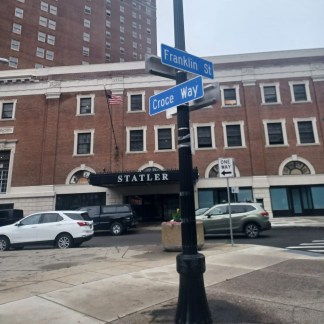
Croce Way sign in Downtown Buffalo next to the Statler, which Mark Croce saved from the wrecking ball.
So what happened to the Asbury Church congregation after they merged with Delaware? Asbury-Delaware Church continued to hold services for more than 70 years until the church finally closed in June 1990. Like so many of the urban churches, they lost members to the suburbs. The congregation had dropped from about 2,000 members in the 1950s to just 135 members. Toward the end, they saw just an average of 40 regular attendees in services, all members of about 18 families. The church was listed for sale for $400,000 ($867,000 in 2023 dollars). The proceeds from the sale of the church were planned to be used to support other Methodist churches or programs in the city. The remaining members of the church transferred to other congregations. During the 1990s, two churches in Amherst merged and decided to take on the Asbury name, so while the congregation which still worships in Amherst doesn’t take its roots directly from the Downtown Asbury Church, they share the same namesake!
There were several different proposals for the building that were floated around. The church was then purchased by another church group but sat vacant and neglected. In 1995, pieces of the steeple fell and West Tupper Street adjoining the church was closed for a year. The church was almost demolished that year when a judge declared it a public safety hazard. The City of Buffalo purchased the building in 1999 for $175,000 ($319,000 in 2023 dollars) after a four year legal battle over what was going to happen to the church. In early 2000s, musician Ani Difranco and Scot Fisher purchased and renovated the Delaware -Asbury Church into Babeville/Asbury Hall, a concert venue and offices of the record label. The new venue “The Church” opened in 2006.
Next time you’re at a concert at Asbury Hall, or just the next time you pass by the parking lot at Pearl and Chippewa, think about the history that those sites have seen! Want to learn about other streets? Check out the Street Index. Don’t forget to subscribe to the page to be notified when new posts are made. You can do so by entering your email address in the box on the upper right-hand side of the home page. You can also follow the blog on facebook. If you enjoy the blog, please be sure to share it with your friends. Interested in getting even more content from me? You can become a Friend of Buffalo Streets on patreon. You can go to https://www.patreon.com/buffalostreets/
Sources:
- Buffalo Christian Advocate. January 23, 1851, p2.
- “At Church” Buffalo Christian Advocate. June 18, 1863, p2.
- “Church Dedication”. The Buffalo Commercial. December 2, 1872, p3.
- “City Mission Directors See Their Work Growing” Buffalo Times. March 7, 1931, p14.
- “Plans Could Brighten Chippewa”. Buffalo News. April 8, 1998, p1.
- “Goldman is Planning to Open Diner”. Buffalo News. June 27, 1997, p8.
- “Asbury and Delaware Ave to Join Hands.” Buffalo News. July 21, 1917, p5.
- “Semi-Centennial”. Buffalo Commercial. April 27, 1897, p10.
- “Corner-Stone Laying, Today”. Buffalo Advocate. July 13, 1871, p3.
- “Churches Merge”. Buffalo Commercial. June 20, 1917, p10.
- “Business Block to Supersede Asbury Church”. Buffalo Courier. January 11, 1922.
- “Our History” Buffalo City Mission. https://www.buffalocitymission.org/who-we-are/history/
- “City Mission Now in Fenton’s Pekin”. Buffalo Courier. June 12, 1922, p14.
- “Another Famous Landmark Passes Out”. Buffalo Times. January 13, 1922, p13.
- “Advertisement for Bids.” Buffalo News. March 8, 1960, p34.
- “Request for Proposals”. Buffalo News. June 16, 1996, p 75.
- Hunt, Sandford. Methodism In Buffalo: From its Origin to the Close of 1892. HH. Otis and Sons: Buffalo, 1893.
- “Pearl-Chippewa Fire Pours Out Pall of Smoke”. Buffalo News. February 19, 1959, p1.
- “Pearl-Chippewa Blaze Quelled by Daring Firemen”. Buffalo news. February 19, 1959, p1.
- “One of two things”. Buffalo News. February 21, 1959, p3.
- “Blaze Dampened in Rubble Left by Big Mid-Winter Fire”. Buffalo News. April 24, 1959, p31.
- “Further Evidence of a Greater Buffalo The Peabody Building”. Buffalo Times. May 14, 1922, p 54.
- “Peabody Block Aids Business”. Buffalo Times. May 14, 1922, p54.
- “Damage is $25,000 in Downtown Blaze, Sixth Big One of Year”. Buffalo News. July 10, 1954, p4.
- Real Estate Transactions. Buffalo News. November 23, 1998, p7.
- Dolan, Thomas. “New Diner Faces Trip”. Buffalo News. September 13, 1996, p21.
- Dolan, Thomas. “Rail Car Diner Project is Not Going Forward”. Buffalo News. September 15, 1998, p2.
- Condren, Dave. “2 Churches Prepare Last Services”. Buffalo News. May 27,1990, p 17.
- Stouffer, Rick. “Realtor Plans Open Church Sundays”. Buffalo News. December 14, 1990, p5.
 Discovering Buffalo, One Street at a Time